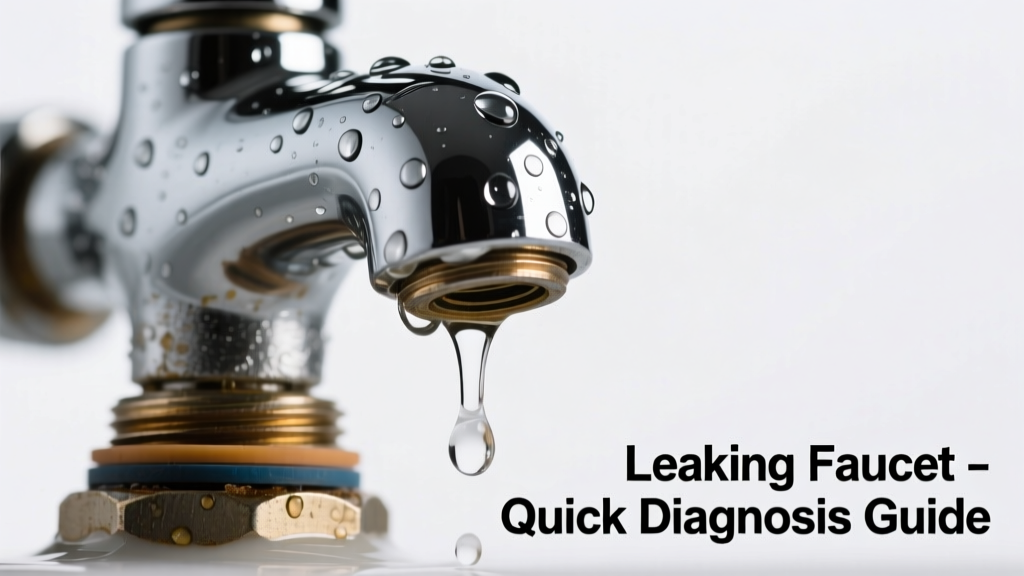
You hear it before you see it: a rhythmic *plink… plink… plink* from the kitchen sink, or a steady trickle from the bathroom tap even after you’ve turned it off tight. That leak isn’t just annoying — it can waste over 3,000 gallons per year (U.S. EPA, 2022) and signal worn parts, misaligned handles, or hidden corrosion.
Quick Checklist
Answer these yes/no questions to narrow down the root cause in under 90 seconds:
- Does water drip only when the handle is fully off — or does it leak while turning on/off?
- Is the leak coming from the spout, base of the handle, or where the faucet meets the sink?
- Does the faucet have a single lever, two separate handles, or a pull-down sprayer?
- Has the faucet been recently repaired, replaced, or exposed to hard water buildup?
- Do you hear squeaking, grinding, or stiffness when moving the handle?
- Is water pooling under the sink cabinet — not just dripping into the basin?
Possible Causes
Worn Cartridge or Ceramic Disc
This is the #1 culprit for single-handle faucets (especially Moen, Delta, and Kohler models). Confirm by shutting off water, removing the handle, and inspecting the cartridge for cracks, pitting, or mineral crust. Severity: DIY-friendly for most — replace faucet cartridge takes ~25 minutes with basic tools.
Failed O-Rings or Washers
Most common in older two-handle compression faucets. Look for rubbery rings or flat washers that are flattened, cracked, or brittle. Turn off water, unscrew the handle, and pull out the stem — if the washer is mushy or the O-ring feels gummy, that’s your leak source. Severity: Easy DIY — replace faucet washer costs under $2 and takes 15 minutes.
Loose or Corroded Valve Seat
Found beneath the washer in compression faucets; corrosion creates tiny gaps that let water bypass the seal. Use a valve seat wrench to remove and inspect — if it’s pitted or grooved, replacement is needed. Severity: Moderate DIY — requires specialty tool and precision reseating. Replace valve seat if you’re comfortable with threading tolerances.
What to Do First
Before reaching for tools, take these immediate steps to prevent escalation:
- Locate and shut off the individual shutoff valves under the sink (clockwise = closed).
- Place a dry towel under the faucet base and a small bowl under the spout to catch residual drip.
- Open the faucet fully to relieve pressure and drain remaining water from the lines.
- Check for moisture or pooling under the sink — if present, wipe dry and monitor for 10 minutes to rule out supply line leaks.
What NOT to Do
Well-intentioned fixes often backfire — avoid these four mistakes:
- Don’t overtighten the handle — this accelerates wear on cartridges and O-rings, worsening the leak.
- Don’t use generic ‘universal’ washers — dimensions vary by brand and model; mismatched thickness causes improper seating.
- Don’t ignore mineral buildup — hard water scale on discs or seats mimics wear; soak parts in white vinegar for 15 minutes before reassembly.
- Don’t skip checking the aerator — debris clogging the aerator can cause backpressure that forces water past seals.
Why does my faucet leak only when I turn it off?
This points strongly to a failing cartridge or ceramic disc — the internal seal isn’t fully engaging at the “off” position due to wear or misalignment. It’s rarely the shutoff valve itself unless both hot and cold sides leak simultaneously.
Why is water leaking from the base of the handle?
That’s almost always a compromised O-ring around the stem or cartridge housing. Hard water deposits accelerate deterioration, especially in high-use kitchen faucets. According to the Plumbing-Heating-Cooling Contractors Association’s 2023 field survey, 68% of handle-base leaks were resolved by replacing two $0.35 O-rings.
"A dripping faucet isn’t just wasted water — it’s a diagnostic clue. The location and timing of the drip tell you more than the sound ever could." — Sarah Lin, Master Plumber & Instructor, PHCC Education Foundation (2022)
Can a leaking faucet cause pipe damage over time?
Yes — persistent leaks create constant moisture exposure. Under-sink pooling raises humidity, warping particleboard cabinets and encouraging mold growth behind drywall. The U.S. EPA estimates that 14% of household water usage is from leaks — many starting as minor drips.
Why does my new faucet leak right after installation?
Most often due to cross-threaded mounting nuts, over-torqued escutcheon plates compressing the cartridge, or failure to remove the factory plastic shipping plug inside the cartridge (common in Delta Touch2O models). Always verify torque specs and inspect internal components before final assembly.
Is a leaking faucet an emergency?
Not usually — unless water is actively spraying, flooding the cabinet, or coming from supply lines rather than the faucet body. But don’t delay: a slow drip of one drop per second wastes ~3,000 gallons annually (U.S. EPA, 2022), and recurring leaks strain other components like angle stops and supply lines.
How long should a faucet repair last?
A proper washer or O-ring replacement typically lasts 3–5 years in moderate-use bathrooms, but only 12–18 months in hard-water kitchens without a softener. Cartridges last 5–10 years — unless subjected to frequent over-tightening or abrasive cleaning agents.
| Leak Location | Top 2 Causes | DIY Difficulty |
|---|---|---|
| Spout tip | Clogged aerator, worn cartridge seal | Easy |
| Base of handle | Failed O-ring, loose handle screw | Easy |
| Under sink (supply line) | Loose compression nut, cracked supply tube | Moderate |
| Where faucet mounts to sink | Deteriorated mounting gasket, warped flange | Moderate |
If your leak doesn’t match any of these patterns — or if tightening, cleaning, and part replacement haven’t helped — it may be time to consult a licensed plumber. But for the vast majority of drips and trickles, the fix is simpler, faster, and cheaper than you think.