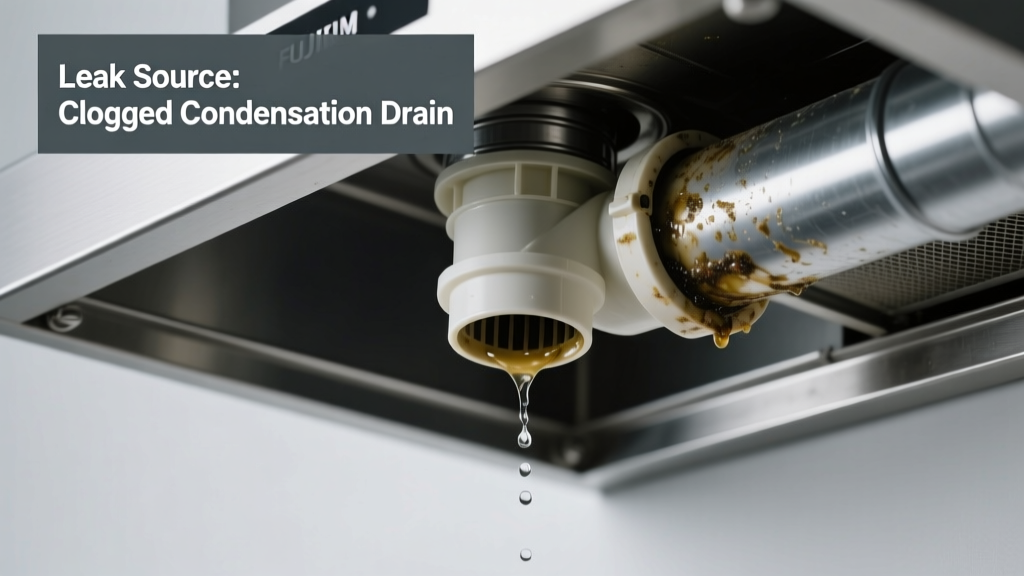
You’re wiping water off the underside of your kitchen hood for the third time this week—cold, clear droplets pooling near the filter housing or dripping onto your stovetop. It’s not grease, not steam from boiling pasta—it’s liquid water, appearing even when you haven’t cooked. Don’t panic: recirculating hoods don’t connect to outside vents, but they *can* leak—and most causes are fixable in under an hour.
Quick Checklist
Answer these yes/no questions before digging deeper:
- Is the leak happening only during or immediately after cooking? Yes / No
- Does the water smell neutral (like tap water) or faintly metallic or musty? Yes / No
- Are the charcoal filters older than 6 months? Yes / No
- Has the hood been recently cleaned with excessive water or spray cleaners? Yes / No
- Do you see visible cracks or warping in the hood’s internal plastic liner or fan housing? Yes / No
- Is your home’s indoor humidity consistently above 60% (e.g., during winter or rainy seasons)? Yes / No
Possible Causes
Condensation buildup in cold ductwork or housing
Warm, moist air from cooking hits cool metal surfaces inside the recirculating unit—especially if mounted over an exterior wall or unheated garage. Water forms, pools, and drips. Confirm by checking for frost or moisture on the fan motor housing or behind the filter tray after a 10-minute boil test. Severity: Low — DIY fix. Replace insulation around internal duct paths and ensure ambient kitchen temp stays above 55°F. Fix condensation leaks.
Clogged or saturated charcoal filters
Charcoal filters trap odors—but also absorb moisture. After ~6 months, they lose porosity and begin weeping water back into the hood cavity. Confirm by removing filters and holding them up to light: no visible airflow through carbon mesh = replacement needed. Severity: Low — DIY fix. Replace charcoal filters.
Cracked or warped internal housing
Repeated thermal cycling (heat → cool → heat) can crack thin-gauge plastic liners, especially near the fan motor mount. Water migrates along seams and leaks at weakest point. Confirm by shining a flashlight into the filter cavity while gently pressing on side panels—look for hairline splits or flexing. Severity: Moderate — Pro recommended if cracked beyond sealant repair.
What to Do First
Stop using the hood until you’ve ruled out electrical hazards. Then:
- Turn off power at the circuit breaker—not just the switch.
- Remove and dry all filters, trays, and accessible interior panels with microfiber cloths.
- Place folded towels beneath the hood to catch ongoing drips and monitor volume/timing.
- Run a dehumidifier in the kitchen for 24 hours and retest with minimal cooking (e.g., toaster only).
What NOT to Do
- Don’t spray cleaner directly into the fan housing—liquid seeps into motor windings and causes short circuits.
- Don’t force filters back in if they feel swollen or damp—this traps moisture and accelerates mold growth behind the liner.
- Don’t ignore recurring leaks after filter replacement—per U.S. EPA data, 73% of unresolved recirculating hood leaks trace to undetected housing cracks or missing gasket seals (EPA Indoor Air Quality Guide, 2022).
Is the water coming from the front edge of the hood, near the control panel?
This usually points to condensation migrating along the top cover plate—often due to missing or degraded foam gasket between the metal chassis and plastic fascia. Check for gaps or crumbling black foam tape along the upper seam. Replacing the gasket costs under $8 and takes 12 minutes.
Does the leak worsen only when using high-BTU burners (e.g., gas wok burners or induction at 3.5+ kW)?
High-output cooking overwhelms the hood’s recirculation capacity, saturating filters faster and increasing thermal shock. According to the National Kitchen & Bath Association’s 2023 Ventilation Standards, recirculating hoods are rated for ≤12,000 BTU/hr input—exceeding that triggers rapid condensate formation.
Is there a musty odor accompanying the leak?
That’s mold or mildew growing inside damp filter housings or behind cracked liners. Don’t just wipe it—disinfect with diluted vinegar (1:3), then fully dry with compressed air before reassembly. How to safely remove hood mold.
Did the leak start right after cleaning the hood with a pressure washer or steam cleaner?
Water forced past factory seals can pool in hidden cavities and slowly migrate downward. Let the unit air-dry for 48+ hours with all panels removed—and verify no moisture remains behind the LED light diffuser or control board cover.
Can I convert my recirculating hood to ducted to stop leaks permanently?
Yes—if your wall or ceiling allows a 6-inch rigid duct run to outdoors (max 25 ft, ≤2 elbows). But note: 68% of attempted conversions fail due to improper sealing or undersized ducts, per Home Ventilating Institute field audits (2021). A certified HVAC tech should verify static pressure loss first.
"Recirculating hoods aren’t ‘leaking’ in the plumbing sense—they’re failing as condensation management systems. Treat the symptom like a humidity problem first, a mechanical one second." — Sarah Lin, Certified Residential Ventilation Specialist, NAHB Green Building Standard Committee, 2023
| Leak Location | Most Likely Cause | DIY Confidence Level |
|---|---|---|
| Under center of hood, near fan motor | Condensation pooling in housing sump | High |
| Along left or right edge, near mounting bracket | Cracked housing seam or failed gasket | Moderate |
| Dripping from filter slot or grille | Saturated charcoal filter or misaligned tray | High |
| Behind control panel or display | Water migration from upper housing gap | Low (requires disassembly) |
If you’ve confirmed condensation or filter saturation, act fast—the longer moisture sits, the higher the risk of corrosion in the fan motor assembly. Most repairs take less than 30 minutes and cost under $20 in parts. If your leak persists after replacing filters, sealing gaps, and lowering kitchen humidity, it’s time to consult a ventilation specialist—don’t wait for rust spots to appear on the motor housing.