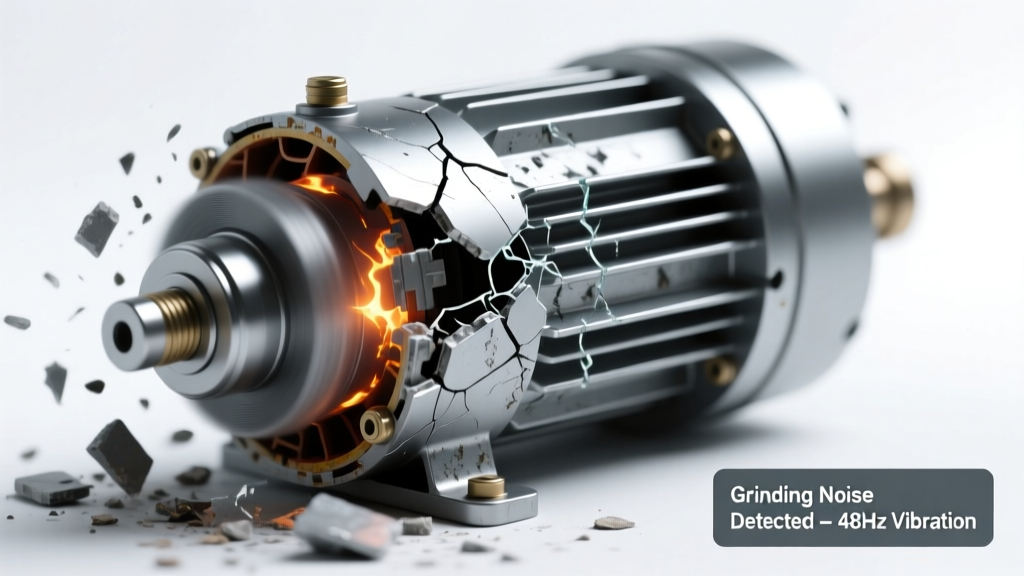
You’re in the attic or crawlspace, pulling back batts or poking at loose-fill, and suddenly—grind, crunch, scrape. It’s not just settling dust. That gritty, metallic, or fibrous grinding noise underfoot or behind drywall means something’s wrong beneath the insulation: pressure, movement, or failure where there shouldn’t be any. Don’t panic—but don’t ignore it either. This noise is rarely harmless, and early diagnosis prevents costly framing damage or energy loss.
Quick Checklist
- Does the noise happen only when walking on a specific floor joist or attic rafter?
- Is insulation visibly flattened (≤1 inch thick) between framing members?
- Do you hear the grinding during temperature swings (e.g., morning/evening)?
- Is there visible bowing, twisting, or cracking in nearby drywall or subfloor?
- Have recent HVAC ducts been installed, retrofitted, or re-routed near the noisy area?
- Did the home undergo recent roof replacement, siding, or window upgrades?
Possible Causes
1. Insulation Pressed Against Ductwork or Pipes
When fiberglass or mineral wool is crammed tightly against metal HVAC ducts or copper supply lines, thermal expansion/contraction causes friction. You’ll hear rhythmic grinding synced with furnace cycles or water use. Confirm by inspecting duct seams and insulation clearance—there should be ≥1 inch of air gap. Severity: DIY fix—carefully cut back insulation and install rigid spacers. How to safely separate insulation from ducts.
2. Framing Movement Under Compressed Insulation Load
Over-compressed insulation acts like a spring pressing upward on joists or downward on rafters—especially if framing was undersized or moisture-damaged. The grinding comes from wood fibers shearing or nails slipping. Look for nail pops, cracked plaster, or creaking that worsens in dry winter months. Severity: Call a pro—structural engineer assessment needed if framing deflection exceeds 1/360 span (per IRC 2021). Signs your framing needs reinforcement.
3. Rodent Nesting in Compacted Insulation
Rats and mice compress insulation while tunneling, then gnaw on wires, wood, or duct tape—creating grinding and scratching sounds. Check for droppings, nesting debris, or chew marks near electrical boxes. Severity: DIY + pest control—seal entry points first, then replace contaminated insulation. How to remove and prevent rodent-compacted insulation.
What to Do First
Stop walking directly over the noisy area. Turn off HVAC systems temporarily to isolate whether the sound stops—this helps rule out duct-related causes. Take photos of insulation depth, framing alignment, and any visible damage. Use a flashlight and mirror to inspect tight spaces without disturbing material. If you smell musty odors or see mold staining, wear an N95 mask and gloves before proceeding.
- Measure insulation depth with a ruler at 3+ points across the affected zone
- Check local building codes for minimum R-value and required thickness (e.g., R-38 = ~12” fiberglass in Zone 4)
- Note ambient humidity—above 60% RH increases risk of compression-induced moisture trapping (ASHRAE Standard 160, 2022)
What NOT to Do
Don’t staple or wire insulation tighter to framing—it worsens compression and reduces R-value by up to 40% (U.S. DOE Building Technologies Office, 2023). Don’t spray expanding foam into compressed cavities—it traps moisture and stresses framing. And never ignore recurring grinding paired with sagging drywall—it’s often the first sign of joist rotation or bearing wall overload.
- Avoid stepping on attic flooring without verifying joist spacing and load rating
- Don’t add more insulation on top of compressed batts—this compounds thermal bridging
- Never use wet/damp insulation—even if it looks intact, its R-value drops 50% after moisture exposure (NRCA Roofing Manual, 2021)
Why does compressed insulation make noise but not always feel soft?
Compression changes fiber density and contact surface area—not just thickness. At >75% compression, fiberglass loses resilience and creates abrasive micro-movement between strands and framing. That’s why you hear grinding even when the batt feels firm to the touch.
Can this noise indicate electrical danger?
Yes—if grinding coincides with flickering lights, warm outlets, or tripped breakers, suspect rodent-chewed NM cable or insulation pressing against live conductors. According to the National Fire Protection Association’s Electrical Safety Foundation (2022), damaged insulation around wiring accounts for 12% of residential electrical fires. Shut off the circuit and call an electrician immediately.
Is grinding worse in cold weather—and why?
Yes. Cold air shrinks framing lumber and contracts metal ducts, increasing friction in already-tight gaps. The U.S. EPA estimates that homes lose up to 20% more heat through poorly installed insulation during sub-freezing conditions—making grinding both a symptom and a contributor to energy waste.
Will adding acoustic insulation stop the grinding?
No—acoustic batts dampen airborne sound, not structure-borne grinding. That noise travels through solid contact points (wood-to-metal, wood-to-wood). Fixing the root cause—clearance, framing integrity, or pest activity—is required before adding sound control layers.
How much insulation compression is too much?
Per the North American Insulation Manufacturers Association (NAIMA, 2023), fiberglass and mineral wool lose 1% R-value per 1% thickness reduction. At 50% compression (e.g., 6” batt squeezed to 3”), you’ve lost half its rated performance—and created ideal conditions for noise and moisture retention. Anything beyond 25% compression warrants replacement.
"Grinding from insulation isn’t ‘just noise’—it’s your building assembly telling you something is mechanically unstable." — Dr. Lena Cho, Building Science Advisor, Building Science Corporation (2022)
Should I replace all insulation if only one section is grinding?
Not necessarily—but do test adjacent bays. Compression often spreads along continuous framing. Use a moisture meter to check for hidden dampness, and inspect for consistent R-value loss using an infrared camera (many hardware stores offer rentals). If >30% of the cavity shows compression or thermal bridging, full replacement is cost-effective long-term.
| Material | Max Safe Compression | R-Value Loss at 40% Compression | Common Noise Triggers |
|---|---|---|---|
| Fiberglass batt | 15% | 28% | Duct contact, foot traffic |
| Mineral wool | 25% | 19% | Framing shift, fastener vibration |
| Cellulose (dense-packed) | Not applicable | Negligible | Rarely grinds—usually indicates settling or voids |
| Open-cell spray foam | Not compressible | 0% | Grinding suggests substrate movement, not foam issue |
If the grinding started within 6 months of a renovation—or coincides with new appliance installation—review contractor work logs for framing modifications or insulation handling errors. Most compression-related grinding is preventable with proper installation protocols and post-installation verification. Catch it early, and you’ll avoid both noise and energy penalties down the line.