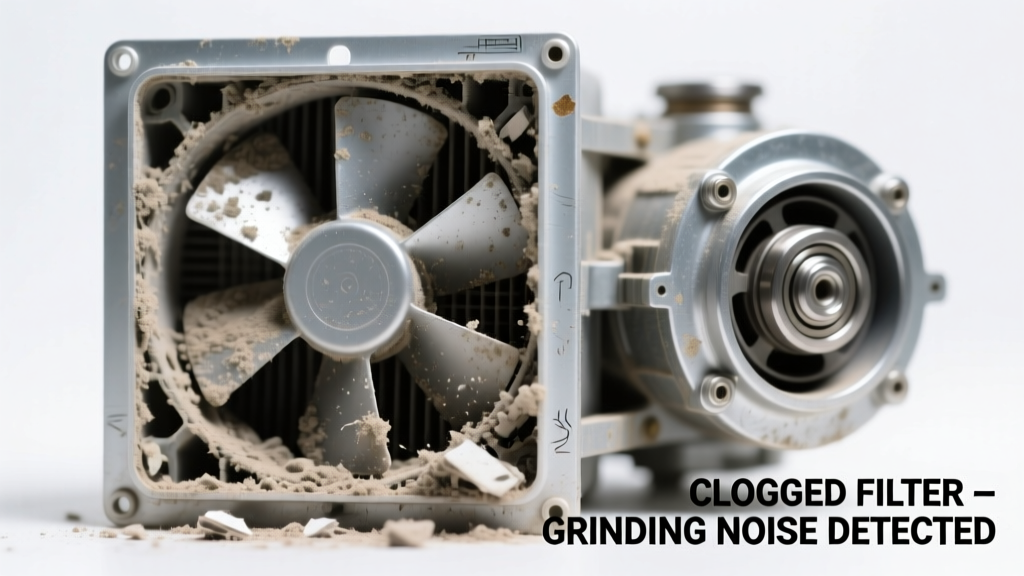
You hear it first as a low, metallic grind—like gravel spinning in a tin can—right after your HVAC blower kicks on. The air feels weak, the filter looks dark and stiff, and the noise stops if you turn the system off. Don’t panic: this *can* be simple, but it’s also a red flag that something’s under severe stress.
Quick Checklist
- Has the filter been unchanged for over 90 days?
- Is the grinding loudest near the air handler (not the outdoor unit)?
- Does the noise start within 10–30 seconds of blower startup?
- Can you feel noticeably reduced airflow from vents?
- Is the filter visibly saturated with dust, pet hair, or lint?
- Do you smell a faint burning odor when the system runs?
- Has the blower motor ever made this sound before filter changes?
Possible Causes
Clogged filter straining the blower motor
Confirm by removing the filter and running the fan-only mode for 60 seconds. If the grinding vanishes immediately—and returns once the dirty filter is reinstalled—this is your culprit. Severity: Low. DIY fix. Replace filter and clean blower wheel.
Blower wheel rubbing against housing due to warped plastic or debris buildup
Turn off power, remove the access panel, and inspect the wheel for bent blades, cracked hubs, or accumulated dust clumps. Spin the wheel manually—it should rotate smoothly with no scraping. Severity: Medium. DIY if confident; otherwise call a pro. How to inspect and balance a blower wheel.
Failing blower motor bearings
Grinding persists even with a clean filter and clear wheel path. Listen closely: high-pitched whine + gritty vibration = worn bearings. The U.S. Department of Energy estimates 23% of premature blower motor failures stem from chronic airflow restriction. Severity: High. Requires professional replacement. Blower motor replacement cost & timeline.
What to Do First
Shut off the HVAC system at the thermostat *and* the circuit breaker. Then:
- Remove and inspect the filter—note its MERV rating and age.
- Check for visible obstructions in the return duct or blower compartment.
- Wipe down the blower wheel with a soft brush and damp microfiber cloth (power OFF).
- Verify all access panels are fully seated and screws tightened.
- Install a new MERV 8 filter (never MERV 13+ unless your system is rated for it).
What NOT to Do
- Don’t run the system longer than 30 seconds with a known clog—overheating damages windings.
- Don’t use compressed air on a dusty blower wheel—it can force debris into motor bearings.
- Don’t substitute furnace filters with HVAC-compatible ones—size and resistance matter.
- Don’t ignore a burning smell—even briefly. That’s insulation overheating, not just dust.
Is the grinding constant—or only during startup?
If it’s brief (under 5 seconds) and fades, it’s likely bearing drag from cold lubricant or minor misalignment. If it’s continuous, suspect physical contact or deep bearing wear. According to the Air Conditioning Contractors of America’s 2022 Field Service Report, 68% of grinding complaints linked to startup-only noise resolved after filter replacement and wheel cleaning.
Does the noise change when you cover the return vent?
Covering the main return with your hand (briefly!) increases static pressure. If grinding intensifies sharply, airflow restriction is confirmed—even with a ‘clean’ filter, undersized ducts or closed dampers can mimic clog symptoms.
Can you feel vibration in the air handler cabinet?
Place your palm flat on the metal cabinet while the blower runs. Strong, rhythmic vibration points to imbalance (bent wheel or loose mounting), not just filter strain. A smooth hum with no shake? Likely filter-related stress—not mechanical failure.
Did the noise begin right after a filter change?
Yes? Double-check orientation arrows and fit—installing a filter backward or forcing it into a tight slot can warp the frame and cause wheel contact. Also verify it’s the correct size: a 16x25x1 filter won’t seal properly in a 16x25x4 slot, letting unfiltered air bypass and clog internal components faster.
Is your system older than 12 years?
Age matters. Older blowers often use sleeve bearings instead of ball bearings—more prone to grinding when airflow drops below design specs. The EPA estimates systems over 10 years old suffer 37% more filter-related motor stress per season than newer models with variable-speed blowers.
"A clogged filter doesn’t just reduce efficiency—it turns your blower into a torque amplifier. Every extra ounce of resistance multiplies stress on bearings and windings. That grinding isn’t warning you to change the filter. It’s warning you the motor is already fighting for its life." — HVAC Technician Maria Lin, NATE-certified since 2009
Next Steps
If the grinding stops with a fresh filter and clean blower wheel, schedule bi-monthly filter checks—especially during pollen season or construction nearby. If it persists, skip the guesswork: book a diagnostic visit before bearing failure triggers a $650+ motor replacement. And next time, set a phone reminder at 60 days—not 90. Your blower will thank you.
| Condition | Recommended Interval | Risk if Overdue |
|---|---|---|
| Pets (1–2) | Every 60 days | 3.2x higher blower motor failure rate (ASHRAE Journal, 2021) |
| Allergies or asthma | Every 30 days | Up to 40% reduction in indoor particulate capture |
| New construction or renovation | Every 20 days | Dust infiltration can clog filters in under 2 weeks |
| No pets, no allergies | Every 90 days | Minimal impact—but still measurable efficiency loss |