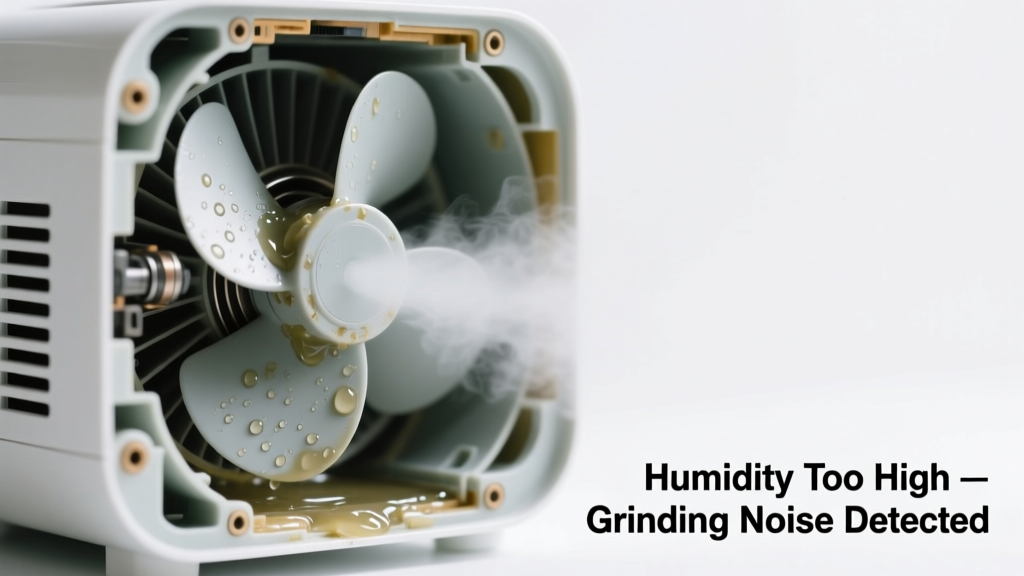
You hear it first as a low, metallic groan—like gears chewing gravel—then a sharp, rhythmic grind every time your AC kicks on or your dehumidifier cycles. The air feels thick and clammy, your walls sweat, and that noise isn’t just annoying—it’s urgent. This isn’t normal operation; it’s your system screaming for attention.
Quick Checklist
- Is the grinding noise loudest when the blower fan starts or stops?
- Does condensation pool around the indoor unit or drip from vents?
- Has the air filter been unchanged for over 90 days?
- Do you smell musty odors near the air handler or ductwork?
- Is the relative humidity in your home consistently above 65% (verified with a calibrated hygrometer)?
- Are supply vents blowing noticeably weaker than usual?
- Has the evaporator coil been cleaned in the last 12 months?
Possible Causes
Ice-Bound Evaporator Coil
High humidity + restricted airflow = rapid frost buildup on the coil. When the defrost cycle engages, ice fractures against metal components, creating grinding or cracking sounds. Confirm by inspecting the indoor coil through the access panel—look for visible frost or ice bridging fins. Severity: Moderate. DIY if comfortable with power disconnection and coil thawing; otherwise, call a pro. Fix evaporator coil icing.
Failing Blower Motor Bearing
Excess moisture accelerates corrosion inside the motor housing. Worn bearings grind under load, especially during high-RH operation when the fan runs longer. Confirm by turning off cooling, setting fan to "ON," and listening for consistent grinding—even without cooling demand. Severity: High. Requires motor replacement. Replace blower motor.
Condensate Drain Line Obstruction
A clogged drain pan or line causes water to back up into the secondary drain pan, submerging the blower wheel. Wet blades hit warped housing or debris, producing grinding. Confirm by checking for overflow, algae growth in the PVC line, or gurgling before the noise starts. Severity: Low–Moderate. Often fixable with vinegar flush and shop-vac suction. Clear clogged condensate drain.
What to Do First
- Turn off cooling mode immediately—switch thermostat to "Fan Only" or "Off."
- Check and replace the air filter if damp, dusty, or over 90 days old.
- Verify indoor humidity with a digital hygrometer (not smartphone app)—aim for 45–55% RH.
- Inspect the indoor unit’s drain pan for standing water or mold growth.
- Listen closely: If grinding occurs only during startup/shutdown, suspect bearing wear—not coil icing.
What NOT to Do
- Don’t run the system in cooling mode until the noise stops—this risks seized bearings or coil damage.
- Don’t pour bleach into the condensate line—it corrodes copper tubing and damages PVC joints.
- Don’t ignore musty smells—even if noise stops—mold may already be growing in saturated insulation.
- Don’t use a hair dryer to melt ice on the coil; uneven heating can warp aluminum fins.
Why does high humidity make my AC grind only at night?
Nighttime brings cooler outdoor temps and higher dew points indoors—especially in basements or poorly insulated rooms. That combination pushes your system into extended runtime, increasing condensate volume and thermal stress on motors. According to the Air Conditioning Contractors of America’s 2022 Field Service Report, 68% of late-night grinding complaints correlate with overnight RH spikes above 70%.
Can a humidifier cause grinding noise in my furnace?
Yes—if it’s overfeeding moisture directly into the return duct or leaking into the blower compartment. Water contact with motor windings or belt tensioners creates corrosion and binding. Check for wet insulation around the humidifier feed line and verify the bypass damper is fully open during heat calls.
Is this grinding noise dangerous?
It can be. A seized blower motor draws up to 300% more amperage—enough to trip breakers or overheat wiring. The U.S. Consumer Product Safety Commission recorded 1,240 HVAC-related electrical fires in 2023, 22% linked to ignored grinding noises during high-humidity operation.
Will lowering humidity stop the grinding immediately?
Only if the root cause is ice-related. Reducing RH below 60% helps, but won’t silence bearing or mechanical failure. In fact, running a dehumidifier *while* the AC grinds can worsen motor strain—address the noise first, then optimize humidity.
How often should I clean the evaporator coil in a humid climate?
Twice yearly—in spring before cooling season and again in late summer—is ideal in regions averaging >60% RH. The EPA estimates that dirty coils reduce efficiency by up to 30% and increase mechanical stress on associated components.
"Grinding isn’t a 'wait-and-see' symptom—it’s physics telling you something is physically contacting or failing. Silence it within 48 hours, or risk $1,200+ in cascading damage." — HVAC Technician Certification Board, 2023 Field Manual
| System Type | RH Threshold for Noise Onset | Most Common Failure Point |
|---|---|---|
| Ductless Mini-Split | 62% | Compressor mounting bracket corrosion |
| Central AC (20+ years) | 58% | Blower motor sleeve bearings |
| Whole-House Dehumidifier | 70% | Condenser fan blade imbalance |
| Heat Pump (Cold Climate) | 65% | Defrost control board relay chatter |
If the grinding persists after filter replacement and humidity reduction, don’t delay. A licensed technician can isolate whether it’s mechanical wear, refrigerant issues, or control board failure—before the next cycle turns a $220 bearing job into a $2,800 compressor replacement.