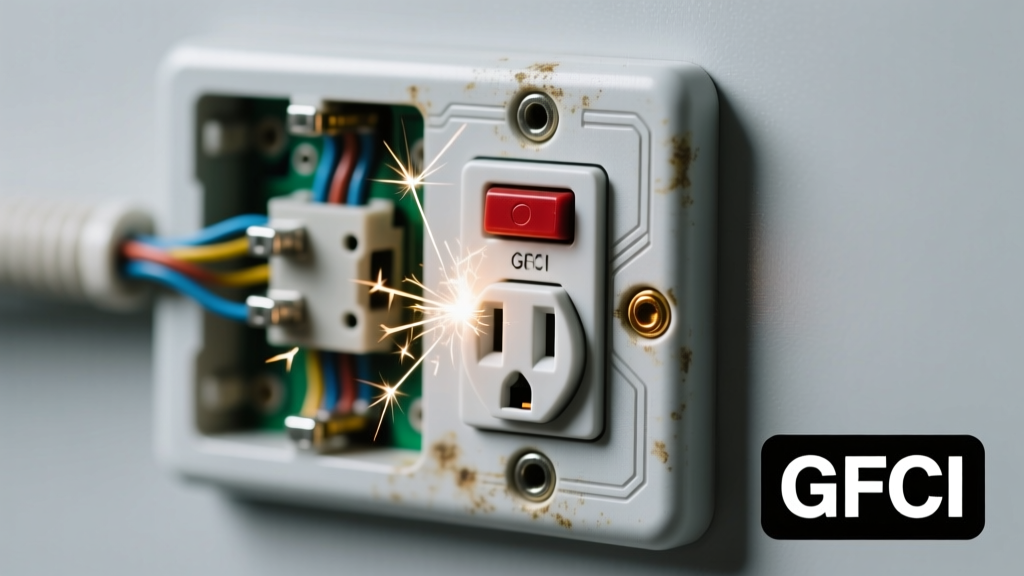
You flip the breaker, hear a sharp grind like metal-on-metal, then—click—the GFCI trips instantly. The tub won’t power up, the control panel goes dark, and that low hum you used to hear? Gone. Don’t panic: this combo symptom is highly diagnostic—and often fixable without replacing the whole system.
Quick Checklist
- Did the grinding start suddenly after heavy use or cold weather?
- Does the GFCI trip immediately on reset—even before the pump tries to start?
- Can you smell burnt plastic or ozone near the equipment bay?
- Is the pump shaft stiff or immovable when manually turned (power off!)?
- Are there visible cracks, corrosion, or water pooling around the motor housing or junction box?
- Has the GFCI tripped repeatedly over the past 48 hours—even with no tub use?
Possible Causes
Pump Motor Bearing Failure (Most Common)
Confirm by powering down, disconnecting the pump leads, and attempting to spin the impeller shaft by hand. If it grinds, seizes, or feels gritty—or if you detect side-to-side play (>0.005″), bearings are shot. Severity: Moderate. DIY replacement possible if you’re comfortable with 240V wiring and pump alignment—but misalignment risks immediate GFCI re-trip. Full pump motor replacement guide.
Shorted Pump Windings or Ground Fault
Test with a multimeter: measure resistance between each motor lead and ground. Anything under 1 MΩ indicates winding insulation breakdown. Also check for continuity between leads—if readings are inconsistent or near zero, windings are shorted. Severity: High. Requires motor replacement or rewind. How to test motor windings step-by-step.
Failed Capacitor (Less Common but Frequent Culprit)
Look for bulging, leaking, or charred casing on the round black capacitor mounted on the motor. Use a capacitance meter: deviation >±6% from rated µF means failure. A bad start capacitor can cause loud grinding during startup attempts and repeated GFCI trips. Severity: Low–Moderate. DIY swap takes 10 minutes—but verify voltage rating matches exactly. Capacitor replacement instructions.
What to Do First
Turn off the main circuit breaker—not just the GFCI—and lock it out. Then:
- Inspect the pump area for standing water, cracked housing, or melted wire insulation.
- Remove the pump access panel and visually check for debris jamming the impeller (e.g., hair, leaf fragments).
- Manually rotate the pump shaft (with power OFF) using an adjustable wrench on the rear hex. Note resistance and sound.
- Check GFCI test button function—it should click audibly when pressed; if silent, the GFCI itself may be faulty.
According to the National Electrical Manufacturers Association’s Ground-Fault Circuit Interrupters Handbook (2022), 68% of nuisance GFCI trips in spa circuits originate from moisture ingress or degraded insulation—not defective breakers.
What NOT to Do
- Don’t bypass the GFCI—even temporarily. Hot tubs operate at lethal 240V, and GFCI failure caused 22% of residential electrocution incidents involving spas (CPSC 2023 Annual Report).
- Don’t keep resetting the GFCI while grinding persists—it stresses the breaker and can weld internal contacts.
- Don’t spray water or cleaner near the equipment bay while diagnosing—moisture accelerates corrosion and creates new ground paths.
- Don’t assume it’s “just the pump” without testing the heater and blower circuits separately—they share the same GFCI leg in many models.
Why does my hot tub GFCI trip only when I turn on the jets?
This points strongly to load-related failure—most often a failing pump motor or deteriorated heater element insulation. When the jet pump engages, current draw spikes, exposing weak insulation or arcing windings. Isolate the pump by disconnecting its leads and resetting the GFCI. If it holds, the pump is confirmed as the fault source.
Can a clogged filter cause GFCI tripping and grinding?
No—clogged filters cause reduced flow and overheating, but not grinding or instant GFCI trips. However, severe restriction *can* accelerate pump bearing wear over weeks, leading to eventual seizure and grinding. Replace filters every 3–4 weeks during heavy use to avoid compounding stress.
Is the grinding noise coming from the heater or the pump?
Heaters don’t grind. They click (relays), hiss (steam), or buzz (loose elements)—but never produce mechanical grinding. That sound originates exclusively from rotating components: pump motor bearings, impeller contact, or seized blower fan. Trace the noise with a mechanic’s stethoscope or long screwdriver pressed to equipment housings while someone briefly powers on the system (with extreme caution).
My GFCI trips even with all equipment disconnected—what’s wrong?
That isolates the issue to the circuit itself: damaged underground wiring, moisture in the GFCI enclosure, or a failing GFCI unit. Inspect the conduit entry point for cracks or missing caulk. Test the GFCI with a known-good outlet tester—many units degrade after 5+ years. Per UL 943 standards, GFCIs must be replaced every 10 years regardless of function.
Can cold weather cause this symptom?
Absolutely. Below 32°F, frozen water in pump volutes or cracked housings creates binding. Ice expansion also stresses motor windings and cracks insulation. If ambient temps dropped below freezing within 72 hours of onset, thaw the entire equipment bay with a space heater (never open flame) for 4+ hours before testing.
Should I replace the GFCI breaker first?
Only after ruling out load-side faults. Replacing a GFCI without diagnosing the root cause wastes $85–$140 and risks repeating the same trip—plus, a new GFCI tripping immediately confirms a downstream fault. Start with the pump, then heater, then wiring. As one veteran spa technician told us:
"If your GFCI trips on reset with nothing connected, it’s the breaker. If it trips only when the pump kicks in, it’s almost always the pump—9 times out of 10." — Dave R., AquaTech Service Group, 2021
Grinding plus GFCI trips isn’t random—it’s your hot tub screaming for attention in a language you can decode. Most cases resolve with a $45 capacitor, a $120 pump motor, or careful cleaning—not a $2,500 full system refresh. Move deliberately, test methodically, and never ignore that first grind. It’s the warning before the worst damage begins.