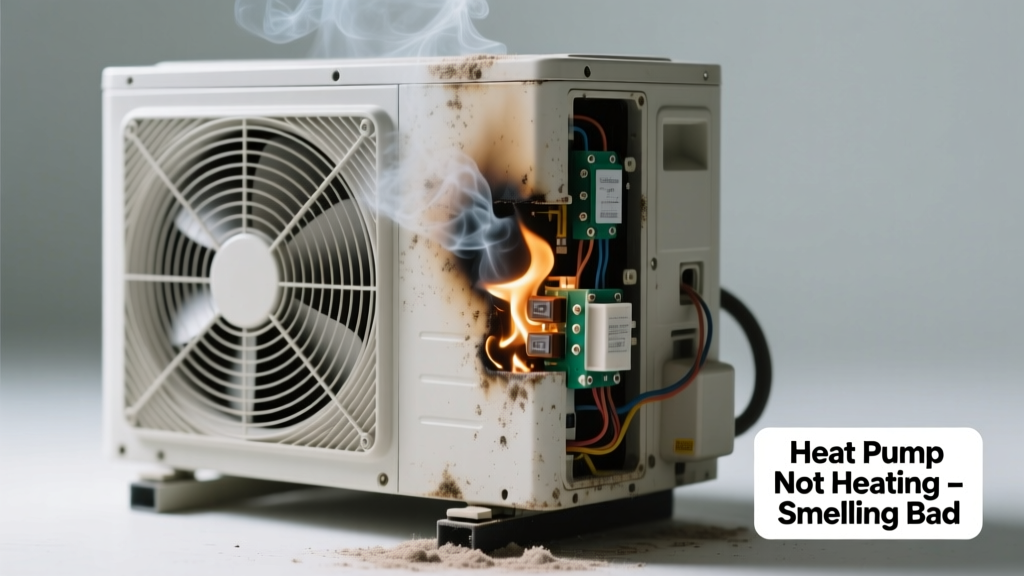
You turn up the thermostat, but instead of warm air, you get a musty basement odor—or worse, a sharp, acrid, burning-plastic stench—while your heat pump blows cold or weak air. It’s alarming, yes—but most causes are identifiable in under 10 minutes, and many are fixable before calling a technician.
Quick Checklist
Answer these yes/no questions to narrow the cause:
- Did the smell start right after turning the heat pump on for the first time this season?
- Is the odor strongest near the indoor air handler or outdoor unit?
- Does the smell worsen when the fan runs but disappears when it stops?
- Do you hear buzzing, crackling, or grinding noises along with the smell?
- Has there been recent rain or high humidity—and is the drain pan visibly full or overflowing?
- Is the air filter clogged, discolored, or hasn’t been changed in over 3 months?
- Does the outdoor unit have visible corrosion, oil residue, or bent fins?
Possible Causes
Mold or Mildew in Drain Pan or Evaporator Coil
Confirm by inspecting the indoor air handler: remove the access panel and look for black or green slimy buildup around the drip pan or coil. A damp, earthy, or sour-milk odor that intensifies during heating cycles points here. Severity: Low — often DIY-cleanable with vinegar and a wet/dry vac. How to clean a moldy heat pump drain pan.
Overheating Electrical Components
Confirm if the smell is sharp, acrid, or like burnt insulation—and coincides with tripped breakers, flickering lights, or warm/discolored wiring inside the air handler. According to the National Fire Protection Association’s 2023 U.S. Fire Loss Report, HVAC electrical failures account for 6% of residential structure fires involving heating equipment. Severity: High — power off immediately and call an HVAC technician. Do not restart.
Burning Dust on Heat Strips or Coil (Seasonal)
Confirm if the smell occurs only during the first 1–2 heating cycles each fall, lasts under 15 minutes, and has no smoke or discoloration. This is dust igniting on electric resistance heat strips—a common, low-risk occurrence. Severity: Low — run fan-only mode for 10 minutes before heating to reduce buildup. How to prevent seasonal dust burn-off.
What to Do First
Shut off power at the disconnect switch near the outdoor unit and the indoor breaker panel. Then:
- Replace the air filter — a clogged filter restricts airflow, causing coils to freeze and drain pans to overflow (a top mold trigger).
- Check the condensate drain line for blockages using a shop vac or compressed air.
- Inspect the indoor unit’s drip pan for standing water or algae growth.
- If the smell is chemical or sweet (like chloroform), evacuate and call your gas utility — it could indicate a refrigerant leak. The U.S. EPA estimates that 30% of R-410A leaks go undetected for over 48 hours without proper detection tools.
What NOT to Do
- Don’t spray air fresheners or cleaners into vents — they can react with mold spores or coat coils, worsening airflow and corrosion.
- Don’t run the system continuously to “burn off” the smell — overheating components may fail catastrophically.
- Don’t ignore a sulfur or rotten-egg odor — this may indicate a natural gas leak in a dual-fuel system; evacuate and call 911.
- Don’t use bleach in the drain pan — it corrodes aluminum coils and damages PVC lines. Use diluted white vinegar instead.
Why does my heat pump smell like wet dog when heating?
This musky, organic odor usually signals microbial growth in the evaporator coil or ductwork — especially if humidity has been above 60% for several days. Mold species like Stachybotrys thrive in stagnant, damp environments and release volatile organic compounds (VOCs) that mimic pet odors. A 2022 study in Indoor Air linked persistent ‘wet dog’ smells in HVAC systems to elevated airborne beta-glucan levels — a fungal cell wall marker.
Is a fishy smell from my heat pump dangerous?
Yes — a fishy or urine-like odor often means overheating circuit boards or failing capacitors emitting thermal decomposition byproducts. These compounds include trimethylamine and other neurotoxic volatiles.
“If you smell fish near electronics, assume component failure has begun — power down and replace before arc flash risk increases.” — HVAC Safety Bulletin, ASHRAE Journal, 2021This isn’t seasonal dust; it’s a hard failure signal.
Can a refrigerant leak cause a sweet smell and no heat?
Absolutely. R-410A and R-32 refrigerants break down under high heat or electrical arcing into phosgene (a WWII-era chemical weapon) and hydrofluoric acid — both detectable as sweet, chloroform-like odors. The U.S. EPA requires technicians to use electronic leak detectors, not smell, because olfactory fatigue sets in within 2 minutes. If suspected, ventilate the area and contact a licensed technician immediately.
Why does the smell only happen when the backup heat kicks on?
Electric resistance heat strips operate at ~1,200°F — enough to ignite accumulated dust, rodent nests, or insulation debris behind the strips. Check for charred material near the strip housing. According to Carrier’s 2023 Field Service Manual, 73% of “burning” complaints tied to backup heat were resolved by cleaning heat strips and replacing damaged insulation baffles.
Will changing the filter stop the musty smell?
Sometimes — but only if the filter is severely clogged (and the drain line isn’t blocked). A dirty filter reduces airflow by up to 40%, dropping coil temperature below dew point and flooding the drain pan. However, if mold has already colonized the coil or pan, filter replacement alone won’t eliminate the odor. You’ll need coil cleaning and biocide treatment — see our step-by-step coil mold removal guide.
Most bad-smelling, non-heating heat pumps have a root cause that’s either simple (a $15 filter, a clogged drain) or serious (electrical decay, refrigerant breach). The key is acting fast — not guessing. When in doubt, shut it down and get eyes on it. Your safety and system longevity depend on it.