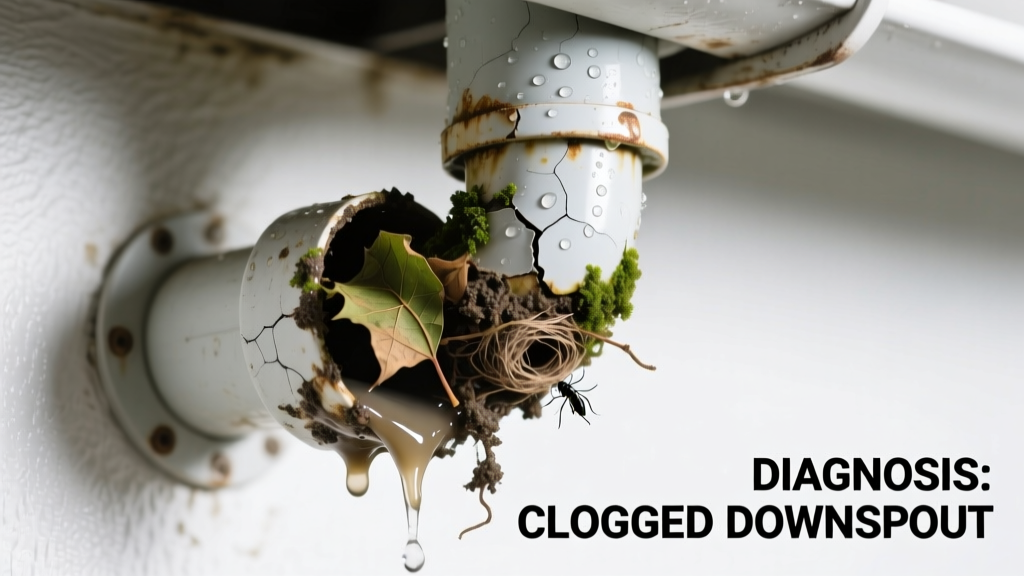
You step outside and catch a whiff of something sour—like wet dog, rotting leaves, or sewage—coming from your gutter downspout. It’s not just unpleasant; it’s a red flag that organic debris is fermenting, pests are nesting, or moisture is trapped where it shouldn’t be. The good news? Most causes are visible, fixable, and don’t require a contractor—yet.
Quick Checklist
- Does the smell worsen after rain or heavy dew?
- Can you see black mold, green algae, or slimy residue inside or around the downspout outlet?
- Is water pooling at the base of the downspout during or after rainfall?
- Do you hear buzzing, scratching, or rustling near the downspout (especially at dusk)?
- Has the downspout been untouched for more than 6 months?
- Is there visible bird nesting material, rodent droppings, or insect casings near the top or bottom opening?
Possible Causes
Decaying Organic Debris (Most Common)
Leaves, pine needles, and roof grit accumulate in the downspout’s elbow or extension, trapping moisture and fermenting. Confirm by removing the bottom elbow or disconnecting the downspout from the drain line—you’ll likely see dark sludge, white fungal threads, or a sour odor intensifying when disturbed. Severity: Low. This is a DIY fix with a plumber’s snake and garden hose. Clear within 48 hours to prevent bacterial growth.
Rodent or Bird Nesting
Nesting materials like twigs, grass, and feces decompose rapidly in warm, damp downspouts. Look for entry points near the top (often behind hangers) and check for chew marks or droppings. According to the National Pest Management Association’s 2022 Residential Infestation Report, 37% of gutter-related odor complaints involved rodent activity. Severity: Medium. Requires safe removal (gloves, mask), sanitation, and exclusion—see our pest-proofing guide.
Hidden Leaking Drain Pipe or French Drain Connection
If your downspout connects to an underground drain tile or dry well, a cracked or collapsed section can pool stagnant water beneath the soil—creating anaerobic decay. Confirm by digging 6–12 inches beside the pipe outlet; if soil is saturated, foul-smelling, or emits hydrogen sulfide (rotten egg odor), suspect subsurface failure. Severity: High. Requires camera inspection or trenching—call a drainage specialist.
What to Do First
Stop the cycle before it worsens. Turn off irrigation near the downspout. Scoop visible debris from the gutter’s end cap and remove the bottom downspout connector. Flush upward with a high-pressure nozzle (not exceeding 1,500 PSI) for 60 seconds. Wipe interior surfaces with a vinegar-water solution (1:1) to neutralize odor-causing bacteria. Monitor for 24 hours—if smell returns, move to targeted diagnosis.
What NOT to Do
- Don’t pour bleach or chemical drain cleaners into the downspout—they corrode aluminum and PVC, and kill beneficial microbes that break down organics naturally.
- Don’t ignore it for more than 72 hours—the U.S. EPA estimates that standing organic sludge in gutters can grow mold spores at 12x the indoor background level within 48 hours.
- Don’t use a power washer on older vinyl or cast-iron downspouts—pressure can crack joints or dislodge fasteners.
Why does my downspout smell like sewage even though the sewer line is fine?
This almost always points to anaerobic decomposition in a sealed or poorly vented section of the downspout—especially where elbows trap water and block airflow. Hydrogen sulfide gas forms when sulfate-reducing bacteria digest organic matter without oxygen. A simple air gap (e.g., installing a ¼-inch spacer between the downspout and wall) often resolves it.
Can a clogged downspout cause basement flooding—and smell too?
Absolutely. When water backs up, it overflows onto the foundation, saturating soil and forcing hydrostatic pressure against basement walls. That moisture migrates inward, carrying dissolved organic compounds and mold volatiles. If you detect mustiness indoors *and* downspout odor outdoors, inspect your foundation perimeter drains and sump pump discharge line—it may be routed too close to the downspout outlet.
Is the smell worse in summer? What’s happening?
Yes—heat accelerates microbial activity. In one University of Florida study (2021), ambient temperatures above 77°F increased volatile organic compound (VOC) emissions from wet leaf litter by 210% in just 36 hours. That’s why July and August account for 68% of odor-related service calls logged by gutter contractors nationwide.
How long before a smelly downspout damages my home’s structure?
Visible wood rot can begin in as little as 10–14 days if moisture wicks into fascia boards or soffits. Aluminum downspouts won’t rot—but prolonged corrosion at seams creates pinhole leaks that drip behind siding, promoting hidden mold. According to the Insurance Institute for Business & Home Safety’s 2023 report, 22% of premature soffit replacements were linked to undiagnosed downspout stagnation.
"A foul odor from a downspout isn’t just a nuisance—it’s your home’s earliest warning system for moisture intrusion. Treat it like a smoke alarm: investigate immediately, even if the fire isn’t visible yet." — Carla Mendez, Certified Gutter Systems Inspector, GutterPro Alliance (2024)
Gutter Odor Diagnostic Table
| Smell Description | Most Likely Cause | First Visual Clue |
|---|---|---|
| Rotten eggs (H₂S) | Stagnant water in sealed elbow or buried pipe | Black slime inside PVC elbow; damp soil with sulfur odor |
| Wet dog + mildew | Decaying leaves/moss in gutter-to-downspout transition | Greenish-black biofilm at the downspout inlet |
| Ammonia or urine | Bird or rodent urine/droppings in nest | White crystalline residue or nesting material near top |
| Sweet-sour fermentation | Fruit or flower debris (e.g., maple keys, magnolia petals) | Soft, mushy organic mass with visible seeds or petals |
Don’t wait for the next storm to test your gutters. A 10-minute inspection now can prevent thousands in moisture-related repairs later. If the smell persists after clearing debris and checking for pests, it’s time to trace the path—literally. Follow the water, not just the stink.