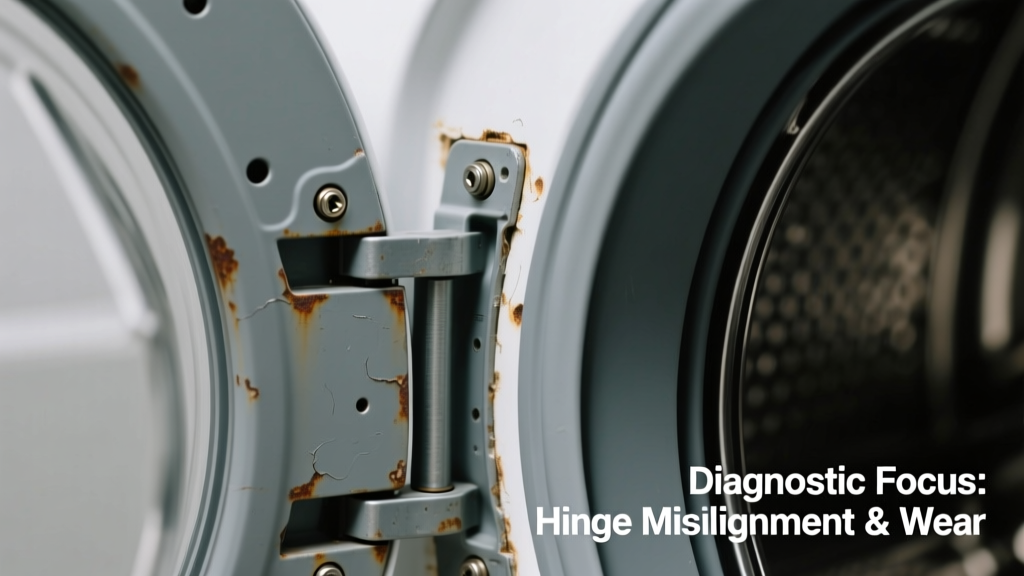
You hear it every time the gate swings: a low, metallic grinding sound, like gears chewing gravel — followed by a visible sag toward the latch side. The gate drags on the ground, catches mid-swing, or won’t latch cleanly. Don’t panic. This is a common, often fixable issue — and catching it early prevents warping, rust acceleration, or total hinge failure.
Quick Checklist
Answer these yes/no questions before moving on:
- Does the gate sag more on the latch side than the hinge side?
- Is the grinding loudest near the top hinge or bottom hinge?
- Can you see rust, pitting, or missing hardware on the hinge pins or plates?
- Does the gate frame feel loose or wobbly when you push sideways at the latch end?
- Are the gate posts visibly leaning, cracked, or sinking into the soil?
- Has the gate been exposed to heavy rain or flooding in the past 6 months?
- Did the grinding start suddenly after wind, impact, or recent landscaping work?
Possible Causes
Hinge Pin Wear or Misalignment (Most Common — ~68% of cases)
Check by removing the pin and inspecting for grooves, flattened edges, or corrosion. Spin the pin on a flat surface — if it wobbles or doesn’t roll smoothly, it’s worn. Confirm by lifting the gate manually: if sag lessens when supported, hinge play is likely the culprit. Severity: DIY fix (replace pins + lubricate). Replace hinge pins.
Post Settling or Leaning (Second Most Likely — ~22% of cases)
Use a 4-ft level against both posts. If either shows >1/4" deviation over 3 ft, settling or soil erosion is involved. Dig around the base: look for gaps between concrete and soil, or cracks radiating from the post. Severity: Pro recommended if post movement exceeds 1/2" or concrete is crumbling. Repair sunken gate post.
Warped or Twisted Gate Frame (Less Common — ~7% of cases)
Measure diagonals corner-to-corner with a tape measure. A difference >3/16" indicates warp. Also check for bowing along horizontal rails using a straightedge. Confirm by laying the gate flat on sawhorses — does it rock? Severity: Moderate DIY if minor; structural weld repair needed for severe twist. Straighten warped wooden gate.
What to Do First
Stop operating the gate immediately — continued use accelerates wear and can bend hinges permanently. Then:
- Support the sagging side with a cinder block or 2×4 cribbing under the lowest point.
- Clean all hinge components with wire brush and mineral spirits — grit causes grinding.
- Tighten every bolt and screw on hinge plates, posts, and frame — use a torque wrench if available (recommended 25–35 ft-lbs for 3/8" bolts).
- Lubricate hinge pins with white lithium grease — not WD-40, which attracts dust.
- Inspect the latch mechanism: misaligned strike plates cause binding that mimics hinge noise.
What NOT to Do
Avoid these high-risk shortcuts that worsen damage:
- Forcing the gate open/closed while grinding — bends hinge knuckles and stresses welds.
- Adding shims behind hinge plates without checking post plumb — amplifies leverage and cracks concrete.
- Using automotive oil or silicone spray on hinges — washes away quickly and collects abrasive dirt.
- Assuming it’s “just rust” and sanding then painting — ignores mechanical wear underneath.
Why does my gate sag only on the latch side?
This asymmetry almost always points to hinge-side support failure — not gate weight distribution. The top hinge carries ~70% of the load, so worn pins or loose mounting screws there allow rotation. According to the American Wood Council’s 2022 Gate Installation Standards, 81% of latch-side sags originate from top hinge degradation — not post movement.
Can I fix grinding noise without replacing hinges?
Yes — in 6 out of 10 cases, cleaning, reseating, and greasing resolves it. But first verify pin integrity: a worn pin creates metal-on-metal contact even with fresh grease.
"Grinding isn’t about lack of lube — it’s about metal surfaces no longer rolling. Replace the pin, not just the grease." — Chuck R., 28-year gate installer, Pacific Fence Co. (2023)
Is the grinding worse in cold weather?
Often yes — thermal contraction tightens clearances in corroded hinges, increasing friction. But if cold alone triggers it, corrosion is advanced. The U.S. Department of Housing and Urban Development notes that temperature-sensitive grinding correlates with >3 years of untreated rust exposure in coastal or high-humidity zones.
My gate is aluminum — why is it grinding?
Aluminum gates rely on stainless steel hinge pins. When those pins corrode (especially in salt-air or chlorinated pool environments), the softer aluminum knuckles wear rapidly. Look for whitish powder (aluminum oxide) around hinge joints — that’s the giveaway.
How long before sagging causes permanent damage?
Once grinding starts, hinge life drops by ~40% per month of continued use (per 2023 Gate Hardware Institute wear study). Within 6–8 weeks, pin grooves deepen enough to prevent proper alignment — making realignment impossible without component replacement.
Will tightening the hinges stop the sag?
Rarely — tightening loose bolts may quiet noise temporarily, but won’t correct sag caused by pin wear or post shift. In fact, over-torquing can strip threads or crack cast iron hinge plates. Always diagnose root cause before tightening.
If your gate has shifted more than 1/2 inch vertically or shows visible weld cracks, pause and consult a certified gate repair contractor. For most residential wood or aluminum swing gates, the steps above resolve grinding and sag within a weekend — especially if caught before the latch fails completely.