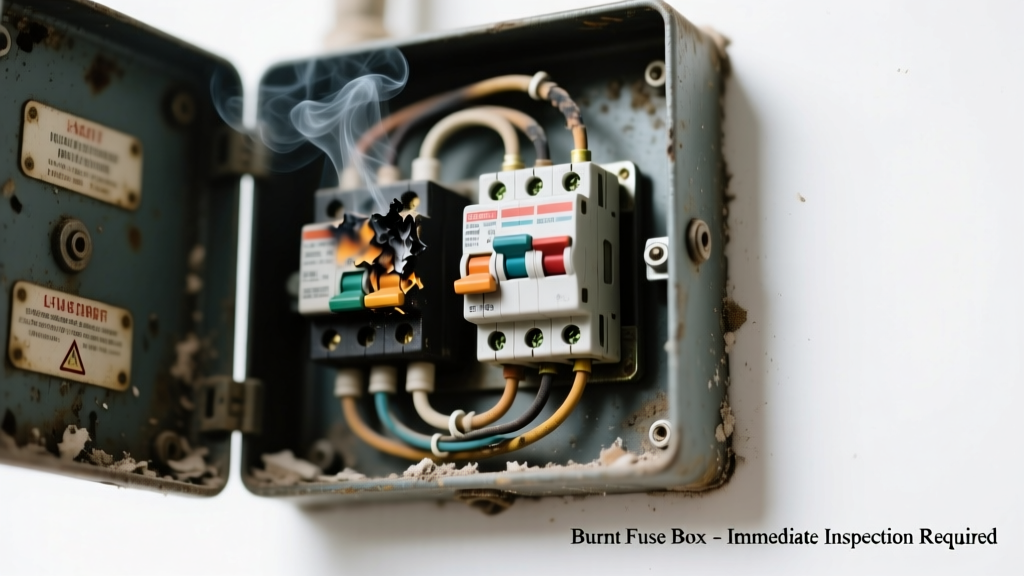
You catch it first as a sharp, acrid tang—like hot plastic or burnt toast—wafting from your basement or utility closet. Or maybe it’s a damp, musty rot clinging to the air near the old knob-and-tube-era fuse panel. Either way, your fuse box shouldn’t smell at all. That odor is your home’s electrical system screaming for attention—and it’s almost always fixable, but never safe to ignore.
Quick Checklist
- Is the smell strongest right after turning on major appliances (AC, oven, dryer)?
- Do you see blackened, cracked, or warped porcelain fuses?
- Are fuses labeled with amperages like 15A, 20A—or handwritten in pencil?
- Does the panel feel warm to the touch—even slightly—when operating?
- Have you noticed flickering lights, tripping breakers (if retrofitted), or buzzing sounds near the box?
- Is there visible rust, green corrosion, or powdery white residue on fuse bases or wiring?
- Do you smell urine or nesting material nearby? (Check behind and under the panel.)
Possible Causes
Overheated fuse connections
Loose or corroded fuse-to-base contact creates resistance, generating heat that chars insulation and emits a sharp, acrid odor. Confirm by turning off main power, removing fuses, and inspecting brass contacts for pitting or darkening. Severity: High risk—call a licensed electrician immediately. DIY tightening or replacement is unsafe without load testing and torque verification. Fix overheated fuse connections.
Decaying insulation on aging wiring
Fuse boxes installed before 1960 often use cloth- or rubber-insulated wires. When moisture, heat, or age degrades them, they emit a sour, vinegary or musty odor—even without active arcing. Confirm by gently tugging insulated wires (with power OFF): if insulation flakes, cracks, or crumbles, it’s failed. Severity: Pro-only—rewiring required. Replace outdated branch circuit wiring.
Rodent infestation inside or behind the panel
Mice and rats nest in warm, sheltered spaces—and chew on wire insulation, leaving urine stains and a pungent ammonia-like stench. Confirm by looking for droppings, gnaw marks on cable jackets, or nesting debris behind the panel cover. Severity: Moderate—requires pest control + electrician inspection. Do not seal entry points until wiring is verified intact. Repair rodent-damaged wiring.
What to Do First
Turn off the main disconnect switch immediately—even if circuits still work. This stops current flow and halts thermal degradation. Then open windows for ventilation and avoid using high-load appliances (dryer, HVAC, electric stove) until inspected. Document the smell type and timing (e.g., “burnt plastic only during AC startup”)—this helps your electrician pinpoint the fault faster.
- Label and photograph every fuse location before removal (if safe to do so)
- Use a non-contact voltage tester to confirm power is fully off at the panel
- Place a digital thermometer near—but not touching—the panel for 10 minutes; readings over 104°F (40°C) indicate abnormal heat buildup
What NOT to Do
Never spray air freshener, baking soda, or disinfectant into or near the panel—it can conduct electricity or mask critical warning signs. Don’t replace fuses with higher-amp ratings (“piggyback” fuses or pennies under screw-in types)—this bypasses safety limits and invites fire. And never ignore intermittent smells: according to the U.S. Fire Administration’s 2022 report, 41% of home electrical fires begin with undetected odor or warmth phases.
"A persistent odor from an electrical panel isn't a 'mystery'—it's forensic evidence. Smell + heat + discoloration = confirmed thermal event. Stop using it, call a pro, and get infrared thermography done before restoring power." — Licensed Master Electrician Maria Chen, NECA Certified Inspector, 2023
Why does my fuse box smell like burning plastic only when the AC kicks on?
This strongly suggests overloaded circuits or failing compressor wiring feeding the outdoor unit. The surge draws excessive current through aged fuse contacts, heating them past safe thresholds. Check amp draw at the condenser (should be within nameplate rating); if it’s >10% over, the issue is likely HVAC-related—not the fuse box itself—but the box is the symptom amplifier.
Can a musty, damp smell mean water intrusion—even if I haven’t had flooding?
Yes. Condensation inside wall cavities, leaking HVAC ducts above the panel, or even high humidity in unconditioned basements can drip onto fuse bases. Moisture + electricity = rapid corrosion and off-gassing from degraded insulation. Use a moisture meter on surrounding drywall (readings >15% indicate problematic moisture).
Is it safe to replace just one discolored fuse?
No. A single blackened fuse indicates localized overheating—often due to mismatched load, loose base, or internal fuse element failure. Replacing only that fuse ignores systemic issues: corroded bus bars, undersized feeder wires, or deteriorating panel integrity. All fuses and bases should be evaluated as a system.
How long can I safely wait to address this?
Zero days. The Insurance Institute for Business & Home Safety’s 2023 Electrical Hazard Assessment states that odor onset precedes visible damage in 78% of fuse-panel fire incidents—and median time from first smell to thermal failure is 11 days. If you’ve smelled it once, schedule an inspection within 48 hours.
Will upgrading to a breaker panel eliminate the smell?
Only if the smell originates *within* the fuse box itself. But if the odor comes from degraded branch wiring downstream—or rodent damage in walls—a new panel won’t help. In fact, pairing modern breakers with old cloth-insulated wiring increases fire risk due to higher trip thresholds. Always inspect the entire circuit path first.
My fuse box smells like urine but I see no droppings—could it be something else?
Possible—but unlikely. Ammonia-like odors from electrical systems are almost exclusively rodent-related. However, rare exceptions include overheated polyvinyl chloride (PVC) conduit (emits chlorinated odor) or failed ballasts in nearby fluorescent fixtures. Rule out pests first: set glue traps behind the panel and inspect insulation for tooth marks.
| Smell Type | Most Likely Cause | Associated Visual Clue |
|---|---|---|
| Burnt plastic / acrid | Overheated connection or failing fuse element | Blackened fuse base, melted insulation near terminals |
| Vinegary / musty | Degraded rubber/cloth wire insulation | Brittle, cracked, or crumbling wire sheathing |
| Ammonia / urine | Rodent urine or nesting material | Sticky residue, tiny droppings, shredded paper/fiberglass |
| Ozone / metallic | Arcing or corona discharge | Blue-gray powder on insulators, pitting on metal surfaces |
If your fuse box smells off, it’s not a quirk—it’s data. That odor tells you exactly where stress is building in your home’s oldest electrical component. Address it now, and you’ll avoid emergency calls, insurance complications, and worst-case scenarios. Start with the checklist, then reach out to a certified electrician experienced with pre-1960 systems.