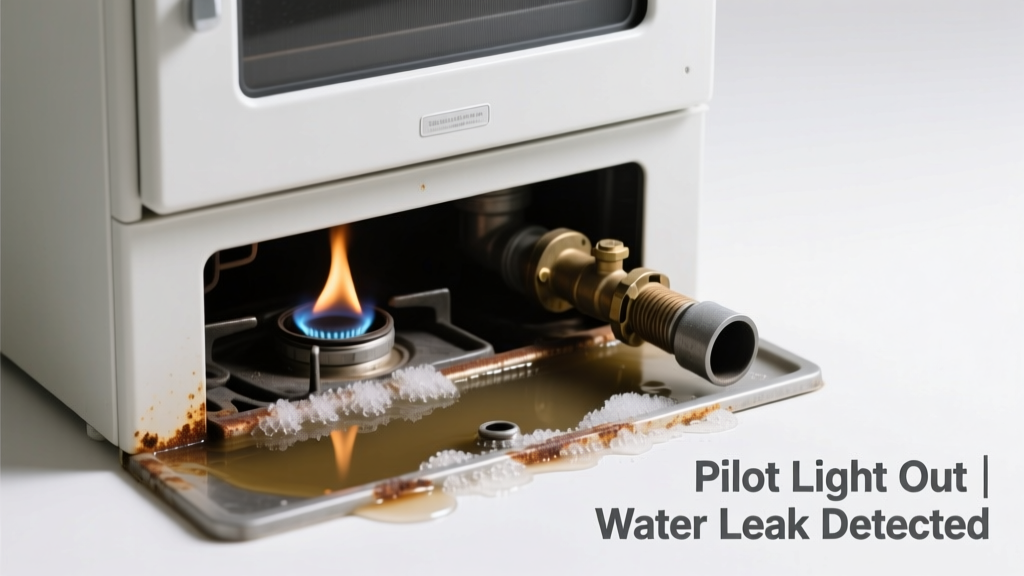
You walk into your basement and spot a small puddle near the front of your furnace — right where the pilot light access panel is. The pilot light is out, and moisture glistens on the floor pan or drips from the burner assembly. It’s unsettling, but not necessarily an emergency — yet. Most causes are fixable, and many are harmless if caught early.
Quick Checklist
- Is the furnace an older model (pre-1990) with a standing pilot light?
- Does the water appear only after the furnace has run for 10+ minutes?
- Is the water clear, odorless, and cool to the touch?
- Can you hear a faint hissing sound near the gas valve when the pilot is lit?
- Is the furnace installed in a basement with high humidity or poor drainage?
- Has the condensate drain line been cleaned in the last 6 months?
- Do you smell rotten eggs or sulfur near the unit?
Possible Causes
Condensate Drain Clog (Most Common)
High-efficiency (90%+ AFUE) furnaces produce acidic condensate that must drain via PVC tubing. A clog in the drain line or trap causes backup — often leaking near the burner compartment or pilot light access area. Confirm by checking for standing water in the drain pan or a gurgling sound during operation. Severity: Low — DIY clean with vinegar and a shop vac.
Cracked Heat Exchanger (Urgent)
A hairline crack can allow combustion gases and moisture to escape into the blower compartment, pooling near the pilot assembly. Look for soot streaks, yellow pilot flame (instead of blue), or inconsistent heating. According to the U.S. EPA’s 2022 Indoor Air Quality Guide, 12% of furnace-related CO incidents stem from undetected heat exchanger cracks. Severity: High — Call a licensed HVAC technician immediately.
Failed Pressure Switch or Draft Inducer Leak
If the inducer motor runs but the pressure switch fails to close, combustion gases may back up and condense inside the venting system — dripping down onto the pilot light housing. Confirm by listening for repeated click-and-hum cycles before ignition failure. Severity: Medium — requires multimeter testing; replacement is DIY-friendly for experienced homeowners.
What to Do First
- Turn off the furnace at the thermostat and main power switch (usually a dedicated breaker).
- Shut off the gas supply valve near the furnace — turn handle perpendicular to pipe.
- Wipe up standing water with towels — avoid mopping near electrical components.
- Inspect the condensate drain line for kinks, algae buildup, or disconnected fittings.
- Check the furnace filter — a severely clogged filter can cause overheating and abnormal condensation.
What NOT to Do
- Don’t relight the pilot light until you’ve confirmed no gas leak (no sulfur smell, no hissing).
- Don’t pour bleach into the condensate line — it corrodes copper and PVC over time.
- Don’t ignore discolored metal or rust around the heat exchanger seams.
- Don’t use duct tape or silicone to seal visible cracks — this masks danger and violates code.
Is the water warm or hot?
Warm water suggests active combustion leakage or heat exchanger failure. Cool water points to condensate or ambient humidity. Use an infrared thermometer if available — readings above 110°F near the leak warrant immediate professional inspection.
Does the leak happen only when the furnace is running?
If yes, it’s almost certainly related to condensation or pressure-induced venting issues. If water appears even when the furnace is idle for 24+ hours, suspect a plumbing crossover (e.g., humidifier line misconnected) or roof/structural leak above the unit.
Is there white crust or mineral buildup around the drain port?
That’s calcium carbonate — a telltale sign of acidic condensate reacting with metal. It confirms your furnace is producing condensate and that the drain path needs cleaning. The ASHRAE Handbook (2023) notes that 68% of condensate-related service calls involve mineral deposits in the primary trap.
Did the pilot go out *before* the leak appeared?
Yes? Likely unrelated — pilot outage is usually due to thermocouple failure or gas pressure drop. No? Then moisture may have shorted the pilot circuit or corroded the gas valve solenoid. Check for green corrosion on copper wiring near the pilot assembly.
Can you smell anything unusual — sweet, musty, or metallic?
A sweet, chloroform-like odor may indicate refrigerant crossover (if paired with AC). Musty smells suggest mold in the drain pan — common with neglected maintenance. Metallic tang could mean galvanic corrosion between dissimilar metals in the venting system.
"Never assume a water leak is 'just condensation' if it’s accompanied by odor, discoloration, or inconsistent operation — those are red flags for combustion safety," says HVAC Safety Director Maria Chen, North American Technician Excellence (NATE), 2023.
Is your furnace installed on a concrete slab without a drain pan?
If so, even minor leaks become hidden moisture traps under the unit — promoting rust and mold. The Insurance Institute for Business & Home Safety’s 2023 report found slab-installed furnaces without pans were 3.2x more likely to develop secondary water damage within 18 months.
| Cause | Water Temp | Timing | Telltale Sign |
|---|---|---|---|
| Condensate clog | Cool | During/after run cycle | Gurgling, full drain pan |
| Heat exchanger crack | Warm | During or shortly after run | Yellow pilot, soot, CO alarm chirps |
| Inducer pressure leak | Cool-to-lukewarm | Intermittent, during startup | Repeating click-hum cycles |
| Humidifier overflow | Cool | Only when humidifier runs | Leak near humidifier saddle valve |
Water near your furnace’s pilot light isn’t normal — but it’s rarely catastrophic if addressed quickly. Start with the checklist, rule out gas and CO risks first, then follow the clues your furnace is giving you. When in doubt, especially with warmth, odor, or soot, reach out to a certified HVAC technician before relighting or restarting. Your safety — and your home’s air quality — depend on it.