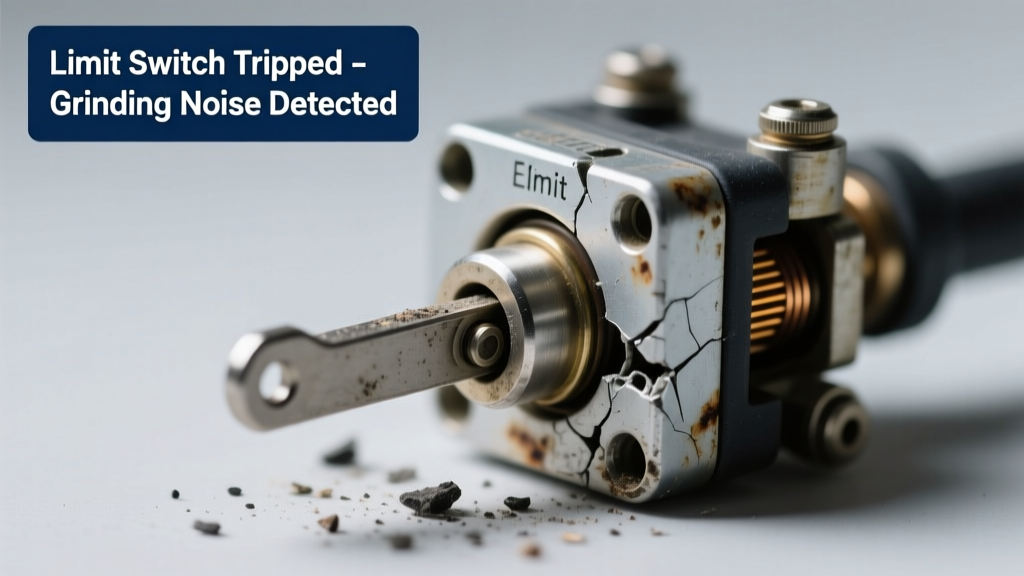
You hear a sharp, metallic grinding sound — like gears chewing gravel — then your furnace cuts out mid-cycle, and the limit switch trips. The blower stops, heat vanishes, and you’re left staring at a cold duct register. Don’t panic: this isn’t always catastrophic, but it *is* urgent. Most causes are fixable — if caught early.
Quick Checklist
- Did the grinding start *just before* the furnace shut down?
- Does the noise come from the blower compartment (front/bottom of furnace)?
- Is the air filter visibly clogged or over 3 months old?
- Can you smell burning dust or hot metal when the unit runs?
- Has the furnace been running longer than usual cycles lately?
- Is the blower wheel wobbling or scraping the housing when manually spun?
- Do you hear the grinding only during startup or shutdown?
Possible Causes
Blower motor bearing failure
Confirm by turning off power, removing the blower access panel, and spinning the wheel by hand. If it grinds, feels gritty, or has side-to-side play >1/16″, bearings are shot. Severity: Pro-only — replacing bearings requires motor disassembly and alignment. Replace blower motor.
Clogged air filter causing overheating
Check filter: if it’s gray-black, stiff, or blocks light when held to a window, airflow is restricted. Overheating triggers the limit switch *and* strains the motor, accelerating bearing wear. Severity: DIY in 5 minutes. Replace air filter.
Blower wheel bent or misaligned
Inspect wheel for dents, cracks, or debris (e.g., insulation scraps). Spin slowly: if it scrapes the housing at one point, it’s warped. Severity: DIY if minor; replace wheel if bent >0.02″ (use feeler gauge). Replace blower wheel.
What to Do First
Turn off power at the furnace disconnect switch (not just the thermostat). Wait 10 minutes for components to cool. Then check and replace the air filter — even if it looks okay. According to the U.S. EPA, 14% of household heating energy waste stems from dirty filters that force systems to overheat and cycle abnormally (EPA Energy Star Guide, 2022).
- Verify the furnace is getting proper voltage (120V at blower motor leads)
- Inspect blower wheel for visible damage or obstructions
- Feel the heat exchanger surface (after cooling) — any warping or cracks?
- Reset the limit switch only once — if it trips again within 10 minutes, stop and call a pro
What NOT to Do
Never bypass the limit switch with tape, wire, or a paperclip. This risks heat exchanger cracking, carbon monoxide leaks, or fire — the Insurance Institute for Business & Home Safety reports that 27% of furnace-related home fires involve tampered safety controls (IBHS Residential Fire Safety Report, 2023).
- Don’t run the furnace with the blower access panel removed — airflow imbalance worsens overheating
- Don’t ignore grinding that persists after filter change — bearings degrade rapidly once noisy
- Don’t assume “it’s just dust” if the noise is rhythmic and metallic — that’s mechanical failure, not debris
Is the grinding coming from the inducer motor instead of the main blower?
Inducer motors (smaller, near the heat exchanger) make high-pitched whines or buzzing when failing — but true grinding usually means worn bushings or cracked fan blades. If noise is loudest near the exhaust vent pipe, inspect the inducer assembly. Inducer motor replacement steps.
Could a failing capacitor cause both grinding and limit trips?
No — capacitors don’t grind. But a weak start/run capacitor can cause the blower motor to labor, overheat, and trip the limit. You’ll hear humming or delayed startup, not grinding. Test capacitance with a multimeter: deviation >±6µF from rated value means replace. How to test a furnace capacitor.
Why does the limit switch keep tripping *after* I reset it?
Because the underlying overheating hasn’t been resolved. Each trip degrades the switch’s internal contacts. After 3+ resets in one day, assume permanent damage — replacement is needed. The switch itself costs $12–$28, but diagnosing *why* it’s tripping saves $300+ in emergency service calls.
Can a cracked heat exchanger cause grinding noise?
Rarely — cracks cause hissing, popping, or combustion gas odors, not grinding. However, a severely warped exchanger can vibrate against the blower housing, mimicking grinding. If you detect exhaust odor or soot buildup near burners, shut down immediately and call a certified HVAC technician.
"Grinding + limit trip is almost always a mechanical issue upstream of the heat exchanger — focus on airflow and moving parts first, not combustion." — NATE-certified technician, HVAC Excellence Field Manual, 2021
Should I clean the flame sensor if my furnace is grinding?
No. A dirty flame sensor causes lockouts or ignition failure — not grinding. Cleaning it won’t stop metal-on-metal noise. Save that step for no-heat or short-cycling issues without sound.
| Sound Description | Most Likely Component | Urgency Level |
|---|---|---|
| Rhythmic, low-pitched scrape every 2–3 seconds | Bent blower wheel | High — risk of motor seizure |
| Constant high-frequency whine + grinding | Failing inducer motor bearings | Medium — may run 1–2 weeks more |
| Intermittent grinding only at startup | Worn blower motor start capacitor | Low — but monitor closely |
| Grinding that worsens as furnace runs longer | Overheated blower motor bearings | Critical — shut down now |
If the grinding returns after filter replacement and visual inspection, the blower motor or wheel needs professional evaluation. Delaying repair risks seizing the motor shaft — a $420+ part-and-labor job versus $180 for early bearing replacement. When in doubt, find a licensed HVAC technician who offers same-day diagnostics — many charge under $95 just to identify the source.