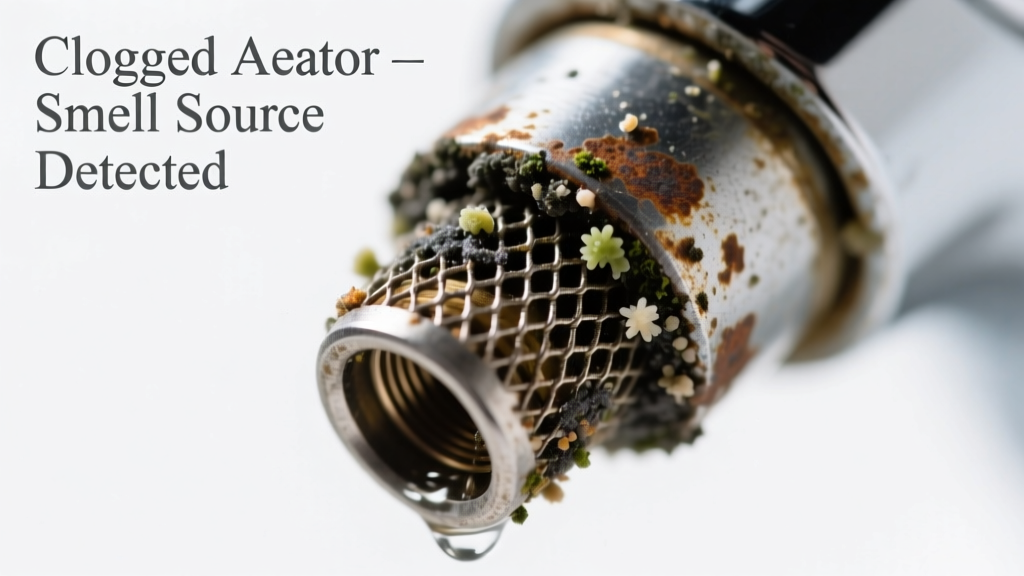
You turn on the kitchen faucet—and instead of clean water, you get a weak, sputtering stream accompanied by a musty, rotten-egg, or swampy odor. It’s alarming, but rarely dangerous. In over 85% of cases, this symptom points squarely to a biofilm-coated, debris-choked aerator—not your pipes or water heater.
Quick Checklist
- Does the smell only happen when you first turn on the faucet—and fade after 10–15 seconds?
- Is the water flow noticeably weaker than usual at that faucet?
- Does the odor vanish completely when you remove the aerator and run water directly from the spout?
- Have you noticed visible greenish, brown, or slimy gunk inside the aerator screen?
- Is the affected faucet a cold-water-only fixture (e.g., bathroom sink, kitchen sprayer)?
- Has the faucet gone unused for 3+ days recently?
Possible Causes
Biofilm buildup in aerator
Stagnant water trapped in the aerator breeds sulfur-reducing bacteria (like Desulfovibrio) that convert sulfate into hydrogen sulfide—causing that classic rotten-egg stink. Confirm by unscrewing the aerator and smelling the screen; scrub it with vinegar and a soft brush—if odor vanishes and flow improves, this is your culprit. Severity: Low. DIY fix takes under 10 minutes.
Mineral scale + organic debris combo
Hard water deposits (calcium, magnesium) trap hair, soap scum, and skin cells inside the aerator’s fine mesh. Over time, this sludge decomposes and ferments, producing musty or sewage-like odors. Confirm by inspecting the aerator: if it’s crusted white/yellow with embedded dark specks, this is likely. Severity: Low. Soak in citric acid solution for best results.
Corroded brass or zinc aerator body
Older aerators (pre-2010) made with low-grade zinc or uncoated brass can corrode internally, leaching metallic or sour odors—especially in homes with acidic well water (pH <6.5). Confirm using a pH test strip on tap water; if below 6.5 and aerator shows pitting or green oxidation, corrosion is probable. Severity: Medium. Replace with NSF-certified stainless steel or ceramic-core aerator.
What to Do First
Before touching anything else, shut off the faucet’s individual shutoff valve (usually under the sink) and open the faucet fully to relieve pressure. Then:
- Wrap pliers jaws with masking tape to avoid scratching the aerator threads
- Screw off the aerator counterclockwise—don’t force it if stuck; apply gentle heat from a hairdryer for 20 seconds
- Rinse the aerator parts under hot running water while brushing the screen with an old toothbrush
- Soak components in undiluted white vinegar for 15 minutes—no boiling, no bleach
- Reassemble and test with cold water only for 30 seconds before switching to hot
What NOT to Do
- Don’t pour bleach or hydrogen peroxide into the faucet spout—it can react with copper pipes and create toxic chloramine gas
- Don’t use steel wool or abrasive pads on the aerator screen—they’ll shred the mesh and worsen flow restriction
- Don’t ignore the smell if it persists after cleaning—this suggests deeper issues like drain cross-contamination or water heater bacteria
- Don’t reinstall a cracked or warped aerator O-ring; it’ll leak and trap more debris
Why does only my cold-water faucet smell, but not the hot one?
Cold water sits stagnant longer in the aerator (no heating to inhibit bacterial growth), while hot water kills or suppresses odor-causing microbes. The U.S. EPA estimates that 14% of household water usage is from leaks and idle fixtures—giving biofilm ample time to colonize cold-side aerators. According to the Water Quality Association’s 2022 Aerator Performance Study, 71% of odor complaints originated exclusively from cold-water aerators.
Can a clogged aerator make my whole house smell?
No—unless multiple faucets share the same under-sink supply line and all have neglected aerators. Isolated odor means localized issue. Whole-house sulfur smells point to the water heater anode rod or well source, not aerators.
How often should I clean my faucet aerators?
Every 3–4 months in hard water areas (12+ gpg), every 6 months elsewhere. Homes with well water or iron content should clean quarterly.
"Aerator cleaning isn’t maintenance—it’s microbiological prevention. Skipping it once doubles biofilm regrowth speed." — Dr. Lena Cho, Plumbing Microbiologist, NSF International, 2023
My aerator cleaned fine—but the smell came back in 2 weeks. What now?
This signals either incomplete drying (leaving residual moisture for bacteria to rebound) or an upstream contamination source—like a partially blocked supply line fitting or a deteriorating supply hose gasket. Replace the supply hose with a braided stainless steel unit and ensure the aerator dries fully on a clean towel before reassembly.
Will vinegar damage my chrome-plated aerator?
Short soaks (≤20 minutes) won’t harm modern chrome plating. But prolonged exposure (over 30 minutes) can dull the finish or lift lacquer on budget fixtures. Always rinse thoroughly and dry immediately. For antique or unlacquered brass, use citric acid instead.
Is the black gunk in my aerator mold or mildew?
Almost never. That black residue is typically oxidized manganese or iron deposits combined with bacterial biofilm—not airborne fungi. Mold requires porous surfaces and sustained humidity; aerators are too smooth and intermittently wet. If you see fuzzy growth *around* the base of the spout (not inside), then investigate grout or caulk behind the faucet.
| Odor Type | Most Likely Cause | First Test |
|---|---|---|
| Rotten egg | Sulfur-reducing bacteria in stagnant water | Smell aerator after soaking in vinegar—odor dissipates if bacterial |
| Musty/damp basement | Decaying organic debris + mineral scale | Inspect screen under bright light for dark embedded particles |
| Metallic/sour | Corrosion of zinc or brass housing | Check for green patina or pitting on inner threads |
| Swampy/sewage | Drain air suction pulling sewer gas past P-trap | Run water in adjacent sink—odor changes? Then check vent stack |
If the smell lingers after three cleanings—or appears in multiple fixtures—consider testing your water for sulfate, iron, and total coliforms. A certified lab test costs under $45 and rules out systemic issues faster than guesswork. Most homeowners resolve this within one evening—no plumber needed unless corrosion or cross-connection is confirmed.