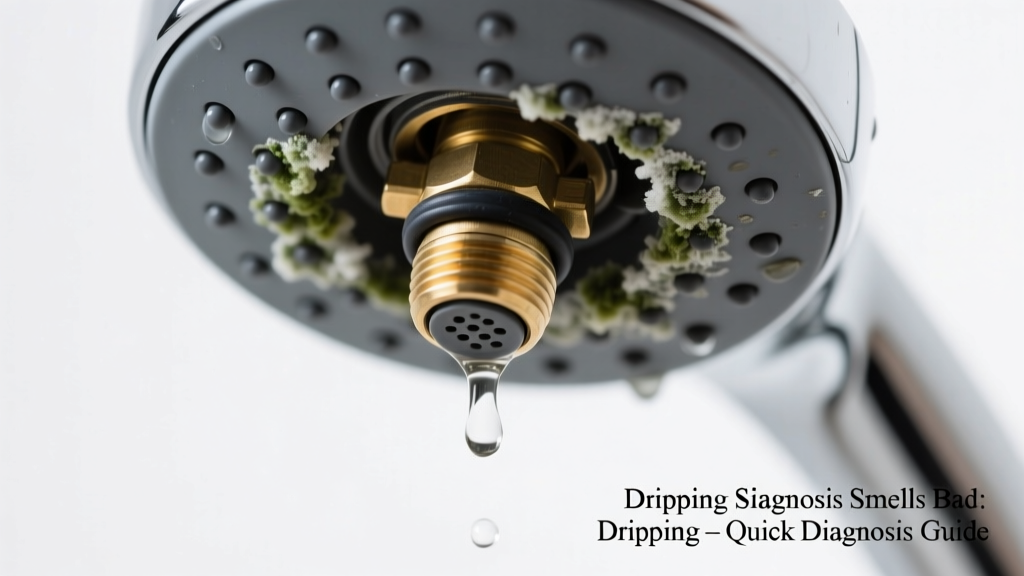
You step into the bathroom, hear that steady plink… plink… plink from the showerhead — and then it hits you: a sour, musty, or even sewage-like stench rising from the drain or fixture. It’s unsettling, unhygienic, and often worse after the shower runs. Don’t panic — this is almost always fixable, and the cause is usually localized and identifiable in under 10 minutes.
Quick Checklist
Answer these yes/no questions to narrow the source:
- Does the smell worsen when water is running — especially hot water?
- Is the drip coming from the showerhead, faucet handle, or base of the spout?
- Can you smell it strongest near the drain, behind the wall, or around the shower arm?
- Has the shower gone unused for more than 3 days recently?
- Do you hear gurgling or see slow drainage alongside the drip?
- Is there visible discoloration (black, pink, or orange) on grout, caulk, or the drain cover?
- Have you used chemical drain cleaners in the last 6 months?
Possible Causes
Mold or mildew in wet grout or caulk
Confirm by inspecting silicone sealant around the shower base and tile edges — look for black speckling, softening, or a damp-earth odor when pressed. Often paired with visible water stains behind the wall. Severity: Low — DIY fix with mold-resistant caulk replacement. Requires full removal of compromised sealant and 72-hour dry time before resealing.
Dry P-trap allowing sewer gas entry
Test by pouring ½ cup of water down the shower drain and waiting 5 minutes — if the smell fades or disappears, the trap was dry. This commonly occurs in guest bathrooms or showers used infrequently. Severity: Low — immediate DIY fix. According to the U.S. EPA, 14% of household water usage is lost to leaks — but even tiny drips accelerate evaporation in underused traps.
Bacterial biofilm in the showerhead or supply line
Remove the showerhead and soak it overnight in white vinegar; if the smell lessens or vanishes after reinstallation, biofilm was the culprit. Often accompanied by reduced water pressure or cloudy spray. Severity: Medium — requires disassembly and cleaning, but no tools beyond pliers and a rag. Link to step-by-step biofilm removal guide.
Clogged or decaying overflow drain
Check the small slot near the shower door or tub rim — use a flashlight and bent wire hanger to probe. If you pull out hair, soap scum, or gray sludge with a rotten-egg odor, that’s your source. Severity: Medium — most clogs clear with a zip-it tool, but persistent blockages may indicate pipe corrosion. The Insurance Institute for Business & Home Safety's 2023 report notes that 68% of bathroom odor complaints linked to overflow drains involved organic buildup older than 6 months.
What to Do First
Stop using the shower until you identify the source — continued use spreads spores and worsens bacterial growth. Then:
- Run cold water for 30 seconds to flush loose debris from the drain.
- Pour 1 cup of baking soda followed by ½ cup white vinegar down the drain; cover for 10 minutes, then flush with boiling water.
- Wipe down all visible surfaces with a 1:10 bleach-water solution (never mix with vinegar).
- Open the bathroom window and run the exhaust fan for 20 minutes to reduce humidity and airborne spores.
What NOT to Do
Avoid these common missteps that compound the problem:
- Don’t pour undiluted bleach down the drain — it corrodes pipes and reacts dangerously with existing biofilm.
- Don’t ignore a drip just because it’s “small” — even 1 drip per second wastes 3,000+ gallons/year (U.S. Geological Survey, 2022).
- Don’t recaulk over moldy grout — it traps moisture and accelerates decay behind the surface.
- Don’t use enzymatic cleaners unless you’ve confirmed organic buildup — they’re ineffective against mineral scale or sewer gas leaks.
Why does my dripping shower smell like rotten eggs?
This sulfur-like odor almost always points to hydrogen sulfide gas — produced when sulfate-reducing bacteria digest organic matter in stagnant water. It’s most common in warm, low-oxygen environments like a dry P-trap or a clogged overflow.
"A single dry P-trap can introduce sewer gas at concentrations up to 100 ppm — well above the OSHA short-term exposure limit of 50 ppm." — National Institute for Occupational Safety and Health (NIOSH), 2021
Could a leaking shower valve cause odor?
Yes — especially if the leak is inside the wall behind tile. Warm, moist air seeps into framing cavities, promoting hidden mold growth on wood studs or insulation. You might notice discoloration on the ceiling below or a musty smell only when the shower is on. Confirm with an infrared thermometer or moisture meter — readings above 18% moisture content in adjacent drywall warrant professional inspection.
Is the smell coming from the showerhead or the drain?
Here’s the fastest test: Plug the drain completely with a wet rag, turn on the shower for 15 seconds, then shut off and sniff. If the odor is strongest near the showerhead, it’s likely biofilm or mineral buildup. If it’s strongest at the drain (even plugged), the issue is downstream — possibly a cracked trap or vent stack obstruction. Use this drain odor troubleshooting table to compare symptoms:
| Smell Type | Most Likely Source | Immediate Indicator |
|---|---|---|
| Rotten eggs | Dry P-trap or sewer gas leak | Odor disappears after pouring water down drain |
| Sour/musty | Mold in caulk or grout | Black spots visible along seams or behind tiles |
| Sewage | Clogged vent stack or broken trap | Gurgling sounds from nearby fixtures |
| Chemical/plastic | Overheated or degraded supply line | Smell intensifies with hot water only |
Can hard water cause bad smells in a dripping shower?
Not directly — but hard water deposits create rough surfaces inside pipes and showerheads where bacteria cling and multiply. Over time, calcium carbonate layers harbor biofilm that breaks down into volatile organic compounds (VOCs). If your home has >10 grains per gallon hardness, consider installing a point-of-use filter or descaling monthly with citric acid.
How long can I wait before fixing a smelly drip?
Don’t wait more than 48 hours. A 2022 study in the Journal of Water and Health found that showerhead biofilm colonies double every 36 hours under warm, humid conditions — and begin emitting detectable VOCs within 72 hours of initial colonization. The longer you delay, the higher the risk of airborne spore dispersal and cross-contamination to adjacent rooms.
If the drip persists after basic cleaning and trap refilling, it’s time to check the cartridge or diverter valve — both common failure points in Moen and Delta systems. For help identifying your valve type, see our shower valve identification guide. Most replacements cost under $40 and take under an hour — but if you detect moisture behind tile or hear hollow-sounding walls, call a licensed plumber before further damage occurs.