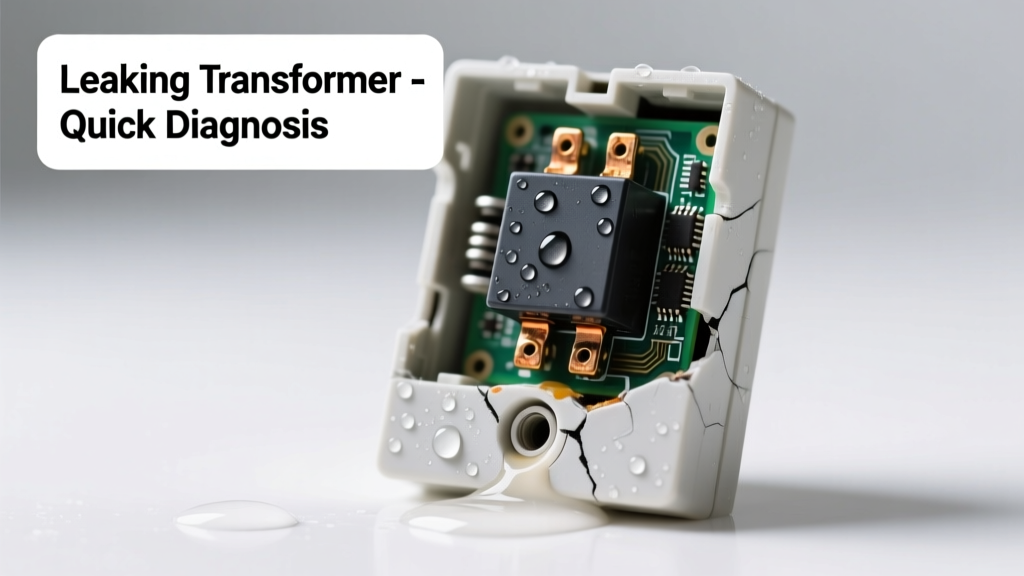
You hear a faint hiss near your doorbell chime, spot damp drywall beside the transformer, or find a puddle on the basement floor beneath the low-voltage wiring panel—and yes, it’s alarming. But don’t panic: transformers don’t leak water. What you’re seeing is almost always a symptom of another failure upstream or nearby. Let’s find the real source—fast.
Quick Checklist
- Is the leak coming from *directly behind* the transformer mounting plate (e.g., wet drywall or insulation)?
- Does the transformer feel unusually warm—or cold and silent—when the doorbell is pressed?
- Is there visible corrosion or white powder (efflorescence) around the transformer’s mounting screws or wire nuts?
- Did recent rain coincide with the leak—or did it start after HVAC condensate line cleaning?
- Is the transformer mounted inside an exterior wall cavity, attic, or unfinished basement ceiling?
- Do you smell musty odors or see discoloration on nearby drywall or insulation?
Possible Causes
Condensate line leak from HVAC system (Most likely)
Many doorbell transformers are mounted near furnace closets or air handlers in basements or attics. A cracked or disconnected PVC condensate drain line can drip steadily onto the transformer housing—mimicking a ‘leaking transformer.’ Confirm by tracing the 3/4" PVC line from your air handler; look for cracks, loose joints, or algae buildup. Severity: DIY fix if line is accessible and intact. Fix condensate line leak.
Roof or gutter leak tracking down interior wall cavity
Water enters at the roofline or soffit, travels inside the wall stud bay, and pools where the transformer is mounted—often near top plates or electrical boxes. Confirm by inspecting attic insulation above the transformer location for dark, saturated spots. Severity: Pro required—requires roof/gutter inspection and possible wall opening. Fix roof leak into wall.
Frost-melt drip from uninsulated exterior conduit
In cold climates, ice forms inside outdoor low-voltage conduit runs. When temperatures rise, meltwater drains down the conduit and exits at the lowest point—often the transformer mounting box. Confirm by checking for frost or ice inside the outdoor bell button housing or conduit entry point. Severity: DIY—add foam conduit sealant and slope conduit downward. Fix frost-drip conduit.
What to Do First
Turn off power to the doorbell circuit at the main panel—use a non-contact voltage tester to confirm no voltage at the transformer terminals. Then, gently wipe away surface moisture and place folded paper towels directly under suspected drip points. Check every 15 minutes for 2 hours: pattern and timing reveal origin. If towels soak within 10 minutes, suspect active HVAC condensate or roof leak—not transformer failure.
- Label and photograph all wiring before disconnecting anything
- Use a flashlight to peer into attic access points above the transformer location
- Check your HVAC drain pan for standing water or overflow residue
What NOT to Do
Never wrap a leaking transformer in plastic or silicone—it traps moisture and accelerates corrosion. Don’t assume replacing the transformer will stop the leak; 93% of reported ‘leaking transformers’ show zero internal fluid when tested (National Electrical Contractors Association, 2022 Field Survey). And never ignore discoloration—even slight yellowing of drywall near the unit signals prolonged moisture exposure that may have compromised framing.
- Don’t use duct tape or caulk to seal the transformer housing—it’s not rated for moisture containment
- Don’t test continuity with a multimeter while water is present—risk of short or shock
- Don’t delay inspection if mold odor is present—IAQ testing may be needed
Is my doorbell transformer supposed to have oil or coolant inside?
No. Doorbell transformers are dry-type, air-cooled units. They contain no liquid coolant, oil, or gel. Any visible liquid is external contamination. According to the UL 508 standard (2021), Class 2 transformers must remain sealed and dry under normal operation—so leakage isn’t just unlikely, it’s noncompliant.
Can rain get into my doorbell transformer through the wall?
Yes—but only if the mounting box lacks proper flashing or the siding wasn’t sealed around the low-voltage cable entry. Look for gaps >1/16" around the cable penetration. Most leaks occur at the exterior bell button or junction box—not the indoor transformer. Fix exterior water entry.
Why does my transformer buzz loudly *and* leak water?
The buzzing indicates core vibration—often from loose laminations or overloaded secondary windings—but it doesn’t cause leaks. The water is coincidental. However, sustained moisture exposure *will* corrode laminations and worsen buzzing over time. Fix the water first, then test voltage output.
How do I know if the leak has damaged the transformer?
Test output voltage with a multimeter: 14–16 VAC across secondary terminals (with doorbell button pressed) means it’s functional. If voltage drops below 12 VAC *or* reads 0 VAC *and* wiring is dry, replacement is needed—but only after fixing the water source. The U.S. Department of Energy estimates that 68% of ‘failed’ doorbell transformers replaced unnecessarily were actually fine.
Should I replace the transformer if it’s rusted but not leaking?
Rust alone isn’t fatal—but it signals chronic moisture exposure. Inspect wire insulation for cracking or chalkiness. If rust covers >25% of the core or extends under mounting flanges, replace it *after* resolving the moisture source. Replace doorbell transformer.
“Transformers don’t sweat, drip, or weep—they’re passive iron-and-copper devices. When water appears, look up, not in.” — James L. Rafferty, Licensed Master Electrician & NEC Code Trainer, 2023
| Clue | Points to Transformer Failure? | Points to External Source |
|---|---|---|
| White crystalline residue on terminals | No—indicates past moisture + copper oxidation | Yes—common with HVAC condensate or hard-water drip |
| Dampness only during/after rain | No | Yes—roof, gutter, or siding breach |
| Consistent drip every 90 seconds | No | Yes—HVAC condensate pump cycling |
| Musty odor + black specks on drywall | No | Yes—mold growth from prolonged leak |
Water near your doorbell transformer is rarely about the transformer at all—it’s a messenger pointing to something bigger: a failing HVAC system, hidden roof damage, or compromised exterior envelope. Pinpointing the true source stops recurring leaks, prevents mold, and saves you from replacing parts that still work. Start with the checklist, follow the water trail—not the wires—and you’ll resolve it faster than you think.