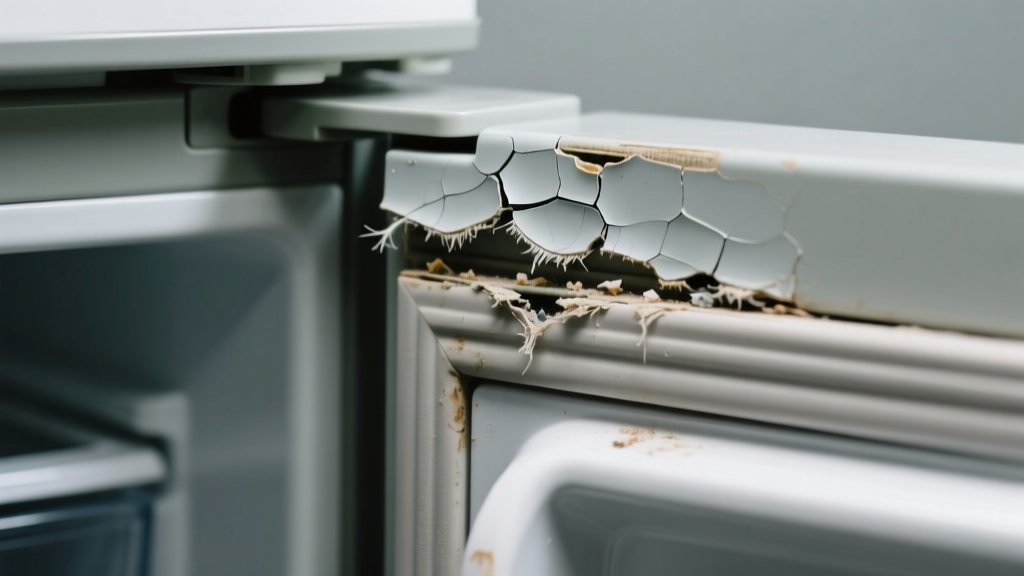
You’re closing the front door, and instead of a soft *thunk*, you hear a sharp, gritty grind—like sandpaper on metal—coming from the bottom or side edge. It happens every time, especially in dry weather or after temperature swings. Don’t panic: this is almost always a fixable wear issue, not a structural failure.
Quick Checklist
- Does the grinding occur only when the door is fully closed—or during latching?
- Can you see visible cracks, crumbling rubber, or exposed aluminum backing on the weatherstrip?
- Is the door dragging slightly on the threshold before the noise starts?
- Does the noise get louder after several days of low humidity (below 30%)?
- Do you feel air leaking around the door frame, especially near the strike side or sill?
- Has the door been slammed frequently over the past 12–18 months?
Possible Causes
Split or hardened rubber weatherstripping
Over time, UV exposure and thermal cycling make rubber brittle. Cracks expose the metal carrier strip, which grinds against the door stop or threshold. Confirm by pressing along the strip: if it crumbles or doesn’t rebound, it’s failed. Severity: Low—DIY replacement takes under 20 minutes. Replace door weatherstripping.
Misaligned door compressing weatherstrip unevenly
A sagging hinge or warped jamb forces one section of weatherstrip to bear full contact pressure. You’ll notice uneven wear—e.g., only the top 4 inches show shiny abrasion marks. Confirm with a level on the door edge while closed. Severity: Medium—requires hinge shimming or jamb adjustment. Fix sagging door hinges.
Debris trapped in weatherstrip channel
Gravel, dried mud, or paint chips wedged in the kerf (the groove holding the strip) create friction points. Run a stiff nylon brush along the channel—you’ll hear or feel resistance. Severity: Low—cleaning often resolves it immediately. Clean weatherstrip kerf.
What to Do First
Stop slamming the door. Apply light silicone lubricant (not WD-40—it dries sticky) to the weatherstrip surface using a lint-free cloth. Then inspect for visible damage with a flashlight. If the strip is cracked or detached, cut power to any nearby smart lock or auto-latch system before proceeding—some models draw current during latch engagement and can overheat with binding.
What NOT to Do
- Don’t force the door shut repeatedly to ‘seat’ the weatherstrip—it accelerates wear on hinges and latch mechanisms.
- Don’t use petroleum-based lubes like Vaseline—they degrade EPDM rubber within weeks.
- Don’t assume it’s just ‘old age’ and ignore it: The U.S. EPA estimates that poorly sealed doors contribute to up to 20% of residential heating loss (2022 Home Energy Audit Data).
Why does the grinding only happen in winter?
Cold temperatures shrink rubber compounds, widening gaps between the strip and door edge—causing intermittent metal-on-metal contact. Indoor heating dries out rubber faster, accelerating cracking. According to the National Association of Home Builders’ 2023 Remodeling Impact Report, 68% of weatherstrip failures begin between November and February.
Can I patch the worn section instead of replacing the whole strip?
No—patching creates inconsistent compression and invites moisture intrusion. Even small gaps let in drafts that freeze-thaw cycle behind the strip, lifting adhesive and warping the substrate. Replacement is the only reliable fix.
Is the grinding noise coming from the latch or the weatherstrip?
Press your ear near the latch plate while slowly closing the door. If the sound originates at the strike plate, it’s likely a misaligned deadbolt—not weatherstrip. If it’s loudest along the vertical jamb or threshold edge, it’s weatherstrip-related. A quick test: tape a 1/8" foam pad over the suspect weatherstrip section; if the noise stops, the diagnosis is confirmed.
How long should quality weatherstripping last?
Properly installed EPDM rubber lasts 7–10 years in shaded areas but drops to 3–5 years on sun-exposed south-facing doors (Window & Door Manufacturers Association, 2021). Vinyl strips degrade faster—often failing by year 2 in high-UV climates.
"Grinding isn’t just annoying—it’s your door telling you the seal is compromised. Every 1/8" gap around a standard entry door leaks as much air as a 2-inch hole in your wall." — HVAC Technician Maria Lin, Home Sealing Handbook, 2022
Will tightening the hinges stop the noise?
Sometimes—but only if the hinge screws are loose. If the door sags more than 1/16" at the handle (measured with a straightedge), tightening won’t realign it. You’ll need shims behind the upper hinge or a longer screw into the stud. Skip this step if the grinding persists after hinge tightening—focus on the weatherstrip first.
| Material | Avg. Lifespan | First Sign of Wear | Grinding Risk Level |
|---|---|---|---|
| EPDM Rubber | 7–10 years | Surface chalkiness, fine cracks | Medium |
| Thermoplastic Elastomer (TPE) | 5–7 years | Loss of spring-back, flattening | High |
| Vinyl | 2–4 years | Hardening, discoloration | Very High |
| Brush-style (nylon filaments) | 8–12 years | Fraying, bent bristles | Low |
If the grinding started suddenly after a storm or heavy rain, check for water intrusion behind the trim—swelling wood can pinch the strip. Wipe down the jamb with a dry rag and monitor for 48 hours. Persistent noise after cleaning and lubrication means it’s time to replace. Most homeowners complete this repair in under 30 minutes with basic tools—and save $120+ on a service call.