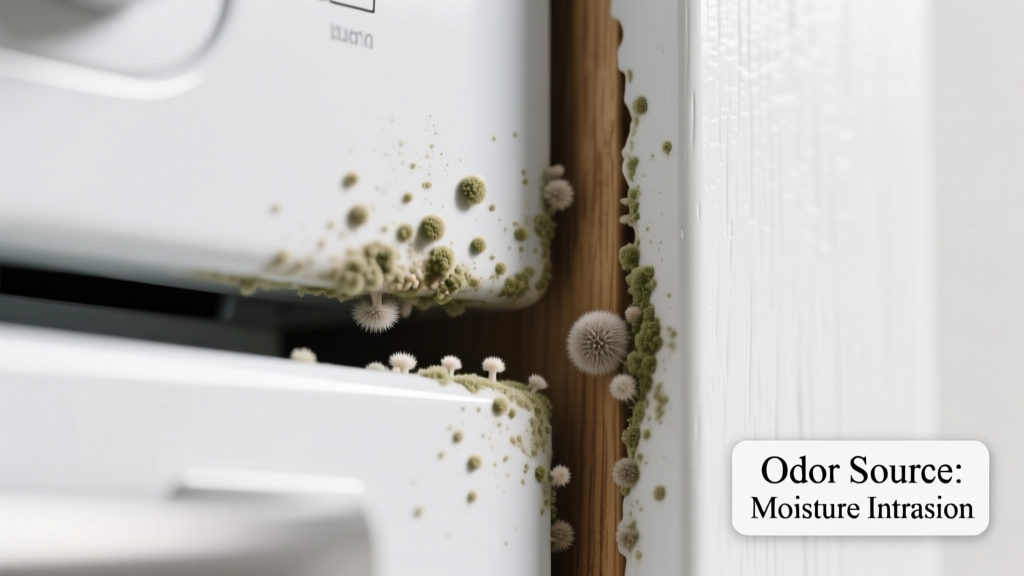
You open the front door—and hit by a sour, musty, or even sewage-like stench wafting up from the narrow gap between the door frame and wall trim. It’s not constant, but it hits hard when humidity rises, after rain, or when you step inside. That smell isn’t just unpleasant—it’s a red flag pointing to something hidden behind the drywall or under the threshold.
Quick Checklist
Answer these yes/no questions to narrow the cause in under 90 seconds:
- Does the smell worsen after heavy rain or high humidity? Yes / No
- Can you see discoloration, bubbling paint, or soft drywall near the trim? Yes / No
- Is the odor strongest near an exterior door (especially basement or garage entry)? Yes / No
- Do you hear scratching, scurrying, or rustling sounds near the gap at night? Yes / No
- Have you recently had plumbing work done nearby—or noticed slow drains or gurgling toilets? Yes / No
- Does the gap feel damp or cool to the touch—even on dry days? Yes / No
- Is there visible insect activity (ants, silverfish) or droppings near the base of the trim? Yes / No
Possible Causes
Mold or mildew behind the trim
How to confirm: Shine a flashlight into the gap—look for fuzzy black, green, or gray growth. Use a moisture meter (how to use one) on the adjacent wall; readings above 18% indicate trapped moisture. Check for prior water events: roof leaks, failed flashing, or sprinkler overspray hitting the foundation.
Severity: Moderate. DIY fix if area is small (<2 sq ft) and surface-only. Call a pro if drywall feels spongy or insulation is wet—mold remediation steps here.
Dead animal or pest infestation
How to confirm: Smell intensifies over 3–7 days, then plateaus or fades. Look for gnaw marks, grease trails, or nesting debris. Tap lightly on the trim—if it sounds hollow *and* you hear a faint rattle or shift, something may be lodged or decomposing inside the cavity.
Severity: High. Do not seal the gap yet—this traps odor and attracts more pests. Contact a licensed wildlife removal specialist. See safe exclusion protocols.
Leaking supply line or drain pipe behind the wall
How to confirm: Smell resembles wet dog or rotten eggs—not musty. Check nearby sinks, toilets, or HVAC condensate lines. Turn off water and monitor odor: if it lessens within 24 hours, plumbing is likely culprit. A plumber can pressure-test lines using acoustic leak detection.
Severity: Critical. Shut off main water immediately if confirmed. Repair requires cutting drywall—call a licensed plumber. According to the Insurance Institute for Business & Home Safety's 2023 report, 62% of hidden water damage starts within 6 inches of door or window framing.
What to Do First
Act now to limit spread and exposure:
- Open windows and run a dehumidifier in the room (target ≤50% RH).
- Wipe down the visible trim and floor with a 1:10 bleach-water solution (never mix with ammonia or vinegar).
- Place activated charcoal pouches (tested brands) directly in the gap—replace every 48 hours.
- Photograph the gap, surrounding wall, and any signs (stains, insects, corrosion) for your contractor or inspector.
- If odor includes sewage notes, shut off water and contact a plumber within 2 hours.
What NOT to Do
These actions delay diagnosis and risk health or structural harm:
- Don’t caulk or foam the gap—you’ll trap moisture or decay gases, accelerating rot or mold spore release.
- Don’t spray air fresheners or disinfectant foggers—they mask clues and may react dangerously with hidden mold or sewer gas.
- Don’t ignore it for more than 48 hours—the U.S. EPA estimates that indoor mold concentrations double every 24–48 hours under sustained moisture.
- Don’t drill into the wall yourself—you could puncture wiring, gas lines, or pressurized plumbing.
Is the smell worse in the morning or after rain?
This pattern points strongly to condensation buildup or groundwater infiltration. Morning intensity suggests overnight dew or HVAC condensate pooling in the gap. Rain-related spikes often mean failed exterior flashing or clogged weep holes in brick veneer. Inspect the exterior sill and caulk line above the door—look for cracks or gaps wider than 1/8 inch.
Does the odor resemble urine, ammonia, or burnt hair?
That sharp, acrid note often means rodent urine or decomposition—not mold. Mice and rats urinate frequently in wall cavities; their urine crystallizes and releases ammonia when dry. If you find tiny yellowish crusts near the gap or along baseboards, wear N95 and gloves before vacuuming with a HEPA filter—then call pest control.
Can you smell it outside the house, near the door’s exterior edge?
Yes? Then the source is likely external: decaying mulch, buried organic debris, or a cracked sewer lateral near the foundation. Dig 6 inches down alongside the door’s exterior trim. If soil smells sulfurous or looks dark and slimy, contact a sewer line specialist—learn how to spot lateral cracks.
Is the gap wider on one side—especially the bottom corner?
Uneven gaps suggest door frame settlement or foundation movement. This creates micro-cracks where moisture wicks upward and stagnates. Measure gap width at top, middle, and bottom with a feeler gauge. If variance exceeds 1/16 inch, consult a structural engineer before sealing anything.
Do you own a home built before 1980—and smell something sweet or chemical-like?
A sickly-sweet odor could signal deteriorating asbestos-wrapped ductwork or old insulation behind the trim—especially if renovation occurred nearby. Do not disturb. Seal the gap temporarily with painter’s tape and contact an asbestos abatement firm certified by the EPA’s AHERA program (2022 standards).
Have you recently installed new flooring or baseboard?
Yes? Adhesives (especially solvent-based) or pressed-wood substrates can off-gas volatile organic compounds (VOCs) for weeks. The smell usually fades gradually. Test by taping aluminum foil over the gap—if odor drops within 2 hours, VOCs are likely source. Ventilate and monitor; no remediation needed unless symptoms include headaches or eye irritation.
"A persistent odor from a door trim gap is never 'just a smell'—it’s forensic evidence of moisture, biology, or chemistry at work behind the wall." — Sarah Lin, Certified Indoor Environmental Consultant (CIEC), 2023
| Smell Description | Most Likely Cause | First Diagnostic Step |
|---|---|---|
| Musty, damp, earthy | Mold or wet insulation | Moisture meter reading + visual inspection with mirror |
| Rotten eggs or sewage | Broken sewer vent or drain leak | Check nearby drains for slow flow/gurgling |
| Ammonia or urine | Rodent infestation or carcass | Use a boroscope camera or infrared thermometer |
| Sweet, chemical, or plasticky | VOC off-gassing or asbestos degradation | Review renovation dates + material SDS sheets |
The right answer isn’t always obvious—but you don’t need to guess. Start with the checklist, document what you see, and act based on evidence—not anxiety. Most cases resolve with targeted action in under 72 hours. If uncertainty lingers, reach out to a certified home inspector—they’ll bring thermal imaging and borescopes to see what’s truly hiding behind that trim.