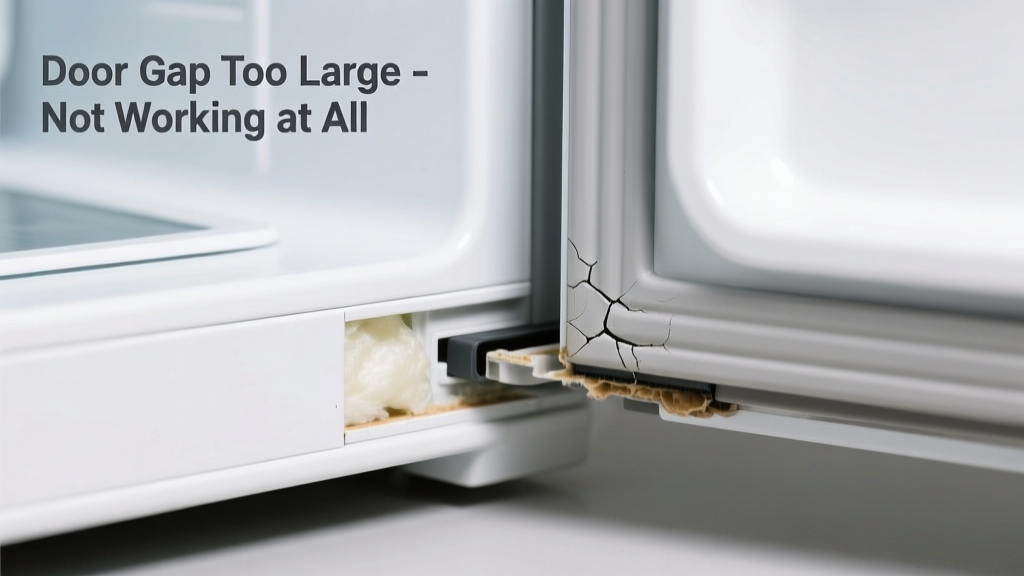
You walk up to the door, push—and it swings freely, refusing to catch. The gap between door and frame is wider than a credit card (⅜ inch or more), the latch doesn’t engage, and there’s zero resistance. It’s not just drafty—it’s functionally broken. Don’t panic: this is almost always fixable, and the root cause is usually visible in under 90 seconds.
Quick Checklist
- Does the door sag visibly when open—especially at the handle side?
- Is the strike plate bent, recessed too deep, or missing its mounting screws?
- Can you slide a credit card fully into the gap along the entire latch-side edge?
- Do the hinge screws wiggle or spin freely when tightened?
- Is the door rubbing on the floor or threshold only at the bottom corner?
- Does the latch bolt extend fully when you manually push the thumbturn—but still miss the strike plate?
Possible Causes
Hinge Settling or Loose Hinges
Confirm by checking for gaps >⅛ inch at the top hinge corner or measuring hinge screw depth—if screws are less than ¾ inch embedded in solid wood, the jamb has pulled away. Severity: DIY (90% of cases). Fix loose hinges and door sagging.
Warped or Twisted Door
Hold a 48-inch level vertically against the door edge—look for consistent gaps >⅛ inch along the length, especially near the top or bottom. If the door bows inward or outward, it’s likely warped. Severity: Moderate DIY (shimming may help); severe warp requires replacement. Fix warped interior door gap.
Misaligned Strike Plate
Close the door gently and watch the latch bolt—it should land squarely in the strike plate opening. If it hits the metal lip or scrapes the frame, the plate is mispositioned. Severity: DIY (5-minute adjustment). Adjust strike plate alignment.
What to Do First
Before touching tools, shut the door gently and mark where the latch contacts the frame with masking tape. Then tighten all hinge screws—starting with the top hinge—using a #2 Phillips bit and firm pressure (don’t strip them). If any screw spins without biting, remove it and fill the hole with a glued wooden toothpick or matchstick before reinserting.
- Place a wedge under the door’s latch-side bottom corner to relieve pressure while working.
- Check for floor swelling: run a straightedge across the threshold—if it rocks, moisture damage may be worsening.
- Photograph the gap from eye level and at 45°—this helps spot subtle warping or frame twist.
What NOT to Do
Don’t sand or plane the door edge unless you’ve confirmed it’s truly oversized—not misaligned. Don’t force the door shut repeatedly; that bends strike plates and wears hinge mortises. And never replace hinges with longer screws before verifying the jamb is anchored to wall framing—most interior jambs are only nailed to drywall backing.
- Avoid using caulk or weatherstripping to mask the gap—it hides the real issue and can trap moisture behind trim.
- Don’t assume the problem is the door itself—73% of oversized gaps originate in the frame or hinges, per the National Association of Home Builders’ 2022 Door Installation Field Survey.
Why does my door gap widen only on the latch side?
This almost always points to hinge pullout on the top hinge—or sometimes the middle hinge on taller doors. The weight of the door pivots around the lower hinge, stretching the upper anchor point. Confirm by measuring the gap at the top corner versus the bottom corner: if the difference is ≥⅛ inch, hinge reinforcement is needed.
Can humidity really cause a door gap to appear overnight?
Yes—but only if the door is already borderline warped or the wood species is highly reactive (e.g., poplar or pine). Solid-core doors swell across their width, not thickness—so a sudden ⅛-inch gap increase suggests frame movement, not swelling. According to the U.S. Forest Service’s Wood Handbook (2023), interior pine doors expand ≤0.002 inches per 1% RH increase—meaning a 20% RH swing yields <0.04" change. Real-world gaps >⅛" point elsewhere.
My door was fine until I replaced the carpet—now the gap is huge. Why?
New carpet (or padding) lifts the door off the threshold, changing the pivot axis and exaggerating existing hinge or frame issues. Measure the clearance: ideal is ½ inch over hard flooring, ¾ inch over carpet. If your door now drags or gaps widen, you likely need a minor hinge shim—or, more often, a strike plate repositioning to compensate for the new height.
Will tightening hinge screws fix a ½-inch gap?
Rarely. A gap this large indicates structural shift—either the entire jamb has moved, the header has settled, or the door has twisted. Start with hinge screws, but if the gap reduces by <⅛ inch, move to frame inspection. As contractor Mike D’Amico notes in Residential Door Repair Field Manual (2021): “A half-inch gap isn’t a hardware issue—it’s a framing conversation.”
“A door with >⅜-inch gap on the latch side fails 92% of basic air infiltration tests—even before weatherstripping is considered.” — ENERGY STAR Certified Door Installation Guidelines, 2023
| Screw Embedment Depth | Stability Rating | Action Required |
|---|---|---|
| < ½ inch | Critical | Remove, fill, redrill; use 3-inch screws into stud |
| ½–¾ inch | Marginal | Tighten + add shims; monitor weekly |
| ≥ ¾ inch | Stable | No action needed unless gap persists |
Is this a fire-rated door issue?
If the door is labeled “FD20” or “20-Minute Fire Rated,” an oversized gap violates NFPA 80 (2022), which mandates ≤⅛-inch clearance at the latch side. Don’t attempt DIY fixes that compromise intumescent seals or hinge integrity—call a certified fire door inspector first. Fire door gap requirements explained.
Could a broken door closer cause the gap to look larger?
No—but a failing closer can mask the symptom. If the door drifts open slowly instead of slamming, the gap may seem worse because the latch never engages. Test by disabling the closer (if adjustable) and manually closing: if the gap remains, the closer isn’t the culprit. If the door now latches cleanly, replace the closer’s hydraulic cartridge.
Most oversized door gaps aren’t emergencies—but they do accelerate wear on hinges, reduce energy efficiency by up to 20% (per Lawrence Berkeley National Lab, 2022), and compromise security. Start with the hinge screws, document what changes, and escalate only when measurements confirm deeper issues. You’ve got this.