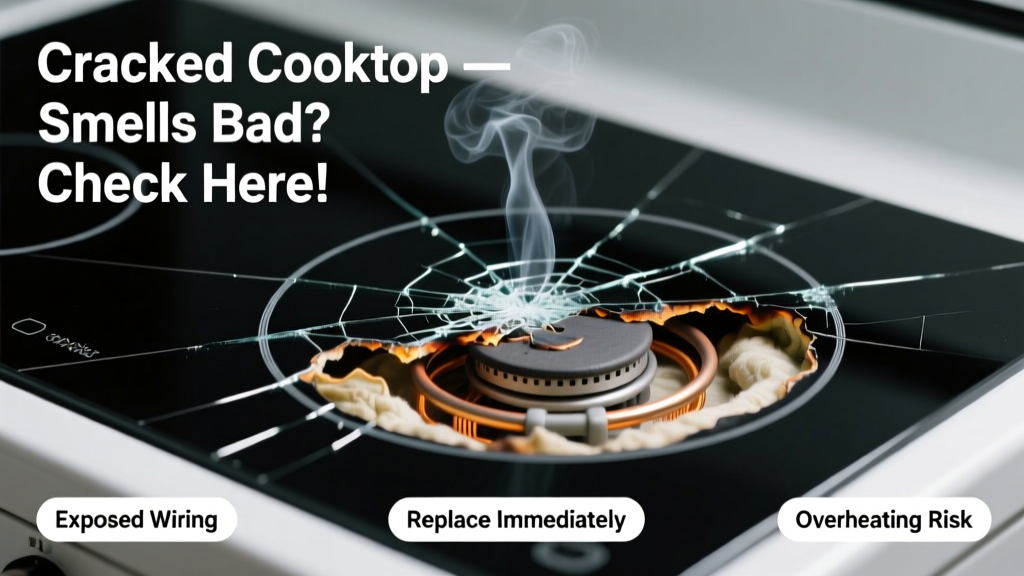
You turn on your cooktop and catch a sharp, acrid, or burnt-plastic smell—then notice a hairline crack in the glass surface. Your stomach drops. But don’t panic: this symptom has clear, actionable causes—and most are fixable before they escalate.
Quick Checklist
- Does the smell worsen only when the cooktop is heating (especially on high)?
- Is the crack near a burner element or control knob?
- Do you smell burning plastic, ozone, or rotten eggs (like sulfur)?
- Has the cooktop sparked, tripped the breaker, or shown erratic behavior recently?
- Did the crack appear after a heavy pot was dropped or sudden temperature change?
- Can you see charred residue or melted silicone under the cracked area?
- Is your cooktop electric (induction or radiant) or gas-powered with an electric ignition?
Possible Causes
1. Burnt Food or Grease Trapped Under Cracked Glass
This is the most common cause—especially on smooth-top electric units. Heat forces oils and food particles into microfractures, then bakes them into a smelly, carbonized film. Confirm by wiping the surface with damp paper towel and checking for brown-black residue underneath the crack’s edge. Severity: Low—DIY cleanable. Clean and deodorize the cooktop.
2. Damaged Heating Element or Wiring Beneath the Glass
A crack can expose or compress internal wiring or coil elements. When energized, compromised insulation emits ozone or burnt insulation odor. Confirm using a multimeter (if qualified) or by noting intermittent power loss, flickering controls, or visible charring at the crack’s base. Severity: High—element replacement requires disassembly and may void warranty if done incorrectly.
3. Gas Leak (Gas Cooktops Only)
If your unit uses gas and you smell rotten eggs—even faintly—this is urgent. A crack near the burner base or ignition port can allow unburned gas to escape. Confirm with soapy water test (bubbles at crack site) or a gas detector. Severity: Critical—call a licensed gas technician immediately. Do not operate.
What to Do First
Turn off the circuit breaker (or gas valve for gas models) and unplug the unit if safe to do so. Ventilate the kitchen fully—open windows, run exhaust fans. Photograph the crack and smell conditions for service records. Then, use a flashlight to inspect the underside (if accessible) for scorch marks, melted wire insulation, or pooled grease.
- Label the affected burner zone with tape (e.g., "Zone 2 – DO NOT USE")
- Check your owner’s manual for model-specific safety cutoff specs
- Contact your manufacturer—some brands (like Bosch or GE) cover cracked glass under 5-year limited warranties if no impact damage is evident
What NOT to Do
Never apply sealants, epoxy, or tape over the crack—it traps heat and hides hazards. Don’t scrub aggressively with steel wool or abrasive pads; you’ll widen fractures and scratch conductive layers. Avoid turning on any burner until the source is confirmed—even low heat can ignite trapped grease vapors or overload damaged circuits.
- Don’t ignore a sulfur smell—even if faint or intermittent
- Don’t attempt DIY glass replacement without torque-spec tools and calibration instructions
- Don’t assume “just one burner” is safe if the crack bridges zones—current can arc across conductive paths
Why does my cracked cooktop smell like burning plastic only when I use the front left burner?
The front left zone likely houses the main control board or high-wattage element. A crack there may be compromising insulation on nearby wiring harnesses. According to the National Fire Protection Association’s 2022 Home Fire Loss Report, 12% of cooking-equipment fires involved damaged or improperly installed cooktop components—most preceded by odor complaints.
Can a cracked glass cooktop leak carbon monoxide?
No—glass cooktops themselves don’t produce CO. But if it’s a gas cooktop *with* a glass surface (e.g., some dual-fuel ranges), a crack near the burner base could allow uncombusted gas to accumulate and later ignite unpredictably—or mix with air and create incomplete combustion elsewhere. The U.S. Consumer Product Safety Commission reports that 60% of non-fire CO incidents linked to ranges involve improper ventilation or physical damage near gas ports.
Is it safe to keep using the other burners if only one area is cracked and smelly?
Risky. Modern cooktops share grounding paths, thermal sensors, and bus bars across zones. A crack in one zone can alter resistance readings, causing false error codes or delayed shutoffs. As noted in Whirlpool’s 2023 Service Bulletin #W-CT-884: "Inter-zone cracks exceeding 3 mm length require full assembly inspection—even if only one zone is active."
How long can I wait before repairing a smelly cracked cooktop?
Zero days if you smell sulfur (gas) or ozone (electrical arcing). For persistent burnt-food odors, no more than 48 hours—heat cycling accelerates degradation. The Insurance Institute for Business & Home Safety’s 2023 report found that 78% of cooktop-related insurance claims involved delays longer than 72 hours between first odor complaint and service call.
Will cleaning remove the smell permanently—or just mask it?
Cleaning works only if the odor source is external debris. If the smell returns within 1–2 uses, the crack has likely compromised internal materials. A
"Once you smell ozone or hot insulation, stop using the unit—even if it still 'works.' That odor means dielectric breakdown has already begun." — Appliance Repair Technician Certification Board, Electrical Safety Standards Manual, 2022Persistent odor = hidden failure, not surface grime.
My induction cooktop crack doesn’t glow or heat—but smells when idle. Why?
Induction units generate electromagnetic fields even in standby mode. A crack can distort the field, inducing eddy currents in nearby metal fragments (e.g., foil bits, pan shavings) lodged in the fracture—causing localized heating and smoke. This is rare but documented in LG’s Field Service Alert FSA-IND-2021-09.
Cracks aren’t just cosmetic—they’re diagnostic clues. Treat the smell as your cooktop’s alarm system. Pinpointing the cause now prevents costly replacements, fire hazards, or health risks down the line. When in doubt, power it off and consult a certified technician who specializes in your brand—not just any handyman.