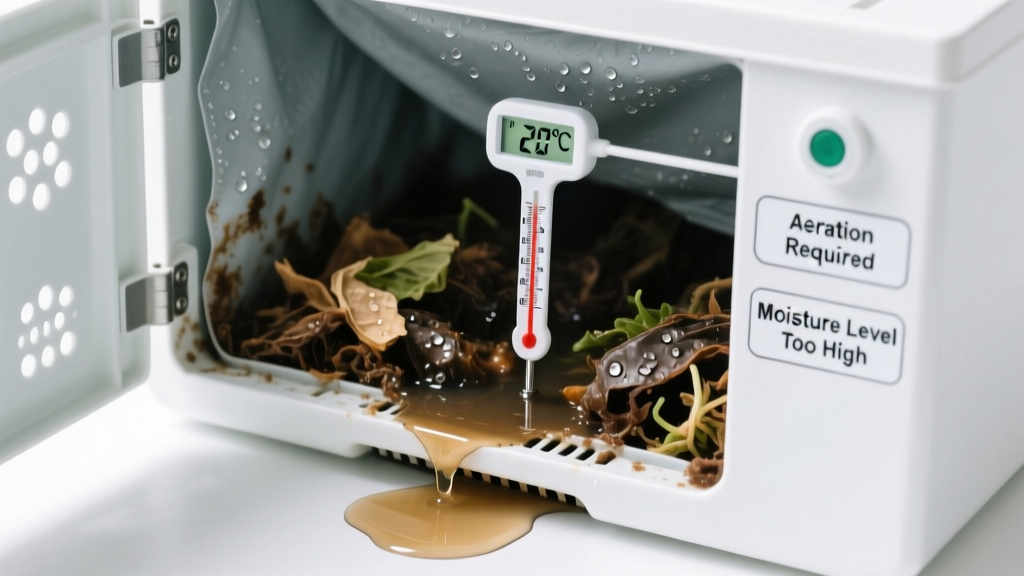
Your compost pile sits cold, soggy, and weeping dark liquid like a damp sponge left in the rain — no steam, no warmth, just a foul-smelling puddle beneath it. Don’t panic: this is a common, fixable imbalance — not a failed system.
Quick Checklist
- Is the pile consistently wet to the point of dripping when squeezed?
- Have you added fresh grass clippings, food scraps, or manure in the last 3 days without balancing with dry browns?
- Does the pile smell sour, rotten, or like ammonia — not earthy or sweet?
- Is there visible mold, slimy texture, or layers of matted greens?
- Has rainfall saturated the pile or is it under a covered area with poor drainage?
- Are you turning it less than once every 5–7 days?
Possible Causes
Too Much Nitrogen (Greens) & Not Enough Carbon (Browns)
This is the most common cause — an oversupply of kitchen scraps, fresh grass, or manure overwhelms the microbes’ ability to process material aerobically. Confirm by checking for slimy greens, ammonia odor, and a temperature stuck below 90°F even after 48 hours. Severity: DIY fix. Add shredded cardboard or dry leaves immediately.
Compaction or Poor Aeration
When dense, wet material compresses, oxygen vanishes — halting thermophilic activity and forcing anaerobic leaching. Confirm by inserting a metal rod: if it meets heavy resistance or pulls out coated in black slime, compaction is likely. Severity: DIY fix. Turn thoroughly with a pitchfork and add coarse browns like straw.
Clogged Drainage or Saturated Base
If your bin sits on clay soil, concrete, or a sealed surface — or if the bottom layer is clogged with fine sawdust or mud — excess moisture has nowhere to go. Confirm by digging 6 inches deep near the base: standing water or black sludge indicates drainage failure. Severity: DIY fix (relocate or add gravel base), but call a pro if built into a permanent raised bed with buried liner issues.
What to Do First
- Stop adding food scraps or fresh greens for 72 hours.
- Turn the entire pile — break up clumps and expose wet cores to air.
- Sprinkle 2–3 inches of dry, shredded browns (newspaper, dry leaves, or coconut coir) over the top and mix in the top 12 inches.
- Elevate the pile off the ground using pallets or a layer of gravel if drainage is poor.
What NOT to Do
- Don’t add more water — even “just a little” worsens saturation.
- Don’t cover tightly with plastic — this traps steam and encourages anaerobic rot.
- Don’t add lime or baking soda to neutralize odor — it disrupts microbial pH balance.
- Don’t ignore pooling liquid: that leachate can carry pathogens into nearby soil or storm drains.
Why does my compost pile leak brown water?
That brown, tea-like liquid — called leachate — forms when excess moisture forces soluble organic compounds and tannins out of decomposing material. Unlike nutrient-rich compost tea (which is brewed intentionally), leachate signals imbalance and potential nutrient loss. According to the U.S. EPA’s 2022 Composting Guidance, unmanaged leachate from backyard piles contributes to 12% of localized groundwater nitrate spikes in urban gardens.
Can a cold, wet compost pile recover without restarting?
Yes — if addressed within 5–7 days. Thermophilic microbes rebound quickly once carbon, oxygen, and moisture hit the right ratio. But if the pile has been cold and slimy for over two weeks, beneficial fungi and actinomycetes decline sharply; restarting with fresh browns and inoculant (like finished compost) cuts recovery time by 40%, per Cornell Waste Management Institute’s 2023 field trials.
Is the leaking water harmful to plants or pets?
Fresh leachate is acidic (pH 4.2–5.1) and may contain phytotoxins and coliform bacteria — especially if meat, dairy, or pet waste entered the pile.
"Never apply raw leachate to edible plants — it’s not compost tea, and dilution doesn’t eliminate pathogen risk," says Dr. Sarah L. Evans, Extension Specialist at Oregon State University (2021).Redirect runoff away from garden beds and pet areas until balance is restored.
How long should it take for the pile to heat up after fixing moisture?
With correct correction (browns added + turned + drained), internal temps typically rise above 110°F within 24–48 hours. Use a compost thermometer — not guesswork. If no heat appears by hour 72, recheck carbon-to-nitrogen ratio and consider adding a shovelful of active, finished compost as a microbial booster.
Should I drain the liquid out of my compost tumbler?
Only if your tumbler has a dedicated leachate valve — and even then, collect it in a bucket for dilution (1:10 with water) and use only on ornamental shrubs. Never let it pool inside the drum: excess moisture reduces oxygen volume by up to 65%, according to the Rodale Institute’s Tumbler Performance Review (2020). Instead, pause tumbling for 24 hours, open vents fully, and add 1 part dry sawdust to every 3 parts wet material before resuming.
Could this be a sign of vermin or pest intrusion?
Leaking water alone rarely attracts pests — but the underlying cause (exposed food scraps, stagnant conditions) does. Rats and flies favor cold, wet piles with accessible greens. If you see tunnels, droppings, or buzzing near the base, address moisture first, then secure lids and bury scraps under 6 inches of browns. See our integrated pest prevention checklist.
Most cold, leaking compost piles respond fast once you rebalance air, water, and food for the microbes — not you. Trust the process, monitor daily with a thermometer, and remember: decomposition isn’t broken — it’s just waiting for better conditions.