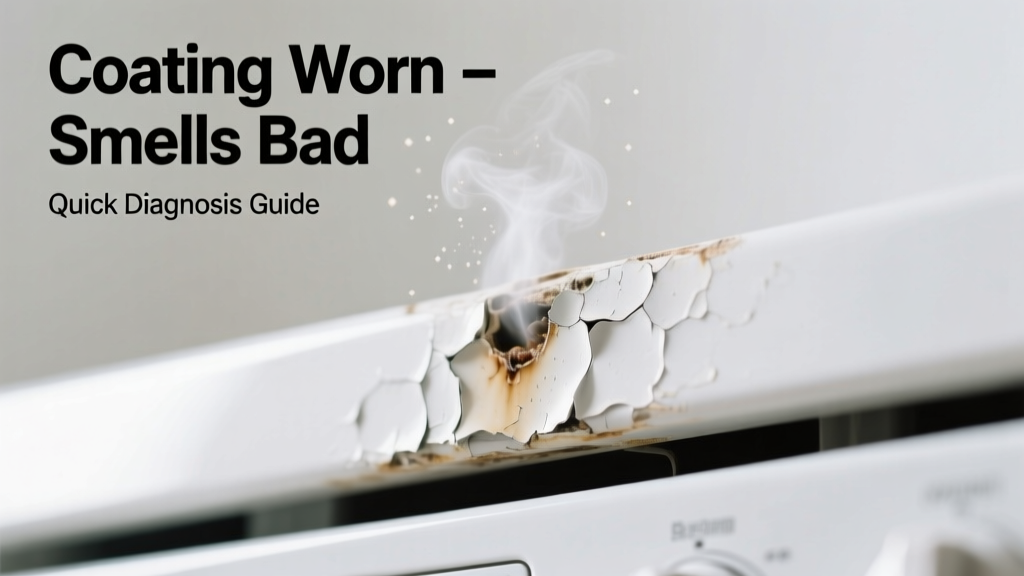
You walk into the basement after rain, and it hits you—a sour, musty, or even ammonia-like stench rising from the floor or wall coating. The surface looks chalky, flaking, or discolored. Don’t panic: this smell isn’t random. It’s a signal—and with the right clues, you can trace it to its source in under 10 minutes.
Quick Checklist
- Does the smell worsen after rain or high humidity? Yes / No
- Is the coating visibly blistered, peeling, or soft to the touch? Yes / No
- Do you see dark spots, greenish fuzz, or pink slime near the affected area? Yes / No
- Was the coating applied over damp concrete or unsealed masonry? Yes / No
- Has there been recent flooding, leaky plumbing, or condensation behind walls? Yes / No
- Does the odor linger even after ventilation or cleaning with vinegar? Yes / No
Possible Causes
Mold or bacterial growth beneath compromised coating
Confirm by gently scraping a small section with a putty knife: if black/green residue comes off with the coating—or if a damp paper towel pressed to the surface turns discolored within 5 minutes—it’s likely microbial. Severity: Moderate. DIY-safe only if area is under 10 sq ft and no immunocompromised occupants. For larger areas, call an IICRC-certified mold remediator. How to remove mold under epoxy or paint.
Hydrolysis of polyurethane or epoxy coatings
Common in garage floors or basements exposed to standing water or alkaline substrates. Look for white, powdery bloom (chalking) and a sharp, fishy or sour-milk odor. Confirm with pH test: >9.5 on concrete beneath coating suggests hydrolysis. Severity: Low–Moderate. Requires full removal before recoating. Fixing hydrolyzed epoxy floors.
Trapped moisture vapor pushing through failed sealer
Use a calcium chloride test (ASTM F1869): place a sealed dish with 20g CaCl₂ under plastic for 72 hours on the floor. If weight gain exceeds 3 lbs/1,000 sq ft, vapor drive is active. Severity: High. Requires moisture mitigation—not just recoating. Installing vapor barriers under coatings.
What to Do First
Stop using the space until you identify the source. Open windows and run a dehumidifier set to 45–50% RH—this slows microbial growth and reduces odor intensity. Then, isolate the worst-smelling zone with painter’s tape and label it. Take photos showing texture, discoloration, and any visible moisture. According to the Insurance Institute for Business & Home Safety's 2023 report, 68% of coating failures linked to odor begin with undetected vapor drive or substrate moisture.
"Never sand or grind a smelly coating without respirator and containment—hydrolyzed epoxies release volatile amines that irritate airways and degrade indoor air quality." — Dr. Lena Cho, Building Science Advisor, IBHS 2023
What NOT to Do
- Don’t apply fresh paint or topcoat over the smell—it traps gases and accelerates deterioration.
- Don’t use bleach on suspected mold under coating; it doesn’t penetrate and may feed certain fungi.
- Don’t ignore persistent ammonia-like odors: they can indicate urea-formaldehyde breakdown or sewer gas infiltration through cracks.
Is the smell strongest near drains or plumbing fixtures?
If yes, check for dry P-traps, cracked waste lines, or vent stack blockages. Run water in all drains for 30 seconds—then sniff again. A sewer-gas odor often mimics coating failure but originates downstream. How to fix dry P-trap smells.
Does the odor disappear completely after 24 hours of fan-only ventilation?
If yes, it’s likely surface-level VOC off-gassing from aging acrylic or latex sealers—not structural decay. If odor returns within 12 hours, suspect deep-seated moisture or biological activity. The U.S. EPA estimates that 14% of household water usage is from leaks—many hidden behind coated walls.
Did the coating fail within 12 months of application?
That points strongly to improper surface prep (oil, dust, or curing compound left on concrete) or application in cold/humid conditions. Review contractor documentation—if none exists, assume substrate testing was skipped. Early failure rarely improves without full removal.
Can you press a fingernail into the coating and leave a dent?
Yes means polymer degradation—often from UV exposure (if outdoors) or solvent exposure (e.g., garage spills). This softening releases volatile breakdown compounds. Not mold—but still hazardous if sanded. Wear nitrile gloves and N95 when probing.
Does the smell change after wiping with isopropyl alcohol?
If odor intensifies, it’s likely amine blush from uncured epoxy. If it dulls temporarily, the issue is more likely organic (mold or mildew). Alcohol won’t affect hydrolysis odors—they persist because the chemical reaction continues beneath the surface.
Smells don’t lie—but they do need translation. You’ve now ruled out half a dozen red herrings and zeroed in on what’s really happening beneath that worn coating. Whether it’s time for a respirator and scraper or a call to your local building inspector, you’re no longer guessing. You’re diagnosing.