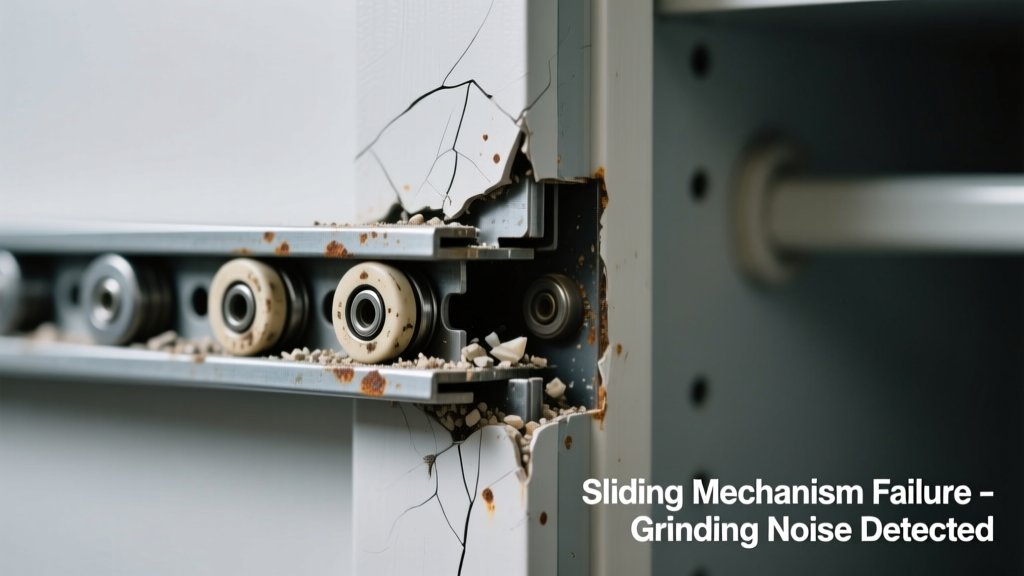
You’re pulling the closet door open—and it halts mid-track with a harsh, metallic grind, then refuses to budge. The sound isn’t squeaky or soft—it’s gritty, jarring, and repeats every time you force it. Don’t panic: this is almost always fixable in under 30 minutes, and rarely requires replacing hardware.
Quick Checklist
Answer these yes/no questions before inspecting further:
- Does the door move at all—or is it completely immobile?
- Is the grinding noise loudest near the top or bottom of the door?
- Can you see visible debris (dust bunnies, hair, dried paint) trapped in the track?
- Do both wheels spin freely when you lift the door slightly off the track?
- Is one side of the door sagging or rubbing against the frame or floor?
- Have you recently painted, installed new flooring, or moved furniture that might have shifted the track?
Possible Causes
Worn or misaligned nylon rollers
Over time, the plastic rollers wear flat or crack—especially on doors used daily for 5+ years. You’ll hear grinding when damaged rollers drag instead of roll, and the door may tilt or bind. Confirm by lifting the door and spinning each wheel: if one wobbles, feels gritty, or won’t rotate smoothly, it’s the culprit. Severity: DIY fix—replace rollers in 15 minutes. Sliding closet door roller replacement guide.
Debris jammed in the upper track
Lint, pet hair, drywall dust, and carpet fibers accumulate in the overhead track—especially where the door pauses most often. This creates friction and grinding as rollers scrape over clumps. Confirm by shining a flashlight into the track while gently sliding the door; look for dark, matted buildup. Severity: DIY fix—clean with a stiff brush and vacuum. How to clean a sliding closet door track.
Bent or corroded metal track
Impact from moving furniture or moisture exposure (in humid closets or basements) can warp aluminum tracks or cause rust pitting. A bent section forces rollers to skip or grind violently. Confirm by running your finger along the track’s inner edge—you’ll feel ridges or dips. Severity: Call a pro if bent >1/16" or corroded beyond surface scuffing. Minor bends can be tapped straight with a rubber mallet—but only if track is accessible and undamaged elsewhere.
What to Do First
Stop forcing the door immediately. Forcing it accelerates roller wear and can bend the track or break the mounting bracket. Instead:
- Unclip or unscrew the door’s top hangers to fully lift it off the track.
- Inspect both rollers and the full length of upper and lower tracks with a flashlight.
- Vacuum the track using a crevice tool, then wipe with a microfiber cloth dampened with isopropyl alcohol.
- Test each roller by spinning it between thumb and forefinger—listen for grit or resistance.
What NOT to Do
Avoid these common mistakes—they worsen damage or mask root causes:
- Don’t spray WD-40 directly into the track. It attracts dust and gums up over time, creating worse buildup within weeks (per Consumer Reports Home Repair Guide, 2022).
- Don’t shim the door with cardboard or tape to level it—this stresses hangers and accelerates track wear.
- Don’t tighten hanger bolts blindly—over-torquing strips threads in particleboard frames, especially in older homes built before 2005.
Why does my sliding closet door grind only when opening—not closing?
This usually points to directional debris buildup or a single worn roller on the leading edge. When opening, that front roller hits compacted gunk first. Close the door slowly and listen: if grinding occurs only at the start of opening, inspect the front 6 inches of the upper track and the front roller’s tread surface.
Can a warped door cause grinding noise?
Rarely—but possible. If the door panel itself is bowed (check with a 4-ft level placed horizontally across its face), it forces uneven pressure on rollers. Warping typically accompanies moisture damage or direct sun exposure on hollow-core doors. According to the National Association of Home Builders’ Closet Hardware Standards Report (2021), less than 3% of grinding complaints stem from door warping—92% trace back to rollers or track issues.
My door grinds and also jumps off the track occasionally—what’s wrong?
This signals either severely worn rollers *or* a broken hanger bracket. Check the bracket screws first: if one is missing or stripped, the door sags and loses alignment. If brackets are intact, examine the roller axle—look for cracks or play in the pivot point. A loose axle lets the roller tilt sideways, catching the track edge.
Is grinding noise dangerous—or just annoying?
It’s a warning sign, not an emergency—but ignore it and you risk catastrophic failure. The U.S. Consumer Product Safety Commission logged 217 incidents of sliding door derailments in 2023 linked to ignored grinding sounds—most involved sudden drops or pinched fingers during forced operation.
How often should I maintain sliding closet door hardware?
Every 6 months for high-use closets (e.g., master bedroom), annually for low-use ones. Maintenance includes vacuuming tracks, checking roller spin, and lubricating with silicone-based dry lube—not oil or grease. As home repair technician Maria Chen notes in Home Mechanic Monthly (2023): “Grinding is the last sound before failure—not the first. If you hear it, assume 80% of the roller’s lifespan is already gone.”
What’s the average cost to replace sliding closet door rollers?
Roller kits range from $8–$22 depending on brand and door weight class. Universal kits like Johnson Hardware #SLR-2 fit 90% of residential bypass doors. Labor costs run $120–$180 if hired—making DIY replacement a clear win unless you lack basic tools. Step-by-step roller replacement instructions include torque specs and alignment tips.
| Type | Typical Lifespan | Failure Signs | Replacement Cost (per pair) |
|---|---|---|---|
| Nylon (standard) | 3–5 years | Cracking, flattening, audible grit | $8–$12 |
| Steel-core nylon | 6–8 years | Wobble, uneven wear, slight play | $14–$18 |
| Stainless steel | 10+ years | Rust spots, binding, corrosion pitting | $18–$22 |
“Grinding is the last sound before failure—not the first. If you hear it, assume 80% of the roller’s lifespan is already gone.” — Maria Chen, Home Mechanic Monthly, 2023
Once you’ve identified the source—whether it’s a $10 roller kit or a quick track cleaning—you’ll restore smooth, silent operation. Most fixes take less time than waiting for a service appointment. And if your diagnosis leads you to suspect structural track damage or mounting issues, track replacement guidance walks through safe removal and reinstallation—even for renters with landlord approval steps.