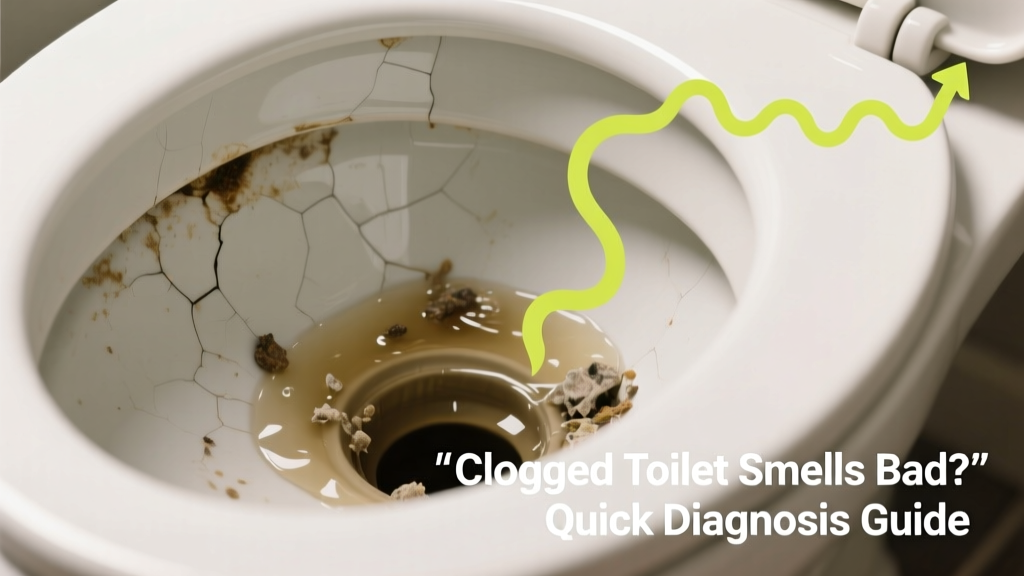
You walk into the bathroom and get hit with a sharp, sour whiff—like rotten eggs or stagnant pond water—coming straight from the toilet bowl. The flush is sluggish or won’t clear at all. Don’t panic: this stink isn’t just unpleasant—it’s a loud warning sign that something’s seriously wrong in your drain or vent system.
Quick Checklist
- Does the smell get stronger right after flushing?
- Is water backing up anywhere else (e.g., shower, sink, floor drain)?
- Can you hear gurgling sounds from nearby drains or the toilet itself?
- Is the toilet bowl water level unusually high—or dropping slowly over time?
- Do you smell sewer gas near the base of the toilet or around floor vents?
- Has there been recent heavy rain or flooding in your area?
Possible Causes
Sewer Gas Escaping Through Dry Trap
When a toilet sits unused for days (or weeks), the water in the P-trap evaporates—breaking the seal that blocks sewer gases. Confirm by pouring 2 cups of water into the bowl and waiting 10 minutes: if the smell fades, the trap was dry. Low severity—DIY fix. How to refill and maintain toilet traps.
Clogged Drain Line or Main Sewer Line
If multiple fixtures back up or gurgle together—or if sewage rises in the basement floor drain—you likely have a main line clog. A plunger may fail; a camera inspection often reveals tree roots or collapsed pipe. High severity—call a licensed plumber immediately. Signs and solutions for main sewer clogs.
Faulty or Cracked Wax Ring
A broken wax ring lets sewer gas leak from beneath the toilet base, especially when pressure builds during flushing. Confirm by rocking the toilet gently—if it wobbles or you see black residue on the floor, the seal is compromised. Medium severity—replaceable with basic tools, but requires lifting the toilet. Step-by-step wax ring replacement guide.
Clogged or Missing Vent Stack
Without proper venting, air can’t escape the drain system—causing negative pressure that siphons water out of traps and pulls odor-laden air upward. Confirm by checking your roof vent for bird nests, ice, or debris; smell intensifies when wind blows across the roof. Medium severity—often DIY-cleanable, but hard-to-reach stacks need pros. How to inspect and clear a vent stack.
What to Do First
Stop using the toilet entirely. Flush only once—if at all—to avoid overflow. Open windows for ventilation and place a damp towel over the bowl rim to temporarily suppress gas release. Run water in other sinks briefly to reseal their traps and reduce cross-contamination risk.
- Turn off the toilet’s shut-off valve (located behind the base)
- Place towels around the base to catch potential seepage
- Check for visible cracks in the porcelain or pooling water on the floor
- Sniff near the base and behind the tank—note where odor peaks
What NOT to Do
Never pour chemical drain cleaners down a smelly, clogged toilet. They won’t clear a full blockage—and can corrode pipes or react dangerously with standing waste. Avoid repeated plunging if water rises toward the rim; you’ll force contaminated water onto the floor. And never ignore gurgling in other drains—it signals a system-wide issue, not just a toilet problem.
- Don’t use bleach or vinegar mixes hoping to ‘disinfect’ the smell—they mask, not fix, gas leaks
- Don’t run the garbage disposal or dishwasher until the cause is confirmed
- Don’t delay calling a plumber if you see black water, hear constant gurgling, or smell gas outdoors
Why does my clogged toilet smell like rotten eggs?
That sulfuric stench comes from hydrogen sulfide gas—a byproduct of anaerobic bacteria breaking down organic waste in stagnant, oxygen-poor conditions. It’s most common when water sits too long in a clog or dry trap. According to the U.S. EPA, 14% of household water usage is lost to leaks—but far more odor issues stem from trapped air, not flow.
Can a clogged toilet cause sewer gas to enter the house?
Yes—and it’s more common than people think. When pressure builds behind a clog, sewer gas seeks the path of least resistance: often through a dry P-trap, cracked wax ring, or faulty vent. The Insurance Institute for Business & Home Safety’s 2023 report found that 68% of indoor sewer gas complaints involved either a dry trap or failed toilet seal.
"Sewer gas isn’t just unpleasant—it’s flammable and potentially toxic at high concentrations. If you smell it consistently, assume your plumbing seal has failed and act within 24 hours." — Licensed Master Plumber, American Society of Plumbing Engineers, 2022
Will plunging fix the smell?
Only if the smell is caused by a shallow clog (like toilet paper) that’s fully cleared by plunging. But if the odor persists after clearing visible water, the issue lies deeper—either in the trap, vent, or main line. Over-plunging can damage the wax ring or crack older porcelain.
Could this be a sign of a broken sewer pipe?
Possibly—especially if you notice soggy ground near your foundation, unusually lush grass in one spot, or persistent foul odors outdoors. A broken sewer pipe leaks wastewater into soil, creating methane and hydrogen sulfide. Camera inspection is required; excavation may be needed. What to expect with sewer pipe repair.
How long can I wait before calling a plumber?
If the smell is mild and only appears after flushing—and disappears within minutes—monitor for 24 hours. But if it’s constant, worsens with weather changes, or coincides with slow drains elsewhere, contact a plumber within 12 hours. Delaying increases mold risk behind walls and exposure to harmful gases.
| Odor Description | Most Likely Cause | Urgency Level |
|---|---|---|
| Rotten eggs + gurgling | Main sewer line clog or vent blockage | High — call pro today |
| Musty basement + toilet base odor | Faulty wax ring or floor flange leak | Medium — fix within 48 hrs |
| Stale, dusty smell only when unused | Dry P-trap | Low — refill and monitor |
| Sweet-sour decay + visible black mold | Leaking supply line or hidden overflow | High — check for moisture damage |
Bad toilet smells are rarely just about cleanliness—they’re your plumbing system shouting for attention. Pinpointing the source early saves money, prevents health risks, and avoids emergency calls at midnight. Trust your nose, follow the clues, and don’t let a stink linger longer than it has to.