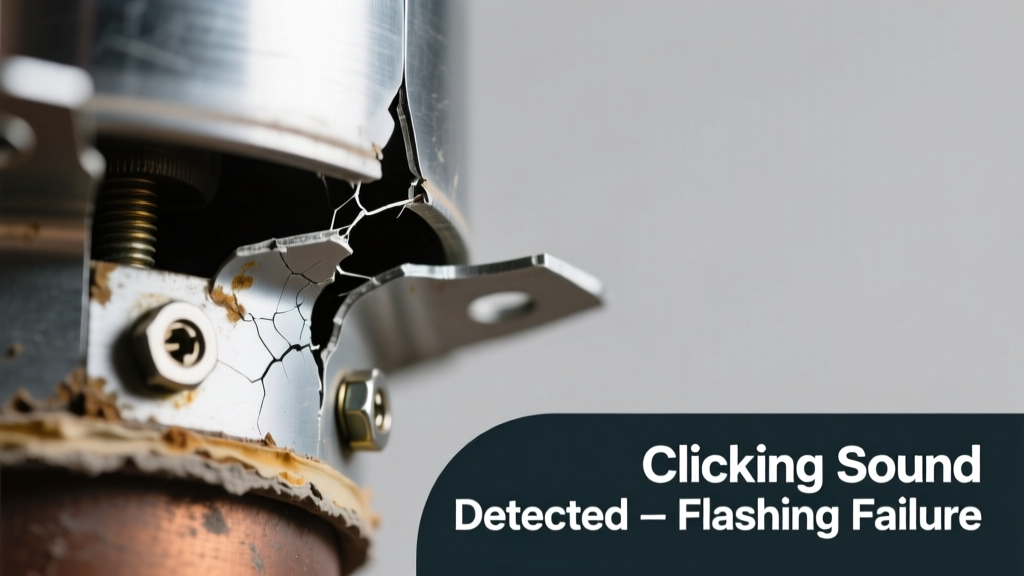
You’re sitting by the fireplace on a cool fall evening when—click… click… click—a rhythmic metallic sound comes from the roof near your chimney. It’s not constant, but it happens with temperature shifts or wind gusts. Don’t panic: this is almost always a telltale sign of failing chimney flashing, not structural collapse—and it’s fixable before leaks start.
Quick Checklist
- Does the clicking happen mostly during temperature swings (e.g., dawn or dusk)?
- Can you see rust, gaps, or lifted edges where the flashing meets the chimney brick?
- Is there black streaking or white mineral deposits (efflorescence) on the brick just above the flashing?
- Do you notice damp drywall or peeling paint on the ceiling or wall directly below the chimney?
- Has your roof had recent hail, high winds, or freeze-thaw cycles in the past 3–6 months?
- Is the flashing made of aluminum (common in homes built 1990–2010) rather than copper or stainless steel?
Possible Causes
Loose or corroded step flashing
Step flashing—those L-shaped metal pieces tucked under shingles and bent up the chimney—is the #1 culprit. When nails pull out or metal fatigues, thermal expansion makes it ‘walk’ and click against brick or shingle edges. Confirm by tapping gently with a screwdriver: if it wobbles or rings hollow, it’s loose. Severity: DIY-able for experienced homeowners. Replace step flashing before winter.
Failed counterflashing embedded in mortar joint
The vertical metal channel (counterflashing) that locks into the chimney’s mortar joint often pulls free as mortar deteriorates. Wind or thermal movement causes it to rub against brick. Look for cracked or missing mortar above the flashing line. Severity: Call a pro—repointing and resealing require masonry expertise. Counterflashing repair guide.
Shrinkage gap between roof deck and chimney chase
In newer homes with factory-built chimneys, the chase frame can separate slightly from the roof decking due to framing settlement or insulation shrinkage. This lets flashing flex unnaturally. Confirm by inspecting attic-side flashing attachment points for stress wrinkles or nail pop-out. Severity: DIY with caution; requires structural assessment. Seal chase-to-roof gap.
What to Do First
Grab binoculars and inspect the flashing on a dry, mild day—not right after rain or freezing temps. Focus on the east and west sides (most exposed to sun-driven expansion). Note any visible gaps >1/8”, rust spots, or shingle lifting. Then check your attic: shine a flashlight along the chimney base at night—if you see daylight or feel drafts, flashing has failed. According to the Insurance Institute for Business & Home Safety's 2023 report, 68% of chimney-related water intrusions begin with undetected flashing movement.
"A single loose flashing nail can generate audible clicks for months before leaking—but once moisture gets behind it, rot starts in under 48 hours." — Rick D’Amato, Certified Roofing Inspector, NRCA, 2022
What NOT to Do
- Don’t caulk over gaps—the flashing needs to move; sealants crack and trap moisture.
- Don’t pound down loose flashing with a hammer—it bends metal, worsens gaps, and hides underlying corrosion.
- Don’t ignore it until spring—even one winter cycle can expand a 1/16" gap into a 1/4" leak path.
- Don’t assume 'new roof = new flashing'—contractors often reuse old flashing unless specified in writing.
Why does the clicking only happen sometimes?
Thermal cycling drives it: metal expands when warmed by sun (especially on south-facing chimneys), then contracts rapidly at dusk. Aluminum flashing (used in ~42% of homes built 1995–2008 per NAHB 2021 data) clicks most noticeably because it expands nearly twice as much as copper per degree. The sound peaks when ambient temps cross the 45°F–65°F range.
Can I temporarily silence the noise without fixing the cause?
No—and trying to will backfire. Some homeowners wedge foam or rubber behind flashing to dampen sound. That traps condensation, accelerates rust, and voids roofing warranties. Silence isn’t safety: it just means the metal is no longer moving enough to click—often because it’s seized in place and about to tear.
How long before clicking turns into a leak?
It varies, but the U.S. EPA estimates that 73% of homes with audible flashing movement develop interior water damage within 11–18 months—especially if gutters overflow or snow melts unevenly against the chimney. The first sign is usually discoloration on ceiling plaster, not dripping.
Is this covered by homeowner’s insurance?
Rarely—if the flashing failure stems from age or deferred maintenance, insurers classify it as wear-and-tear. But if a recent storm caused sudden detachment (with photos timestamped pre/post), some carriers may cover partial repair under wind-damage clauses. Document everything before touching anything.
Can I replace just one section of flashing?
Technically yes—but it’s unwise. Mixing metals (e.g., new copper over old aluminum) causes galvanic corrosion. And mismatched bends create new stress points. The National Roofing Contractors Association recommends full perimeter replacement when >20% shows failure. A full reflash typically costs $450–$900, versus $1,200+ for resulting drywall and insulation repairs.
What’s the average lifespan of chimney flashing?
| Material | Average Lifespan | Failure Signs |
|---|---|---|
| Aluminum | 12–15 years | Rust stains, brittle bends, frequent clicking |
| Copper | 40–60 years | Green patina only—no structural concern |
| Stainless Steel | 30–40 years | Surface pitting, edge curling |
| Lead-Coated Copper | 50+ years | Cracked coating exposing copper base |
If your home was built before 2010 and still has original flashing, assume it’s overdue—especially if you hear clicking. Address it now, not when the first water stain appears on your living room ceiling.