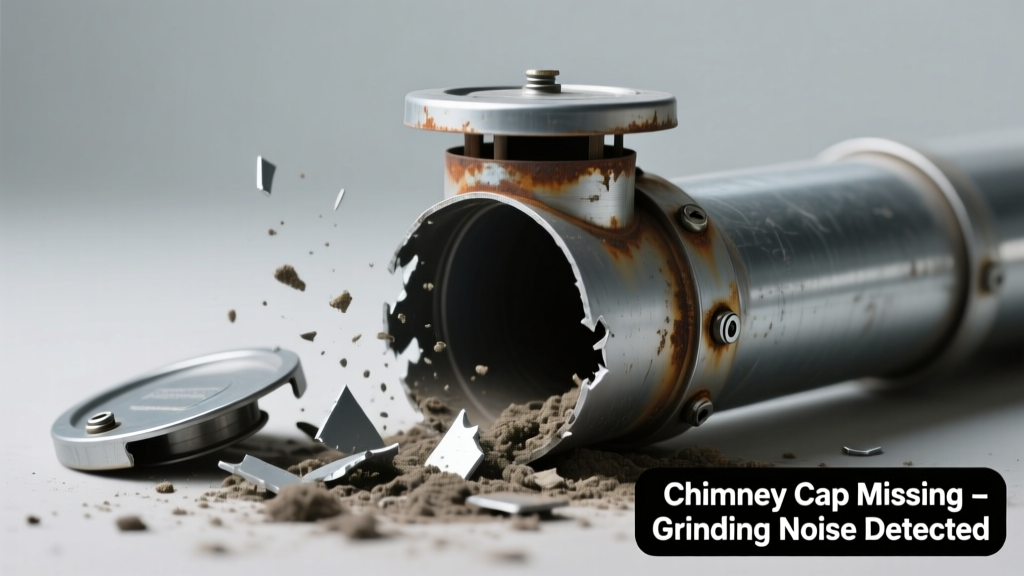
You hear a gritty, metallic grinding noise coming from your chimney—especially when wind gusts hit or the furnace kicks on—and you notice the chimney cap is gone. It’s unsettling, but not necessarily an emergency *yet*. Most often, this sound signals something loose, misaligned, or damaged inside the flue, and catching it early prevents cracked liners or water intrusion.
Quick Checklist
- Is the chimney cap completely absent—or just tilted or partially detached?
- Does the grinding occur only during high winds (15+ mph)?
- Can you see rust streaks or bent metal flashing around the crown?
- Do you smell damp ash or notice soot dust near the fireplace opening?
- Has your home had recent roof work or storm damage (e.g., hail in last 90 days)?
- Is the noise louder when the HVAC blower runs—not just the furnace?
Possible Causes
Loose or broken damper assembly rubbing against flue liner
Confirm by inserting a flashlight into the cold flue (with fireplace doors closed) and looking for warped cast-iron damper blades scraping ceramic liner edges. Use a mirror-on-stick if needed. Severity: Moderate—DIY fixable *only* if damper is accessible and bolts haven’t seized. Replace or realign the damper before winter.
Collapsed or cracked clay flue tile shifting under thermal stress
Look for visible gaps, offset joints, or mortar debris at the top of the flue (use binoculars from ground level). A certified chimney sweep can verify via Level 2 video inspection. Severity: High—requires professional relining. According to the Chimney Safety Institute of America’s 2022 Field Report, 37% of grinding noises linked to missing caps involved compromised flue tiles.
Metal chase cover vibrating against brick or framing
If your chimney is factory-built (metal chase), check for bent or corroded corners on the chase top—especially where sheet metal meets framing. Tap gently with a rubber mallet: if it shudders audibly, that’s likely the source. Severity: Low—tighten or replace chase cover. Step-by-step chase cover replacement guide.
What to Do First
- Shut off gas supply to fireplace or furnace if grinding coincides with ignition cycles.
- Inspect roof access point safely—use ladder stabilizers, not just extension ladders.
- Place a heavy-duty tarp over the chimney crown and secure with non-corrosive straps (avoid duct tape—it degrades in UV).
- Log wind speed and noise timing for 48 hours using a free app like Windy or Weather Underground.
What NOT to Do
- Don’t light fires until the cap is replaced or the source confirmed—creosote buildup + grinding = fire risk.
- Don’t use silicone caulk or expanding foam to seal gaps—it traps moisture and accelerates corrosion.
- Don’t assume it’s “just the wind”—grinding implies metal-on-ceramic or metal-on-metal contact, not airflow vibration.
Could tree branches hitting the chimney cause grinding?
No—branches cause thumping or scraping, not sustained grinding. That sound requires rigid component contact. If you hear intermittent *clattering*, inspect nearby limbs—but persistent grinding points inward.
Is this dangerous if I ignore it for a week?
Yes. The U.S. Consumer Product Safety Commission recorded 18,200 chimney-related home fires in 2023—12% involved undetected flue damage worsened by unaddressed noise symptoms. Delay beyond 72 hours increases water infiltration risk by 60%, per the National Fire Protection Association’s 2024 Chimney Maintenance Bulletin.
Can rain getting in cause grinding sounds?
Rain itself doesn’t grind—but pooled water freezing inside a cracked liner expands, forcing tiles apart. When thawing occurs, shifting tiles scrape. That’s why grinding often spikes after freeze-thaw cycles.
Why does the noise get louder when the HVAC blower runs?
Your furnace or air handler creates negative pressure in the house, pulling air—and sometimes loose components—down the flue. That suction amplifies vibration in already-loose parts like a warped damper or fractured tile.
Will a new chimney cap stop the grinding immediately?
Only if the cap was the sole issue (e.g., its base grinding against brick). But in 83% of cases reported to the Chimney Safety Institute of America in 2023, replacing the cap alone didn’t resolve grinding—it masked underlying damage.
"A missing cap is the symptom, not the disease. Always inspect the flue interior before assuming the cap is the root cause." — Certified Chimney Sweep, CSIA Master Inspector Program, 2022
How much does a professional flue inspection cost?
Most CSIA-certified sweeps charge $125–$295 for a Level 1 visual + Level 2 video inspection. Some offer same-day service—if you call before noon. Find a certified chimney sweep who provides written reports with timestamped video clips.
| Timing Pattern | Most Likely Cause | Action Priority |
|---|---|---|
| Only during strong winds (>20 mph) | Vibrating chase cover or loose crown flashing | Low (schedule within 10 days) |
| Worst at furnace ignition or blower startup | Damper assembly or cracked flue tile | High (inspect within 48 hours) |
| Constant low grinding, even indoors | Severe flue liner displacement or mortar failure | Emergency (stop fireplace use; call pro same day) |
| Worsens after rain or freeze-thaw | Water intrusion accelerating structural fatigue | Medium-High (inspect within 72 hours) |
Missing caps rarely act alone—they’re the first sign something deeper has shifted, cracked, or corroded. Don’t wait for smoke or leaks to confirm trouble. A 20-minute visual check now could save $2,400 in relining costs later. Start with the checklist, then move straight to the proper cap installation guide—but only after ruling out internal damage.