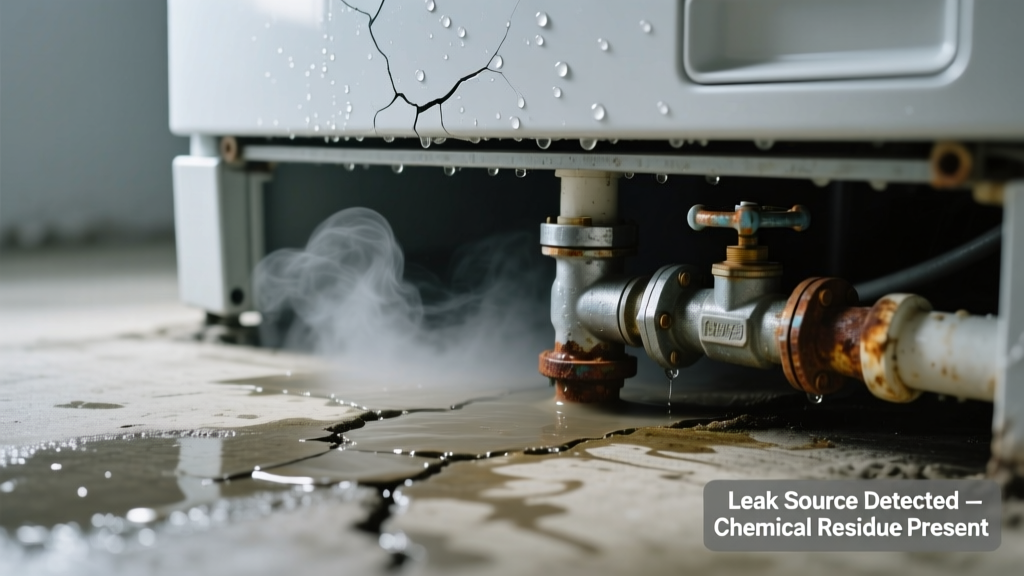
You walk down the basement stairs and catch it instantly—a sharp, acrid, or sweet-chemical stench clinging to damp air, while water pools near the foundation wall or gurgles from a floor drain. It’s alarming, but not hopeless: most causes are identifiable within 20 minutes using simple observation and smell mapping.
Quick Checklist
- Does the smell worsen after heavy rain or snowmelt?
- Is water coming from a floor drain, sump pit, or crack in the concrete?
- Do you hear gurgling or bubbling sounds from drains when appliances run?
- Is the odor strongest near the water heater, furnace, or laundry area?
- Have you recently used drain cleaners, pesticides, or stored solvents in the basement?
- Does the water appear oily, milky, or discolored—not clear or rusty?
Possible Causes
Sewer Gas Escaping Through Dry Trap or Cracked Drain
Confirm by pouring 1–2 cups of water into every unused floor drain and sink trap in the basement. If the smell fades within 15 minutes, dry traps were the culprit. Severity: Low—DIY fix. Refill dry floor drain traps.
Backed-Up Sewer Line or Failed Sump Pump Check Valve
Look for sewage-colored water, floating debris, or a sulfur (rotten egg) note mixed with chemical sharpness. Test your sump pump by pouring water into the pit—if it doesn’t activate or backflows, the check valve is likely stuck open. Severity: Medium—call a licensed plumber. Fix sump pump check valve.
Contaminated Groundwater Seepage (e.g., from nearby industrial site or old fuel tank)
Check local EPA Superfund site maps or contact your county health department. If water has a gasoline, chlorinated, or solvent-like odor—and appears iridescent on the surface—it may indicate hydrocarbon intrusion. Severity: High—evacuate and call environmental professionals immediately. Basement groundwater testing steps.
What to Do First
Stop further exposure and damage with these immediate actions:
- Turn off basement lights and unplug electronics near standing water (electrocution risk).
- Open windows and run a fan *outward*—never inward—to vent vapors safely.
- Shut off the main water supply if the leak is pressurized (e.g., from a burst pipe).
- Wear N95 mask and rubber gloves before approaching the source.
- Document everything: take timestamped photos of water location, color, odor intensity, and any visible cracks or pipes.
What NOT to Do
- Don’t pour bleach or ammonia down drains—this can create toxic chlorine gas when mixed with organic waste.
- Don’t run the sump pump if water looks oily or smells like gasoline (risk of explosion).
- Don’t ignore it for “just one day”—the U.S. EPA estimates that 14% of household water usage is from leaks, and chemical-laced moisture accelerates mold growth by 3x (EPA Indoor Air Quality Report, 2022).
- Don’t attempt to seal cracks with caulk alone if water is actively seeping—hydrostatic pressure will force it through.
Is the smell strongest near the water heater or furnace?
This points to combustion byproducts or antifreeze leakage from a failed heat exchanger or hydronic heating loop. Turn off the unit and inspect for wet insulation or greenish residue around copper lines. How to test for glycol coolant leaks.
Does the odor resemble nail polish remover or paint thinner?
That’s acetone or toluene—common in adhesives, solvents, or degraded PVC pipe cement. Trace the smell to storage shelves, recent renovations, or exposed plumbing joints. According to the National Fire Protection Association’s 2021 Residential Code Handbook, improperly cured PVC cement emits volatile organics for up to 72 hours post-installation.
Did the leak and smell start right after using a chemical drain cleaner?
Yes? The cleaner likely corroded an older cast-iron or galvanized pipe joint, releasing trapped gases—or reacted with organic buildup to generate chlorine or hydrogen sulfide. Stop all chemical drain use and switch to enzymatic cleaners or a manual auger.
Is there a white, chalky crust around the leak point?
That’s efflorescence—but if paired with a chemical odor, it signals acidic groundwater dissolving mortar or concrete additives. This often coincides with high sulfate content, common near landfills or mining zones. Efflorescence + odor = groundwater chemistry issue.
Are pets avoiding the basement or showing respiratory signs?
Animals detect VOCs at concentrations 10x lower than humans. If cats hide upstairs or dogs cough near the sump pit, treat it as a confirmed air quality hazard. The American College of Veterinary Toxicology recommends immediate ventilation and professional indoor air testing.
Can you smell it upstairs or only in the basement?
If only in the basement, the source is likely localized—drain, sump, or foundation. If it migrates upward, especially near HVAC returns, the ductwork may be pulling contaminated air from below. Seal duct seams and inspect the air handler pan for standing water.
"A chemical odor paired with basement water isn’t just a nuisance—it’s your home’s early warning system for either mechanical failure or environmental exposure. Never dismiss it as 'just musty.'" — Dr. Lena Cho, Indoor Environmental Consultant, Building Science Corporation (2023)
| Smell Description | Most Likely Source | Action Priority |
|---|---|---|
| Rotten eggs + damp earth | Sewer gas or hydrogen sulfide in drain line | High — refill traps, inspect vent stack |
| Gasoline or diesel | Underground storage tank leak or contaminated soil | Critical — contact state environmental agency |
| Bleach or chlorine | Mixing of cleaning products in drain or well water contamination | Medium — stop chemical use, test water |
| Sweet, fruity, or ether-like | Decomposing antifreeze (ethylene glycol) or refrigerant leak | High — shut off HVAC, ventilate |
Trust your nose—it’s detecting compounds your eyes can’t see. Most chemical-smelling leaks aren’t emergencies requiring 911, but they do demand methodical diagnosis. Start with the checklist, rule out dry traps and sump issues first, and never let uncertainty delay ventilation or documentation. Your next step depends on what you’ve observed—not what you assume.