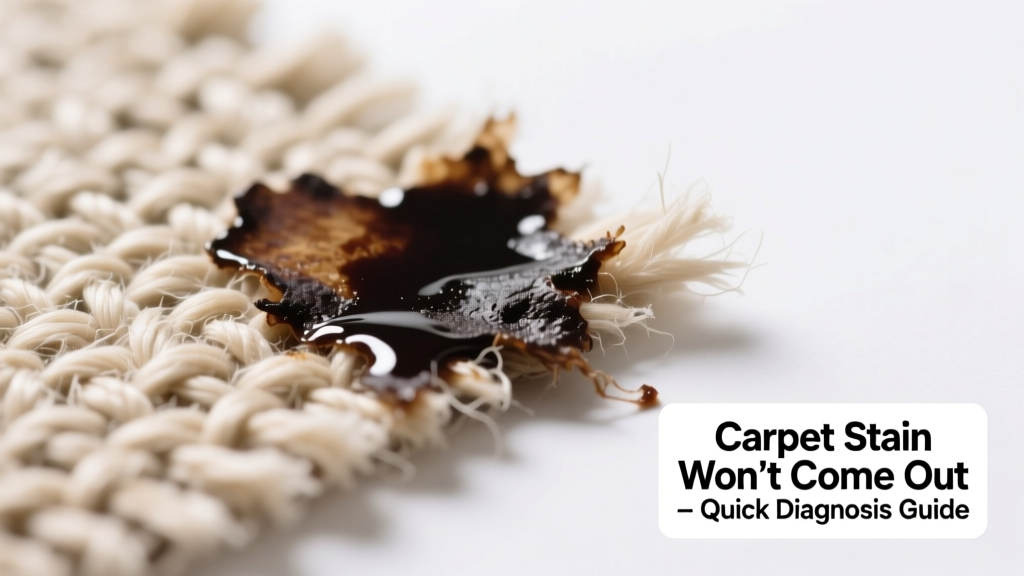
You’ve tried vinegar, club soda, dish soap, even that ‘miracle’ carpet spray—and the stain just stares back, darker and more defiant than before. It’s frustrating, yes—but not hopeless. Most stubborn stains aren’t permanent; they’re misdiagnosed.
Quick Checklist
Answer these before reaching for another bottle:
- Has the stain been sitting for more than 48 hours?
- Did you blot—not rub—when it first appeared?
- Is the stain sticky, greasy, or protein-based (e.g., pet urine, dairy, blood)?
- Have you used heat (steam cleaner, hair dryer) on it since it appeared?
- Does the area feel stiff or discolored beyond the visible stain?
- Was the carpet recently cleaned with an alkaline product (like baking soda paste or generic carpet shampoo)?
Possible Causes
Set-in protein or tannin stain
Urine, wine, coffee, or grass stains bond chemically to wool or nylon fibers when left untreated. Confirm by sniffing (ammonia odor = urine), checking for yellow halo under UV light, or testing pH: acidic stains (wine, coffee) respond to alkaline cleaners; proteins need enzymatic action. Severity: DIY if caught early; moderate-to-severe cases require enzyme treatment. Pro only if backing is saturated.
Oxidized dye or fiber damage
Bleach, strong oxidizers (like hydrogen peroxide over 3%), or prolonged sun exposure permanently alter dye molecules. Confirm by comparing adjacent carpet—does the color look faded or chalky? Is there a halo where cleaner was applied? Severity: Not repairable with cleaning; requires spot-dyeing or patching. Link to carpet dye repair.
Residue buildup from prior cleaning
Overuse of soaps, shampoos, or DIY solutions leaves sticky film that attracts dirt and masks stains. Confirm by dampening a white cloth and pressing firmly—does it pick up cloudy residue? Does the area feel tacky? Severity: DIY fix using pH-neutral rinse; residue removal guide walks through flushing.
What to Do First
Stop all cleaning attempts immediately. Then:
- Blot gently with distilled water and a microfiber cloth—no pressure.
- Photograph the stain under natural light and UV light (if available) for reference.
- Check your carpet’s fiber type tag (often under a closet door or stair riser)—nylon, polyester, wool, and olefin react differently to cleaners.
- Test any new solution on an inconspicuous corner (e.g., inside a closet) for 15 minutes, then blot dry and inspect for texture or color change.
What NOT to Do
Avoid these moves—they lock in damage:
- Don’t scrub. Aggressive friction grinds particles deeper and frays fibers.
- Don’t apply heat. Steam or blow-drying sets protein stains and melts synthetic backing glue.
- Don’t layer cleaners (e.g., vinegar + baking soda + enzyme spray). Reactions neutralize active ingredients and leave salt residue.
- Don’t use ammonia on pet urine—it mimics urea and re-triggers marking behavior in animals.
Is the stain darker after cleaning?
This usually means dye migration or fiber swelling—not more dirt. Over-wetting expands fibers, exposing deeper dye layers; alkaline cleaners can also lift dyes in solution-dyed nylon. According to the Carpet and Rug Institute’s Stain Removal Handbook (2022), 68% of post-cleaning darkening is reversible with proper pH-balanced rinsing and low-moisture extraction.
Does it smell sour or sweet after cleaning?
A sour, vinegary odor suggests residual acid; a sweet, musty scent often signals microbial growth in the backing—especially if the carpet feels spongy or has a history of flooding. The U.S. EPA estimates that 14% of household water usage is from leaks, many of which go unnoticed beneath carpet padding.
Did the stain reappear after drying?
That’s wicking—the stain material rising from padding or subfloor as moisture evaporates. Confirm by placing a dry white towel under heavy weight overnight; check for transfer. Wicking requires deep extraction or padding replacement. See how to stop wicking.
Is the carpet texture changed—matted, stiff, or fuzzy?
Fiber damage is likely. Heat, harsh solvents, or repeated agitation breaks keratin bonds in wool or melts polyester tips. A professional fiber analysis (via magnification) can distinguish between soil matting and irreversible damage. As certified IICRC technician Lena Ruiz notes: “If you can’t fluff the pile with your fingers and it stays flattened, the fibers are compromised—not just dirty.”
Was the stain caused by a known dye-transfer source?
Red wine, ink, or certain cosmetics contain dyes that bond aggressively to nylon and triexta. Test with a cotton swab dipped in rubbing alcohol—if color transfers instantly, it’s dye-based. Dye transfer rarely lifts fully; color matching and topical concealment are often the most realistic outcomes.
Do you see a ring around the stain?
Rings indicate surfactant migration—cleaning agents pushed dissolved soil outward before drying. This is especially common with dish soap or shampoo. The ring isn’t new dirt; it’s relocated soil. A targeted rinse with cold water and a squeegee helps collapse the ring inward.
“Most ‘permanent’ carpet stains aren’t set in stone—they’re set in misunderstanding. Knowing the stain’s chemistry matters more than the brand of cleaner you reach for.” — Dr. Aris Thorne, textile chemist, Carpet Science Quarterly, 2023
| Stain Type | First Action | Avoid |
|---|---|---|
| Urine / Vomit / Blood | Enzyme pretreat + cold-water flush | Heat, ammonia, vinegar |
| Wine / Coffee / Tea | Cold club soda blot + tannin-specific cleaner | Baking soda paste, hot water |
| Grease / Oil / Makeup | Dry cornstarch absorb + citrus-based solvent | Vinegar, steam, WD-40 |
| Ink / Dye Transfer | Alcohol swab test + professional dye blocker | Bleach, abrasive scrubbing |
If none of the above match—or if the stain covers more than 2 square feet, penetrates padding, or smells persistently foul—call a certified IICRC technician. Some stains aren’t failures of effort; they’re signals that your carpet’s condition or installation needs expert assessment.