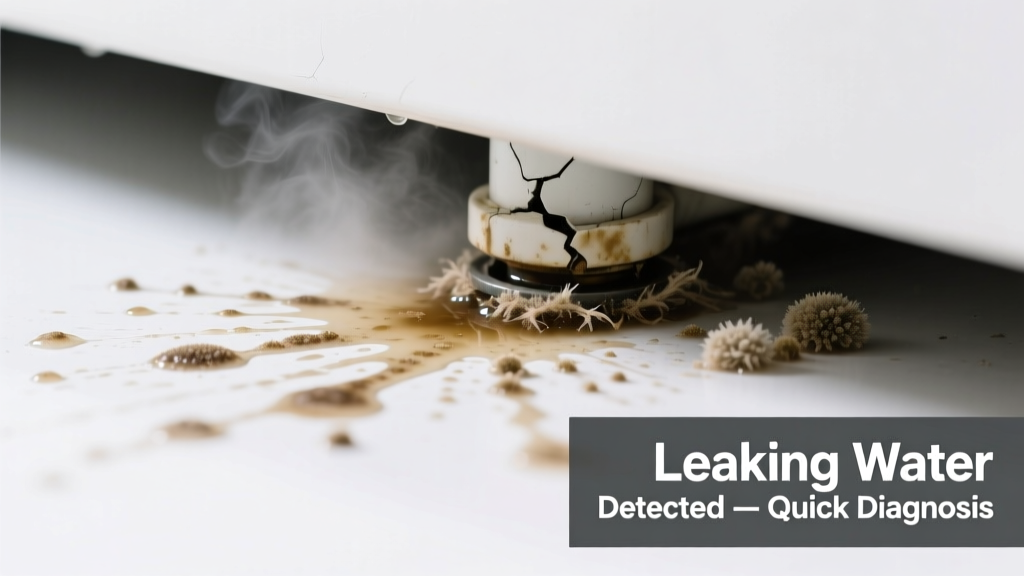
You walk into the living room and catch it instantly: that damp, earthy, almost sweet-rotten smell clinging to the carpet—like wet cardboard left in a basement. Then you spot the dark, spongy patch near the baseboard, or feel moisture underfoot when stepping barefoot. This isn’t just old carpet—it’s a red flag for active water intrusion, and time is critical.
Quick Checklist
Answer these yes/no questions to narrow the likely source:
- Does the musty smell intensify after rain or during high humidity?
- Is the damp area near an exterior wall, window, or sliding glass door?
- Do you hear dripping, hissing, or running water behind walls or under floors?
- Has your water bill spiked unexpectedly in the last two billing cycles?
- Are there visible stains, discoloration, or buckling on baseboards or drywall nearby?
- Does the carpet feel cool or cold to the touch—even in warm weather?
- Have you recently had plumbing work, appliance installation, or roof repairs?
Possible Causes
1. Leaking Supply Line Under Sink or Toilet
This is the most common culprit—especially in bathrooms and kitchens where carpet abuts tiled areas. Look for soft spots beneath rugs near vanities or toilets. Turn off the shut-off valves and check for drips at connections. A loose compression nut or cracked braided supply line often leaks intermittently, soaking subfloor and wicking up carpet backing. According to the U.S. EPA, 14% of household water usage is from leaks—many undetected for weeks. Severity: Low–moderate. Most supply line leaks are DIY-fixable with basic tools and new lines. Replace toilet supply line.
2. Failed Shower Pan or Tub Drain Assembly
If the musty smell originates in a bathroom with carpeted flooring (e.g., older master suites), water may be leaking through grout cracks or failed silicone around the tub flange, then migrating under vinyl or carpet padding. Confirm by running the shower for 10 minutes while checking for moisture at the base of adjacent walls or floor registers. Severity: Moderate–high. Requires removal of flooring to inspect pan integrity; best handled by a licensed plumber or water restoration specialist. Shower pan leak repair.
3. Condensation Behind Insulated Exterior Walls
In humid climates or poorly insulated homes, warm indoor air meets cold sheathing, causing condensation inside wall cavities. That moisture can drip down framing, saturate insulation, and bleed onto subfloor and carpet edges. Check for peeling paint, blistering wallpaper, or efflorescence on interior walls near windows. Severity: Moderate. Requires thermal imaging or invasive inspection; mitigation involves ventilation upgrades or vapor barrier correction. Fix wall condensation.
What to Do First
Act within 24–48 hours to prevent irreversible damage and microbial growth. Mold can colonize in as little as 48 hours on wet carpet padding (per the IICRC S500 Standard, 2023). Follow this sequence:
- Turn off water supply to suspect fixtures (toilets, sinks, washing machines).
- Lift carpet edge near the damp zone—wear gloves and an N95 mask—to inspect padding and subfloor for saturation, staining, or slime.
- Use a digital moisture meter (readings >15% indicate active wetness) on subfloor, joists, and baseplates.
- Run dehumidifiers (≥50-pint capacity) and fans on low speed—not high—to encourage evaporation without aerosolizing spores.
- Contact your insurance provider if wet area exceeds 10 sq ft or involves sewage-contaminated water.
What NOT to Do
Well-intentioned actions often worsen the problem:
- Don’t steam-clean or shampoo the carpet. This adds moisture to an already saturated system and pushes contaminants deeper.
- Don’t cover the area with rugs or furniture. Trapping moisture accelerates decay and hides worsening conditions.
- Don’t delay inspection because the leak seems “small.” A pinhole in a copper pipe can release over 250 gallons per day (Insurance Institute for Business & Home Safety, 2023).
- Don’t rely solely on odor masking sprays or ozone generators. These don’t address moisture or microbial growth—and ozone is hazardous to lungs and pets.
Is the musty smell strongest near a window or exterior door?
That points to infiltration—not plumbing. Check for cracked caulk, missing flashing, or rotted sill plates. A simple hose test (spraying water along the seam while someone watches inside) can confirm entry points. If water appears within 60 seconds, the envelope breach is active and urgent.
Did the smell start right after a heavy rainstorm?
Rain-triggered odors strongly suggest roof, gutter, or foundation drainage failure. Inspect roof valleys, downspout extensions (should extend ≥5 ft from foundation), and grading around the home’s perimeter. Poor drainage accounts for nearly 30% of residential water intrusion claims filed with State Farm in 2022.
Does the carpet feel squishy or emit water when stepped on?
This indicates long-term saturation—likely >72 hours. Padding is probably ruined, and subfloor may be compromised. At this stage, professional extraction and drying are essential. Carpet replacement is almost always required; reuse risks chronic odor and allergen exposure.
Can you hear water running when no fixtures are on?
A persistent hiss or trickle suggests a slab leak or buried supply line rupture. Shut off the main valve immediately and call a leak detection specialist. Acoustic listening devices can locate slab leaks within 6 inches accuracy—no guesswork needed.
Are pets suddenly avoiding the area—or sniffing it intensely?
Dogs and cats detect volatile organic compounds (VOCs) from mold and bacteria at concentrations humans can’t perceive. Their avoidance or fixation is a reliable early-warning behavior—document it with photos and notes before remediation begins.
Have you recently installed new appliances like a washing machine or dishwasher?
Improperly secured drain hoses, kinked supply lines, or unlevel units cause slow, steady leaks. Check behind appliances for pooling water or mineral deposits on flooring. A loose washer drain hose clamp can leak 0.5 gallons/hour—enough to saturate 3 sq ft of padding in under 48 hours.
"When carpet smells musty but looks dry, assume the worst: moisture is trapped beneath—not on top. Your nose is detecting microbial activity, not surface dampness." — Certified Indoor Environmentalist, IICRC-certified firm, 2023
| Material | Dry Range | Caution Zone | Action Required |
|---|---|---|---|
| Carpet Padding | <12% | 12–15% | Monitor daily; increase airflow |
| OSB Subfloor | <12% | 12–17% | Inspect joists; check for rot |
| Concrete Slab | <75% RH | 75–90% RH | Test for hydrostatic pressure |
| Hardwood Flooring | <6–9% | 9–12% | Check for cupping or gaps |
Don’t wait for the stain to spread or the odor to worsen. Most water-related carpet issues escalate silently—until they’re costly or hazardous. Start with the Quick Checklist, document everything, and act decisively. Early intervention saves carpet, subfloor, and peace of mind.