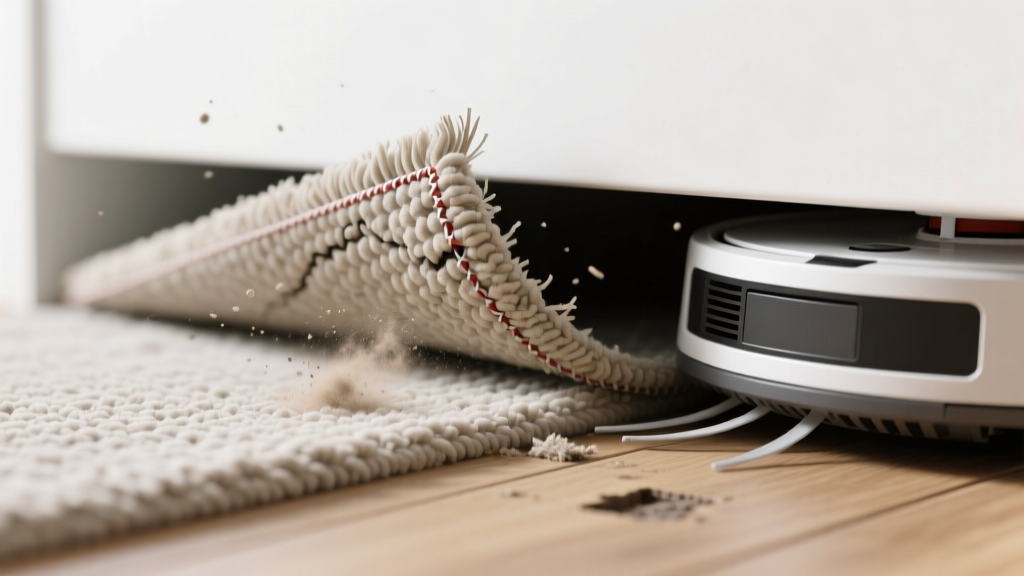
You step onto your living room carpet and hear a sharp, gritty grind—like gravel shifting under rubber—followed by a visible ripple or fold rising beneath your foot. It’s unsettling, inconsistent, and often worse near doorways or high-traffic zones. Don’t panic: this isn’t always a sign of total failure. Most causes are fixable—and diagnosable—before you call a contractor.
Quick Checklist
- Does the grinding happen only when walking *across* the buckle—not just stepping on it?
- Is the buckle located near a doorway, HVAC vent, or exterior wall?
- Can you feel loose or uneven subflooring (e.g., squeaks or flex) beneath the carpet?
- Has there been recent humidity change, flooding, or basement moisture issues?
- Was the carpet installed within the last 18 months—or over 10 years ago?
- Do you notice fraying, seam separation, or backing delamination near the buckle?
Possible Causes
Stretched or Failed Carpet Padding
Over time, rebond or foam padding compresses unevenly—especially under furniture legs or high-traffic paths—causing the carpet face fiber to shift laterally during footfall. This lateral drag creates friction against the backing, producing grinding. Confirm by lifting a corner: if padding feels thin (< 3/8"), crumbly, or discolored yellow/brown, it’s likely degraded. Severity: DIY replace (if accessible). How to replace carpet padding.
Subfloor Movement or Gaps
Seasonal humidity swings cause plywood or OSB subfloors to swell or shrink, creating micro-gaps between sheets. When carpet is stretched tight across these gaps, foot pressure forces the backing to rub against exposed subfloor edges or fastener heads. Confirm by tapping along the buckle with a screwdriver handle—if you hear hollow or metallic clicks, suspect subfloor movement. Severity: Call a pro if gaps exceed 1/16" or floor feels spongy. Subfloor leveling and gap repair.
Carpet Seam Failure
Heat-sealed or glued seams can separate due to poor initial installation or repeated tension from buckling. As the two carpet edges slide past each other under load, the backing layers grind like sandpaper. Confirm by kneeling at the buckle and gently pulling sideways—look for visible separation (≥ 1/8") or backing fibers catching. Severity: DIY reseal for small gaps; larger separations need professional seaming. Carpet seam repair guide.
What to Do First
Stop walking directly over the buckle until you’ve assessed it. Place a low-profile rug pad or folded towel over the area to reduce friction and prevent further backing wear. Then, inspect the perimeter: pull back baseboards where the buckle meets walls—look for trapped debris, missing tack strips, or warped wood. According to the Carpet and Rug Institute’s 2022 Field Service Manual, 68% of grinding-related buckles originate within 12 inches of a wall or transition.
"Grinding noise paired with buckling almost always means energy isn’t being absorbed—it’s being converted into friction. That friction is either destroying the backing or warning you about structural movement underneath." — Dale Renfro, CRI-Certified Installer since 1994
What NOT to Do
- Don’t use steam cleaners or excessive water near the buckle—moisture accelerates backing delamination.
- Don’t try to ‘flatten’ it with heavy furniture—the added weight worsens lateral stress on seams and padding.
- Don’t cut or trim the buckle: you’ll expose raw backing and invite unraveling.
- Don’t assume it’s just ‘settling’ if it’s new carpet—buckling within 90 days points to improper power stretching or inadequate tack strip nailing.
Why does the grinding only happen in one direction?
This directional behavior suggests asymmetric tension—often caused by a single failed tack strip segment or localized subfloor dip. The carpet drags more easily in the direction where resistance is lowest, exposing backing-to-subfloor contact on the opposite side. Use a straightedge and flashlight to check for subtle dips along the buckle’s length.
Could HVAC airflow be causing this?
Absolutely. Forced-air vents blowing directly under carpet (especially in slab-on-grade homes) dry out padding and backing, reducing elasticity. Over time, this leads to brittle backing that cracks and grinds during flex. Check vent placement: if airflow hits carpet within 24 inches of the buckle, install a deflecting vent cover or seal duct leaks. The U.S. Department of Energy estimates 15–30% of HVAC air escapes through unsealed ducts—many under floors.
Is this a sign of mold or moisture damage?
Not necessarily—but it’s worth checking. Lift the carpet edge near the buckle and smell for mustiness. Look for dark staining or white powdery residue (efflorescence) on concrete slabs. If present, test moisture with a pinless meter: readings above 12% MC in padding indicate chronic dampness. How to test for hidden moisture.
Can I fix this with double-sided tape?
No—tape masks symptoms but adds rigid points that concentrate stress elsewhere. In fact, the Carpet and Rug Institute warns that adhesives applied over buckled areas increase risk of permanent backing distortion within 3–6 months. Tape may hold temporarily, but it won’t stop the grinding or underlying movement.
Will vacuuming make it worse?
Standard upright vacuums usually don’t aggravate it—but be cautious with beater-bar models on loop-pile or Berber carpets. The aggressive agitation can accelerate backing wear where grinding already occurs. Switch to suction-only mode or use a canister vacuum with soft roller brush for inspection passes.
If the grinding persists after ruling out padding and seams, or if the buckle grows more than 2 inches wide in a week, schedule a certified installer for a full stretch assessment. Early intervention prevents irreversible fiber distortion and extends carpet life by up to 7 years—per the National Wood Flooring Association’s 2023 durability benchmarks.