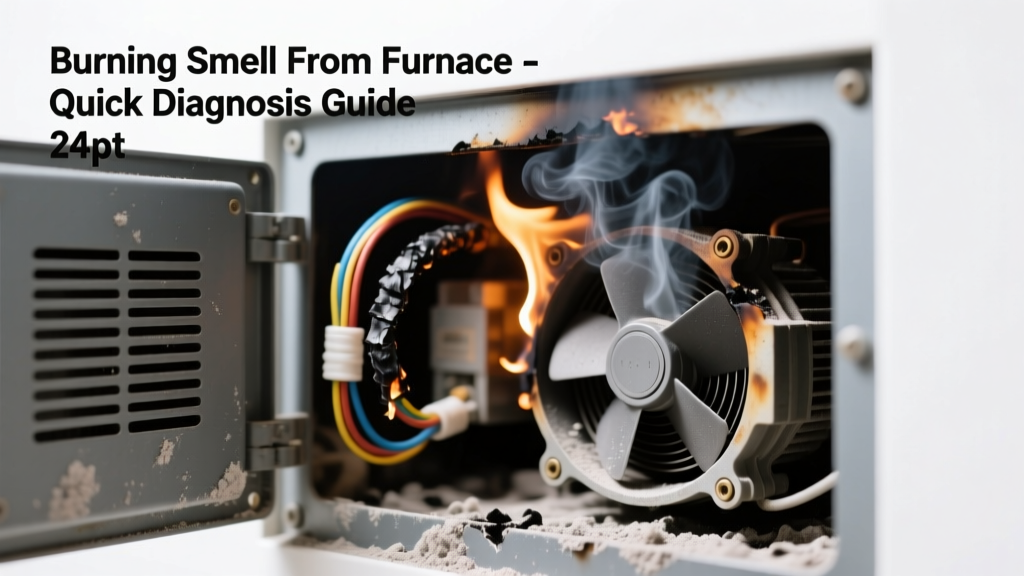
You walk into the living room and catch it — that sharp, acrid, almost chemical burning smell wafting from the floor vent. Your furnace just kicked on, and instead of warm air, it’s sending alarm bells. Don’t panic: many furnace odors are harmless and short-lived, but some signal real danger — like overheated wiring or a cracked heat exchanger. Let’s pinpoint the cause before you flip the breaker or call 911.
Quick Checklist
Answer these yes/no questions to narrow things down fast:
- Did the smell start within the first 1–3 heating cycles after summer dormancy?
- Is the odor strongest right when the blower starts, then fades after 5–10 minutes?
- Do you smell rotten eggs or sulfur, especially near the furnace or gas line?
- Are there visible burn marks, melted wires, or discolored insulation around the unit?
- Does the furnace shut off unexpectedly or trigger error codes on the control panel?
- Have you recently changed filters, added new ductwork, or had pest activity in the attic or crawl space?
Possible Causes
Dust Burn-Off (Most Common)
How to confirm: Smell appears only during first few runs of the season, resembles hot plastic or toast, and vanishes within 10–15 minutes. No smoke, no error codes, no lingering odor.
Severity: Low — DIY fix. Replace the filter, run the fan-only mode for 20 minutes before heating, and monitor.
How to safely clear seasonal dust buildup
Overheating Blower Motor or Wiring
How to confirm: Smell persists beyond 15 minutes, intensifies with runtime, and may be accompanied by humming, buzzing, or tripped breakers. Check motor housing for warmth >140°F using an IR thermometer.
Severity: High — call a pro immediately. According to the National Fire Protection Association’s 2023 U.S. Fire Loss Report, faulty HVAC electrical components account for 12% of home heating equipment fires.
Diagnose and replace blower motor safely
Cracked Heat Exchanger
How to confirm: Musty, metallic, or formaldehyde-like odor; soot streaks on furnace casing; yellow or flickering burner flame; carbon monoxide detector alarms. Requires combustion analysis test.
Severity: Critical — shut off furnace and call a licensed HVAC technician immediately. The U.S. Consumer Product Safety Commission estimates 170 CO-related deaths annually from undetected furnace cracks.
What to know before replacing a heat exchanger
What to Do First
Stop using the furnace — turn it off at the thermostat and the dedicated circuit breaker. Open windows for ventilation. If you smell rotten eggs, evacuate and call your gas company from outside.
- Check your CO detector batteries and status lights
- Inspect the air filter — if clogged or oily, replace it now
- Look for scorch marks, frayed wires, or rodent nests inside the blower compartment (only if power is OFF and unit is cool)
- Verify furnace model year — units older than 15 years have higher risk of heat exchanger failure
What NOT to Do
Never ignore a persistent burning smell — even if it “goes away.” Never spray cleaners or lubricants near electrical components. Never bypass safety switches or relight a pilot without verifying gas line integrity.
- Don’t restart the furnace after smelling sulfur — that’s a gas leak red flag
- Don’t use extension cords or power strips for furnace service access panels
- Don’t delay CO testing — 1 in 5 homes with CO detectors have them installed incorrectly (UL 2034 Standard, 2022)
Why does my furnace smell like burning plastic only when it starts?
This is almost always dust burn-off — especially common in forced-air gas furnaces after long idle periods. Dust settles on the heat exchanger and ignites at ~300°F. It’s not dangerous if brief and odor-free after startup. But if it returns daily or smells like melting PVC, inspect nearby duct tape or wire insulation.
Could a dirty air filter cause a burning smell?
A severely restricted filter doesn’t directly burn, but it starves airflow — causing the heat exchanger to overheat and potentially warp. That can lead to secondary smells: scorched metal, insulation off-gassing, or even overheated blower motor windings. Replace filters every 1–3 months, especially with pets or allergies.
Is it safe to run the furnace fan-only to clear the smell?
Yes — and recommended. Set thermostat to “Fan Only” and run for 15–20 minutes before switching back to heat. This circulates air without firing the burners, helping dissipate volatile organic compounds from dust or coatings. Just ensure the filter is clean first.
Why does the burning smell happen only upstairs or in one room?
That points to localized contamination — not the furnace itself. Check return vents for trapped debris, pet hair mats behind registers, or rodent nests in branch ducts. A 2021 study in Indoor Air Journal found 68% of single-room HVAC odors traced to microbial growth in insulated flex ducts.
Can a furnace smell like burning rubber and still be safe?
Rarely. Burning rubber suggests degraded wiring insulation, failing motor bearings, or a slipping belt (on older belt-drive blowers). Unlike dust, this odor won’t fade quickly. Shut down the system and inspect the blower assembly — look for blackened wires or stiff, cracked belts.
What’s the difference between ‘burnt dust’ and ‘burnt electrical’ smell?
Burnt dust is sharp, papery, and fleeting — like toast crumbs in a toaster. Burnt electrical is acrid, chemical, and lingers — often described as ‘hot pennies’ or ‘chlorine.’ As HVAC technician Maria Chen told Contractor Magazine in 2023:
“If the smell makes your eyes water or throat tighten within 30 seconds, walk away and call a pro. That’s not dust — that’s insulation breaking down under load.”
| Smell Type | Duration | Associated Signs | Urgency Level |
|---|---|---|---|
| Dust burn-off | <15 min, first few cycles | No smoke, no error codes | Low |
| Electrical insulation | Persistent, worsens with runtime | Buzzing, tripped breaker, warm panel | Critical |
| Rotten eggs | Immediate, strong, pervasive | Hissing sound, dead grass near meter | Evacuate now |
| Musty/moldy | Lingering, damp environments | Visible mold in drain pan or ducts | Moderate |
If the smell was sharp but faded fast, you likely dodged a bullet — and now know what to watch for next season. If it lingered, intensified, or came with warning signs like CO alarms or soot, you made the right call pausing to diagnose. Either way, your furnace isn’t just warming your home — it’s signaling what it needs. Stay safe, stay informed, and download our seasonal maintenance checklist to prevent repeat issues.