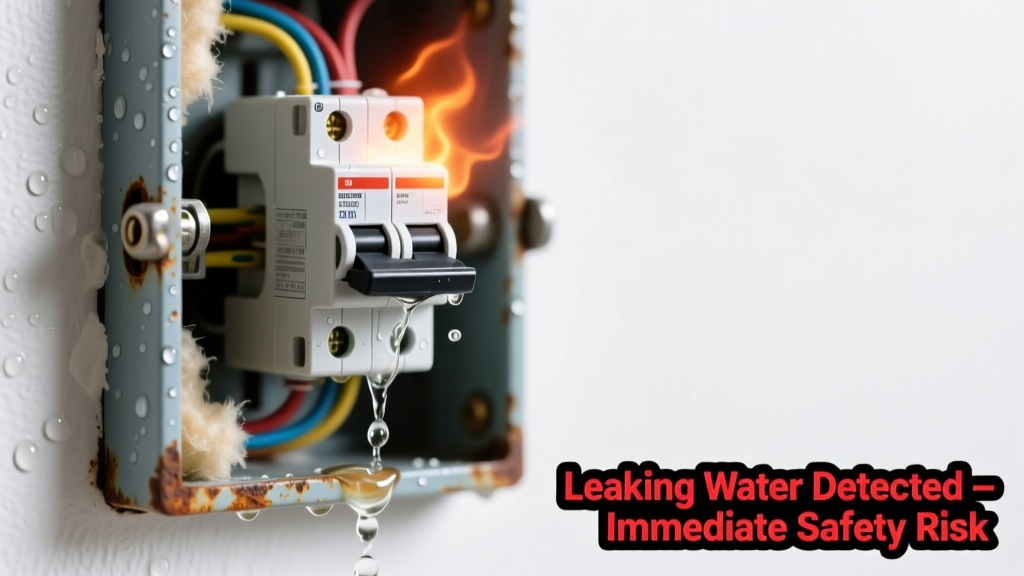
You’re standing in your utility room, and the air smells faintly metallic. You reach toward the main panel—and flinch: the breaker feels unnervingly warm. Then you spot it—a dark stain spreading down the drywall behind the panel, and a slow drip pooling on the floor. This isn’t just inconvenient—it’s urgent. But before you panic, know this: not every hot-and-wet breaker means imminent disaster. Many causes are fixable, some require immediate pro help, and all demand methodical diagnosis.
Quick Checklist
- Is the breaker physically warm—or hot enough to burn skin on brief contact?
- Does the water appear only after rain or high humidity?
- Is the leak coming from above the panel (e.g., attic, roof vent, HVAC drain line)?
- Do you hear buzzing, sizzling, or see discoloration (brown/black scorch marks) on the breaker or bus bar?
- Has the breaker tripped recently—or failed to reset after tripping?
- Is the panel located in a basement, garage, or exterior wall with known insulation gaps?
- Are other breakers in the same panel also warm, or is it isolated to one?
Possible Causes
Condensation from temperature differential (most common)
When humid air meets a cold surface—like a metal panel mounted on an uninsulated exterior wall—it forms condensation. That moisture can pool, drip, and make nearby breakers feel damp and slightly warm (from ambient heat, not electrical fault). Confirm by checking for uniform wetness on panel cover (not just one breaker), absence of burning smell, and no tripping history. Severity: Low—DIY fix. Fix condensation on electrical panel.
Roof or gutter leak tracking down wall cavity
Water enters above the panel—often through missing flashing, cracked boot seals around roof vents, or clogged gutters—and migrates down framing or insulation until it reaches the panel box. Look for staining on ceiling joists above, dripping from top of panel cover, or wet insulation behind drywall. Severity: Medium—requires roofing or carpentry expertise. Fix roof leak near electrical panel.
Faulty GFCI or AFCI breaker overheating and venting moisture
Some older or defective GFCI/AFCI breakers develop internal arcing that generates excessive heat and vaporizes internal lubricants or potting compounds—producing steam-like condensate inside the housing. You’ll often see white residue, blistered labels, or inconsistent tripping. According to the National Fire Protection Association’s Electrical Equipment Fire Patterns Report (2022), 18% of panel-related fires involved compromised GFCI devices showing pre-failure moisture signs. Severity: High—call a licensed electrician immediately. Replace overheating GFCI breaker.
What to Do First
Turn off power to the affected circuit at the main disconnect—not just the individual breaker. If the warmth is localized to the main breaker or entire panel, shut off the main service. Then use a non-contact voltage tester to confirm no live parts remain exposed. Place towels under the drip and mark the wettest point with tape. Photograph the panel interior (with flash off to avoid glare) and note ambient temperature/humidity—this helps pros assess condensation likelihood.
- Check attic access above the panel for visible water trails or mold streaks
- Inspect HVAC condensate drain line if unit is mounted overhead
- Use a thermal imaging camera (or IR thermometer) to map surface temps—anything >140°F on a breaker warrants shutdown
What NOT to Do
Never spray water near the panel—even to test for leaks. Never remove the panel cover while power is on. Don’t wrap breakers in plastic or tape to ‘stop the drip’—that traps heat and accelerates failure. And don’t assume ‘it’s just humidity’ if the breaker trips repeatedly or the odor resembles burnt toast.
- Don’t use a hair dryer to evaporate moisture—it masks the source and may ignite dust buildup
- Don’t install a dehumidifier directly against the panel wall—it creates new condensation points
- Don’t ignore discolored insulation behind the panel—it may indicate long-term moisture exposure and compromised wiring
Is the water clear, cool, and odorless—or warm with a chemical or ozone smell?
Cool, clear water points strongly to environmental sources like roof leaks or condensation. Warm, oily, or chlorinated-smelling water suggests internal breaker failure or degraded insulation. The U.S. EPA estimates that 14% of household water usage is from leaks—but when that water contacts energized components, even small volumes become hazardous.
Does the warmth persist after the breaker has been off for 2 hours?
If yes, it’s likely residual heat from recent load—not active fault. If the breaker heats up again within minutes of resetting under load, internal resistance is building. That’s a red flag. As master electrician Lena Ruiz told EC&M Magazine (2023): “A breaker shouldn’t exceed 90°F surface temp under full rated load. Anything above 115°F means replace it—yesterday.”
"A breaker that’s both hot AND wet violates two fundamental safety boundaries at once: thermal integrity and dielectric isolation. That combination demands escalation—not troubleshooting." — NEC Article 408.36, Interpretive Note, 2023 Edition
Did the leak start after a recent storm—or after installing new lighting, HVAC, or EV charger?
Storms often expose latent roof or flashing flaws. New high-load devices can overload aging breakers, causing thermal expansion that cracks internal seals and allows moisture ingress. Check load calculations: a 50A EV charger on a 60A breaker with existing 30A loads pushes it into continuous-duty territory—where even minor corrosion becomes critical.
Is there visible rust on the breaker’s mounting screws or bus bar connections?
Rust indicates chronic moisture exposure. Even if the current leak is external, rust compromises connection integrity—increasing resistance, heating, and fire risk. Use a flashlight to peer into corners of the panel; rust often hides beneath wire bundles. If found, schedule a full panel inspection—don’t just tighten screws.
Can you trace the water path upward using a dry paper towel?
Press a folded towel firmly against the wettest area and slowly move it upward along the wall. Watch where moisture transfers first: ceiling joint? Window frame? Vent pipe? That tells you the entry point. Avoid using chalk or powder—it conducts electricity if tracked onto live parts.
Have you checked the panel’s NEMA rating and installation date?
Pre-2008 outdoor-rated panels (NEMA 3R) often lack proper gasketing for modern humidity swings. Panels installed before 2000 may use obsolete breakers with known thermal drift issues. Look for the label inside the panel door—manufacturers like Siemens and Eaton publish recall lists for specific vintage models.
This symptom sits at the dangerous intersection of plumbing, weatherproofing, and electrical systems. The right answer isn’t always ‘call an electrician’—sometimes it’s your roofer, sometimes your HVAC tech, and sometimes it’s tightening a gutter hanger. What matters is knowing which clue leads where—and acting before that drip becomes a short circuit.