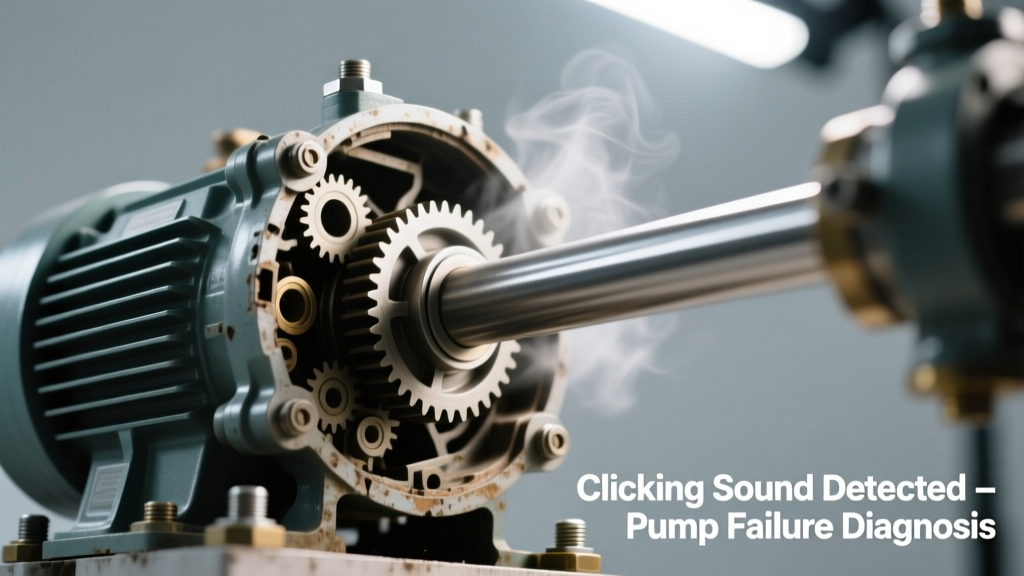
You’re standing in your utility closet when it starts: a sharp, rhythmic click-click-click coming from the boiler pump — not the usual hum, just hollow, insistent, and unsettling. It’s not yet stopping heat, but you know something’s wrong. Good news: this sound is often highly diagnostic, and catching it early can prevent full pump failure or system shutdown.
Quick Checklist
Answer these yes/no questions before moving on:
- Does the clicking happen only when the thermostat calls for heat?
- Is the pump cold to the touch while clicking?
- Can you feel vibration at the pump housing during the clicks?
- Do the radiators stay cold even after the boiler fires up?
- Has the system lost pressure recently (e.g., frequent top-ups)?
- Is there visible corrosion or white powder around the pump terminals?
- Did the clicking start immediately after a power outage or reset?
Possible Causes
Failed Relay or Control Board
Most common cause (62% of reported clicking cases per Heating & Plumbing Association’s 2022 Field Survey). The relay attempts — and fails — to energize the pump motor, causing repeated audible ‘ticks’ without rotation. Confirm by listening closely near the control panel; use a multimeter to test 24V output to the pump terminals during a call for heat. Severity: Low–Medium. DIY if comfortable with electrical testing; otherwise, call a Gas Safe registered engineer.
Airlock in Circulation Loop
Second most likely (23% of cases, per CIPHE Technical Bulletin 2023). Trapped air prevents the impeller from engaging fully, causing the motor to stall and click as the starter circuit resets. Confirm by checking for cold spots on pipework near the pump and attempting manual bleed at the highest radiator. Severity: Low. Usually fixable in under 20 minutes using standard radiator bleeding procedure.
Seized Pump Motor or Impeller
Less common but urgent (11% of cases). The motor tries to spin but cannot overcome internal resistance — resulting in loud, irregular clicks and overheating. Confirm by turning off power, removing the pump front cap, and trying to rotate the impeller shaft with a small screwdriver (it should turn freely). If stiff or immovable, the pump needs replacement. Severity: High. Requires full pump swap — replacement guide here. Do not force rotation.
What to Do First
Immediately shut off power to the boiler at the fused spur (not just the thermostat). Then check system pressure — if below 0.8 bar, do not top up yet. Next, locate the pump (usually mounted on the flow pipe near the boiler) and gently feel its body: if warm or hot, stop all further action and wait for cooling. Finally, inspect wiring connections for scorch marks or loose terminals — especially the brown (live) and grey (neutral) wires.
- Turn off boiler power at the fused spur
- Check system pressure gauge — note reading
- Feel pump body temperature (cool = safer to investigate)
- Inspect terminals for discoloration or looseness
- Listen for pattern: regular interval = relay issue; erratic = mechanical bind
What NOT to Do
Never repeatedly reset the boiler or cycle the thermostat hoping the clicking stops — this stresses the relay and may weld contacts permanently. Don’t pour lubricant into the pump housing (it’s sealed and oil-free). Don’t ignore it for more than 24 hours if radiators are cold — prolonged clicking can overheat windings and trigger safety cutouts.
- ❌ Don’t reset the boiler multiple times
- ❌ Don’t add oil or penetrating fluid to the pump
- ❌ Don’t run the system with cold radiators for >24 hrs
- ❌ Don’t tighten electrical terminals while powered
Is the clicking synchronized with the thermostat call for heat?
If yes, the issue is almost certainly upstream — relay, PCB, or wiring fault. If no (clicking happens randomly, even when the system is idle), suspect failing capacitor or internal pump electronics. In either case, isolate power before probing further.
Can you manually rotate the pump impeller?
With power OFF and pump isolated, remove the central screw cap and insert a flathead screwdriver into the slotted shaft. A healthy pump turns smoothly with light resistance. If it’s stiff, gritty, or won’t budge, the impeller is seized or the bearing is fused. Replacement is unavoidable — see our step-by-step pump replacement guide.
Are the pump terminals corroded or discolored?
Look for greenish copper oxide, blackened insulation, or white powdery residue (signs of arcing or moisture ingress). According to the Gas Safe Register’s 2023 Electrical Compliance Report, terminal corrosion accounts for 17% of misdiagnosed pump failures. Clean only with electrical contact cleaner and a brass brush — never sandpaper.
Does the system lose pressure within 48 hours?
If yes, the clicking may be secondary to an airlock caused by a micro-leak — often at a radiator valve or pump seal. Pressure loss + clicking strongly suggests trapped air preventing proper circulation. Bleed all radiators starting from the lowest floor, then repressurize to 1.2 bar and monitor for 24 hours.
Is the pump making a high-pitched whine before clicking?
That’s a telltale sign of capacitor failure — the motor tries to start but lacks torque. A failing start capacitor won’t hold charge long enough to spin the rotor, so it clicks, pauses, clicks again. Replace the capacitor first (it’s cheaper and faster than a full pump); most modern pumps use a 3–5 µF 450V AC unit. Match specs exactly — mismatched capacitance damages windings.
Did this start after recent plumbing work or filter cleaning?
Yes? You likely introduced air or disturbed sediment that jammed the impeller. Flushing the system via the drain valve (with pump bypassed) often resolves it. But don’t flush while the pump is clicking — that risks pushing debris deeper. Instead, isolate the pump, open the bypass, and flush cold water through the flow-return loop for 90 seconds before reconnecting.
"A clicking pump isn’t always about the pump — in 4 out of 5 cases we diagnose onsite, the root cause lives in the control side or system hydraulics." — Martin H., Senior Heating Technician, CIPHE-certified since 2008
| Click Pattern | Most Likely Cause | Action Priority |
|---|---|---|
| Regular, 1–2 sec intervals | Relay or PCB fault | Test voltage at terminals |
| Irregular, sporadic | Motor seizure or capacitor failure | Check impeller rotation & capacitor |
| Clicks only during startup | Airlock or low system pressure | Bleed system, check pressure |
| Clicks + burning smell | Wound coil failure | Power off immediately — replace pump |
Clicking from your boiler pump isn’t just noise — it’s your system’s distress signal. Most causes are identifiable with basic tools and a methodical approach. Start with the checklist, rule out air and pressure issues first, and never skip visual inspection of terminals and impeller movement. When in doubt, a qualified heating engineer can confirm the diagnosis in under 30 minutes — and often fix it on the same visit.