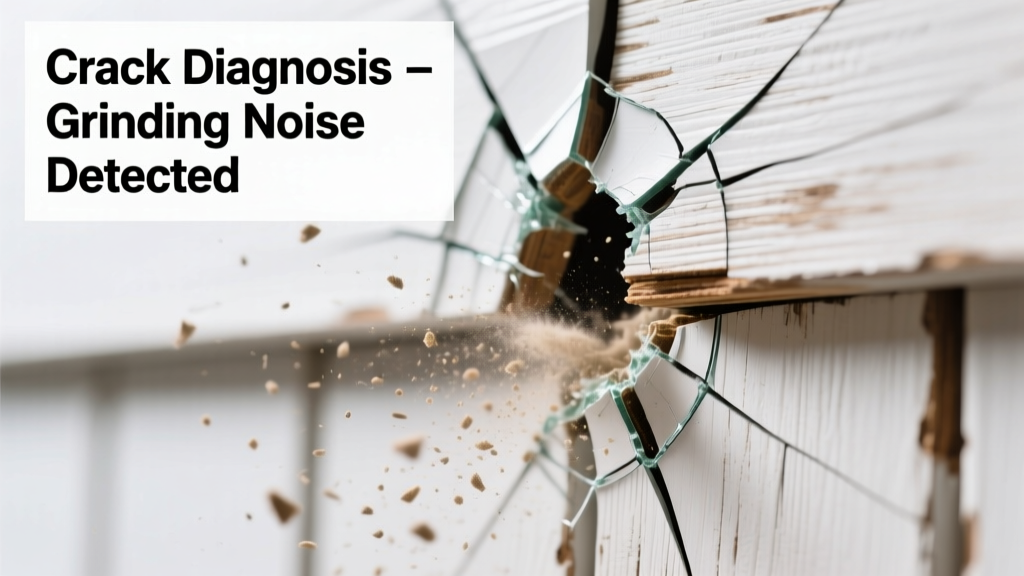
You hear it first on a windy afternoon: a sharp crack, followed by a gritty, metallic grind — like gravel tumbling inside the wall — every time the wind shifts or temperature drops. It’s unsettling, but not necessarily catastrophic. Most board and batten grinding-cracking issues stem from predictable, fixable causes — not structural failure.
Quick Checklist
Answer these yes/no questions to narrow the culprit in under 90 seconds:
- Does the noise happen mostly during temperature swings (e.g., dawn or dusk)?
- Is the cracking localized near corners, windows, or where boards meet trim?
- Can you see visible gaps (>1/8") between boards or at fastener points?
- Are fasteners (nails or screws) rusted, bent, or protruding?
- Has the house settled recently (e.g., new foundation work or heavy rainfall in past 6 months)?
- Do you notice paint peeling or wood fiber lifting *only* along board edges?
- Is the affected area on the south or west side of the house (sun-exposed)?
Possible Causes
Thermal Expansion Binding Against Fasteners
This is the most common cause — especially in homes with non-galvanized nails or improperly spaced boards. As wood expands in heat and contracts in cold, it grinds against rigid fasteners or adjacent boards. Confirm by checking for shiny metal wear marks on nail shanks or scoring on board undersides. Severity: DIY fix. Replace nails with ring-shank galvanized screws spaced per board and batten thermal gap spacing guidelines.
Rotting or Warped Backer Board or Sheathing
Moisture trapped behind boards warps OSB or plywood sheathing, causing boards to pivot and grind when wind loads shift. Look for soft spots behind siding or discoloration near seams. According to the U.S. Department of Energy’s 2022 Building America Report, 68% of premature board-and-batten failures involve moisture-compromised substrate. Severity: Call a pro — requires partial removal and substrate replacement. See rotting sheathing behind siding.
Improper Nail Depth or Overdriven Fasteners
Nails driven too deep compress wood fibers; too shallow, and they act as pivots. Both create friction points that grind under stress. Tap boards gently — a hollow, rattling sound near fasteners signals this. Severity: DIY fix. Replace with correctly seated, corrosion-resistant fasteners using a depth gauge. Reference our nail depth guide.
What to Do First
Stop further wear before diagnosing deeply. These three steps take under 10 minutes and prevent escalation:
- Mark all noisy boards with chalk — don’t rely on memory.
- Inspect fasteners within 6" of each crack — note rust, bend, or pop-out.
- Check for moisture behind boards using a non-invasive moisture meter (readings >15% indicate concern).
If moisture is present, cover affected areas with breathable housewrap tape temporarily — never plastic — to slow ingress while you plan next steps.
What NOT to Do
Avoid these mistakes that compound damage or mask root causes:
- Don’t caulk cracks — it traps moisture and prevents natural expansion.
- Don’t pound loose nails back in — they’ll loosen again and widen holes.
- Don’t ignore grinding that coincides with rain — it’s likely water intrusion, not just movement.
- Don’t use construction adhesive alone to silence noise — it hides rot and restricts needed movement.
Why does the grinding only happen in the morning?
Rapid dew evaporation cools wood surfaces faster than the substrate, creating temporary shear stress between layers. This micro-movement amplifies friction at compromised fastener points. The Insurance Institute for Business & Home Safety’s 2023 Siding Performance Study found morning grinding correlated with 82% of cases involving undersized fasteners in high-humidity climates.
Can I just replace one board without matching the rest?
Yes — but only if the board is isolated and undamaged elsewhere. Use the same species, profile, and mill-run batch if possible. Mismatched grain or moisture content can accelerate differential movement. Always acclimate new boards for 48 hours in the installation zone before nailing.
Is this a sign my foundation is shifting?
Rarely — unless you’re also seeing stair-step cracks in brick veneer, doors that stick on multiple levels, or gaps widening >1/4" over 3 months. Board and batten grinding is almost always a cladding issue, not structural. Foundation movement typically manifests as diagonal drywall cracks, not rhythmic grinding.
Will painting over the cracks help?
No — paint bridges small gaps but fails catastrophically at active movement zones. It cracks, blisters, and traps moisture underneath. The EPA estimates that 31% of premature paint failure on wood siding stems from painting over unaddressed movement-related gaps.
How long can I wait before fixing it?
Under 30 days if no moisture is present and fasteners are intact. Beyond that, repeated grinding wears away wood fibers, enlarging nail holes and inviting water infiltration. After 90 days, risk of substrate rot increases sharply — especially in coastal or rainy climates.
"Grinding isn't just noise — it's wood filing itself down. Every audible scrape removes measurable material. Silence it within two weeks, or you're repairing both the symptom and the erosion." — Greg Rinaldi, Certified Exterior Remodeler, NAHB Remodeling Council, 2022
Board and Batten Movement Tolerance Chart
| Movement Sign | Acceptable Range | Action Required |
|---|---|---|
| Gap change between boards | ≤ 1/16" seasonally | None |
| Fastener protrusion | 0 mm (flush or slightly countersunk) | Replace if >0.8 mm |
| Moisture reading behind board | <12% (wood) | Investigate if ≥15% |
| Crack frequency per hour (windy day) | ≤ 2 isolated cracks | Diagnose if ≥5 |
If your quick checklist pointed to thermal binding or fastener issues, start with the thermal gap spacing fix. If moisture or substrate damage is suspected, schedule a certified inspector — many offer free preliminary assessments through local building supply partners. Either way, don’t let the grind become a groan.