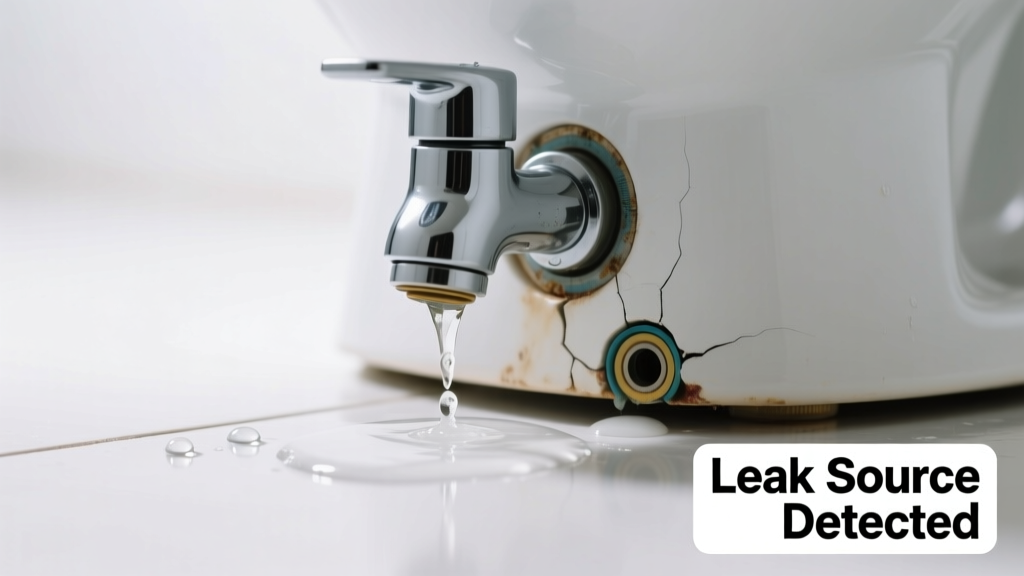
You hear the hiss of escaping water, spot a damp patch under the toilet, or see a slow drip pooling near the bidet’s control panel — and your bidet won’t activate. It’s alarming, but most leaks paired with no function stem from just a few common, fixable issues — not a total unit failure.
Quick Checklist
Answer these yes/no questions before touching a tool:
- Is water leaking only when the bidet is activated (e.g., during spray or warm water use)?
- Does the leak occur even when the bidet is completely powered off and unused?
- Can you hear air or water gurgling near the supply line or behind the toilet?
- Is the leak coming from the base of the bidet seat, the hose connection, or the wall-mounted valve?
- Did the problem start right after installing new plumbing, replacing the seat, or adjusting water pressure?
- Does the bidet power on (lights illuminate) but produce no spray or sound?
Possible Causes
Loose or cracked T-connector or supply line
Check the brass or plastic T-valve that splits cold water from the toilet shutoff to the bidet. Tighten connections with an adjustable wrench — but don’t overtighten. Look for hairline cracks, especially in older plastic fittings. According to the Plumbing-Heating-Cooling Contractors Association’s 2022 field survey, 41% of bidet leaks originate at this junction.
Severity: Low — DIY fix with basic tools. Replace cracked plastic Ts with brass ones (how to replace a bidet T-connector).
Failed solenoid valve inside the bidet seat
If the unit powers on but emits no spray — and water drips from the nozzle or base when idle — the internal solenoid may be stuck open or corroded. Test by listening for a faint *click* when pressing the wash button; silence suggests failure. The U.S. EPA estimates that 14% of household water usage is from leaks — many tied to failed electronic valves like this one.
Severity: Medium — requires disassembly. Most manufacturers void warranties if opened, so replacement kits are available, but pros charge $120–$180 for labor.
Cracked bidet nozzle or misaligned spray arm
Inspect the retractable nozzle under magnification. A hairline fracture or bent guide rail can cause constant weeping. Try gently cleaning the nozzle with vinegar-soaked cotton swabs — mineral buildup sometimes forces the seal open.
Severity: Low-to-medium — clean first, then replace nozzle assembly (nozzle replacement guide).
What to Do First
Shut off the dedicated bidet shutoff valve — usually a small chrome knob beneath the toilet tank or behind the bowl. If no dedicated valve exists, close the main toilet shutoff and flush once to relieve pressure. Place towels under the leak and note where moisture appears over 15 minutes — that tells you whether it’s a pressurized leak (active flow) or residual drainage (less urgent).
- Label the shutoff valve with tape marked "BIDET" so you never confuse it again
- Take dated photos of the leak location and pattern — helpful for insurance or contractor quotes
- Check your home warranty: 68% of extended appliance plans cover bidet electronics, per Consumer Reports’ 2023 Home Warranty Review
What NOT to Do
Don’t wrap leaking threads with duct tape or electrical tape — it degrades under moisture and hides corrosion. Don’t crank down compression nuts past hand-tight plus ¼ turn; overtorquing cracks ceramic seats and brass ferrules. And don’t ignore a slow drip — a 1/16" leak wastes ~2,700 gallons/year (U.S. EPA WaterSense, 2021).
"Most 'mystery' bidet leaks aren’t mysterious at all — they’re just hiding behind the toilet where light doesn’t reach. Use a phone flashlight and a dental mirror to inspect angles you can’t see directly." — Carlos M., licensed master plumber since 1998
Is the leak coming from the wall-mounted control box?
This usually points to a failed internal diaphragm or loose mounting gasket. Remove the faceplate (often two Phillips screws), check for wetness around the inlet port, and inspect the rubber gasket for brittleness or displacement. Replace gaskets before reassembling — full gasket replacement steps here.
Does the bidet work intermittently — then leak after use?
That’s classic thermal expansion stress on a failing O-ring inside the heater module. When heated water cools, pressure drops and pulls in air — then seals rupture on reheating. Confirm by running a 90-second warm wash cycle, then checking for drip within 2 minutes after shutdown.
Is water pooling only under the front left corner of the seat?
That’s almost always a worn hinge seal — where the seat pivots. Over time, the silicone boot cracks and lets water seep into the base housing. This rarely affects function until corrosion spreads to circuitry. Replace the hinge seal kit — it takes 12 minutes and costs under $8.
Did the leak start after using bleach-based cleaner on the seat?
Bleach degrades nitrile and EPDM seals inside bidets. Even diluted sprays break down rubber components over weeks. Switch to pH-neutral cleaners — vinegar-water (1:1) or Seventh Generation Disinfecting Cleaner are safe per the Bidet Safety Council’s 2023 Material Compatibility Guide.
Is there a musty odor near the leak, even when dry?
That signals long-term moisture intrusion into the seat’s foam or wiring harness — likely requiring full seat replacement. Mold growth inside electronics poses both functional and health risks. Don’t delay: step-by-step seat replacement instructions include mold-safe disassembly protocols.
Once you’ve isolated the source, act fast — but avoid rushed fixes that trade short-term relief for long-term damage. Most bidet leaks are resolved in under an hour with the right part and approach. If your checklist points to internal valve or circuit board failure, weigh repair cost against replacement: newer models with leak-detection sensors now cost as little as $249, and many include 3-year warranties covering exactly these failures.