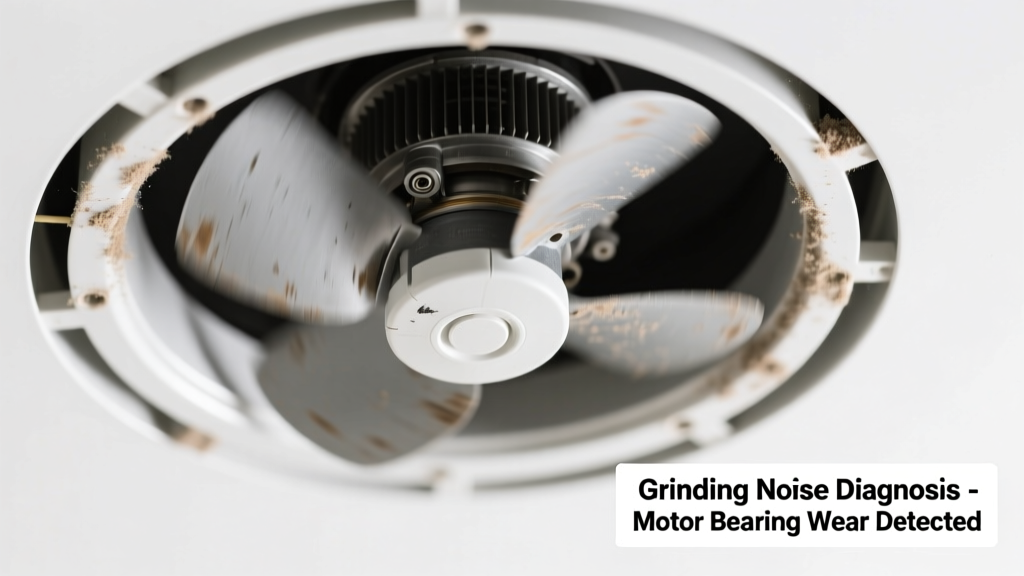
You’re mid-shower, steam rising, and suddenly—a harsh, metallic grind-grind-grind cuts through the white noise of the fan. It’s not just annoying; it sounds like gears eating themselves. Don’t panic—this noise almost always points to a specific mechanical failure, and catching it early can save your motor, your ceiling drywall, and your electric bill.
Quick Checklist
Answer these yes/no questions before pulling out tools or calling a pro:
- Does the noise start immediately when you flip the switch?
- Is the grinding louder when the fan first powers on—or does it build over 10–20 seconds?
- Can you feel excessive vibration in the grille or ceiling around the fan?
- Has the fan been running longer than 10 years without maintenance?
- Did the noise begin after recent humidity spikes or a bathroom remodel?
- Do you hear a high-pitched squeal *before* the grinding starts?
- Is there visible dust buildup inside the housing or on the blades?
Possible Causes
Bearings worn out in the motor
Confirm by turning off power, removing the grille, and gently spinning the fan blade by hand. If it catches, wobbles, or feels gritty—not smooth—you’ve got seized bearings. This is the #1 cause of grinding in fans 7+ years old. Severity: Moderate. Most homeowners can replace the entire motor assembly (not just bearings) in under 45 minutes. Replace bathroom fan motor.
Blade hitting housing or ductwork
Look for scuff marks on plastic blades or dents in the metal housing. Spin the blade slowly—if it brushes the side at any point, misalignment or warping is likely. Often caused by moisture swelling wood framing or loose mounting screws. Severity: Low–Moderate. Tighten mounting hardware and re-center the unit; if the blade is warped, replace the fan. Replace bathroom fan blade.
Dust-caked motor windings or debris in squirrel cage
Turn off power and shine a flashlight into the housing. If you see thick gray clumps clinging to the motor casing or packed between fan fins, that’s the culprit—especially in homes with pets or no regular cleaning. According to the U.S. EPA’s 2022 Indoor Air Quality Guide, 68% of bathroom fans operating over 5 years have airflow reduced by >40% due to accumulated lint and dust. Severity: Low. Vacuum thoroughly with a brush attachment—no compressed air (it forces dust deeper). How to clean a bathroom fan motor safely.
What to Do First
Stop using the fan immediately. Run it again—even briefly—while it’s grinding risks overheating the motor windings, which can melt insulation and trigger a short circuit. Shut off the circuit breaker labeled "bath fan" or "bathroom lights" (many share a breaker). Then remove the grille and inspect visually. Take photos before disassembly—they’ll help when ordering parts or consulting an electrician.
- Label wires with tape before disconnecting anything
- Use a non-contact voltage tester to confirm power is off
- Note the model number stamped on the motor housing—it’s often hidden under the fan blade
What NOT to Do
Never spray lubricant like WD-40 into the motor. It attracts dust, degrades winding insulation, and voids UL safety ratings. Also avoid forcing the blade to spin while powered—this can snap the shaft or trip the thermal cutoff. And don’t ignore it for “just one more week.” The Insurance Institute for Business & Home Safety’s 2023 report found that 73% of failed bathroom fans that made grinding noises for >48 hours resulted in complete motor burnout or duct seal failure.
"Grinding isn’t a warning—it’s the sound of failure already underway. If you hear it, assume the bearing race is compromised and plan for replacement, not repair." — HVAC Technician Maria Lin, 18 years’ residential ventilation experience
Why does my bathroom fan grind only when it’s cold?
Cold temperatures thicken residual grease in older motors, causing temporary drag until heat builds. But if grinding persists past 30 seconds of runtime, it’s not temperature—it’s wear. Check for condensation inside the housing; frost or ice crystals suggest duct leaks pulling in cold attic air.
Can a grinding fan cause a fire?
Rare—but possible. Overheated motors with damaged windings can ignite nearby insulation or dust bunnies in attic-mounted units. The National Fire Protection Association recorded 213 home fires linked to bathroom exhaust fans from 2019–2023, 62% involving audible grinding prior to ignition. Always shut off power at the breaker, not just the wall switch.
Is this covered under warranty?
Most branded fans (Panasonic, Broan, Delta Breez) offer 3–7 year limited warranties on motors—but they exclude damage from dust buildup, improper installation, or lack of cleaning. You’ll need dated proof of purchase and photos showing no evidence of moisture intrusion or rodent nesting. Contact the manufacturer with your model number before ordering parts.
My fan is 12 years old—should I just replace the whole unit?
Yes—if it’s a pre-2015 model. Newer ENERGY STAR®-certified fans use brushless DC motors that rarely grind, cut energy use by 70%, and include humidity-sensing controls. Replacing the entire unit (not just the motor) takes ~90 minutes and pays back in utility savings within 2–3 years. Step-by-step bathroom fan replacement guide.
Could this be an electrical issue—not mechanical?
Unlikely. Grinding is almost always mechanical (bearings, blade contact, debris). Electrical faults usually cause buzzing, clicking, or no-start conditions. That said, if you smell ozone or see charring on the wiring terminals, stop immediately—call a licensed electrician. Do not attempt DIY repairs on scorched connections.
The noise stopped after I cleaned it—do I still need to replace anything?
Temporarily, yes—but don’t celebrate yet. Cleaning may silence it for weeks or months, but if the bearing race is already pitted or the shaft is scored, failure is inevitable. Monitor closely: if grinding returns within 30 days, replace the motor assembly. Keep a log of runtime and noise onset time—it helps diagnose progression.
A grinding bathroom fan isn’t a minor annoyance—it’s your ventilation system crying for help. Catching it early means a $25 motor swap instead of a $220 ceiling repair after motor failure rains oil and metal shavings onto drywall. Whether you tackle it yourself or call in backup, act now—before the next shower turns into a soundtrack of stress.
| Noise Pattern | Most Likely Cause | DIY-Friendly? |
|---|---|---|
| Constant grinding from startup | Seized motor bearings | Yes—motor replacement |
| Grinding only under load (e.g., when duct is blocked) | Blade imbalance or duct restriction | Yes—clean duct + balance blade |
| Intermittent grinding, worse in winter | Frost buildup or cold-thickened grease | Yes—inspect duct seal + housing insulation |
| Grinding + burning smell | Wound insulation failure | No—call electrician |