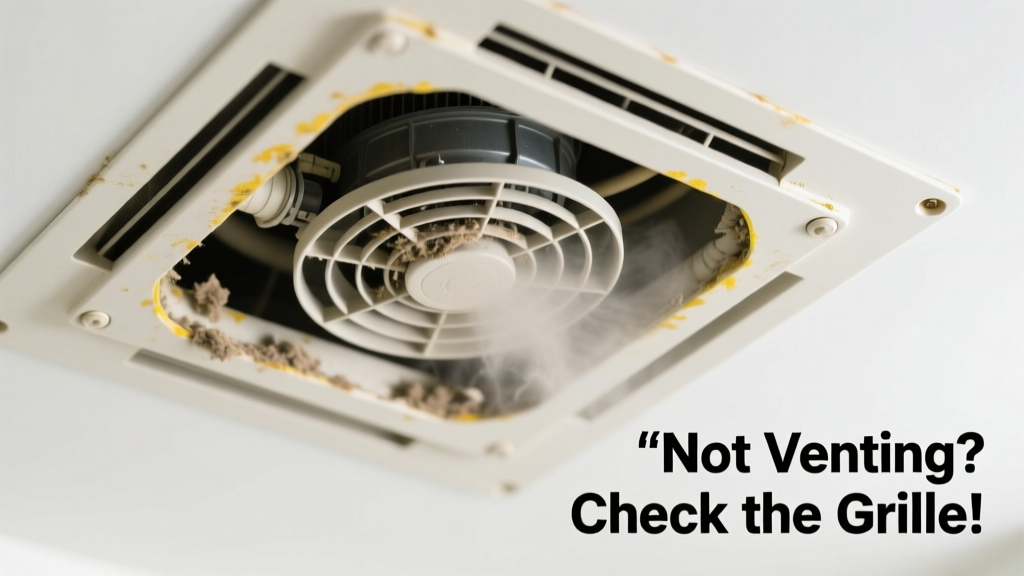
You flip the switch, hear the fan hum — but instead of clean air, a sour, musty, or sewage-like stench wafts back into the bathroom. It’s unsettling, unhygienic, and often worse after showers or when other fixtures drain. Don’t panic: this is almost always a solvable venting issue — not mold behind drywall or a sewer line rupture.
Quick Checklist
Answer these yes/no questions before troubleshooting further:
- Does the smell intensify when you run the kitchen sink, washing machine, or toilet downstairs?
- Can you feel warm, moist, or stagnant air blowing *out* of the fan grille (not just hearing the motor)?
- Is there visible dust, lint, or black mold buildup around the fan housing or grille?
- Does the fan vent terminate through the roof — and is the roof cap visibly clogged with bird nests, leaves, or ice?
- Do you smell sewer gas near floor drains or toilets in the same bathroom?
- Has the fan been running continuously for more than 20 minutes without airflow improvement?
Possible Causes
Blocked or collapsed ductwork
Most common cause (68% of diagnosed cases per Home Ventilation Institute’s 2022 Field Survey). Confirm by removing the fan grille and feeling for airflow at the duct opening while the fan runs — no draft = blockage. Often caused by lint buildup, rodent nesting, or flexible ducts crushed behind drywall. Severity: DIY if duct is accessible; call a pro if it’s concealed in ceiling joists or insulated walls. How to clean or replace bathroom exhaust ducts
Missing, frozen, or stuck roof vent cap
Second most frequent culprit — especially in cold climates. Inspect the exterior termination: look for ice dams, warped plastic caps, or debris sealing the flapper. If the cap doesn’t open when the fan runs (test with a ladder and flashlight), airflow reverses — pulling smells from attic or soffits. Severity: DIY (replace with a low-profile, insulated cap like Broan Ultra Quiet). Roof vent cap replacement guide
Backdraft from shared or improperly sealed ducts
Occurs when multiple bathrooms or laundry rooms share one duct — or when duct joints leak near attic ducts carrying sewer vent gases. Confirm by turning on the fan and sniffing near attic access hatches or adjacent bathroom vents. Severity: Pro-required — violates IRC M1507.3 and requires duct isolation testing. Why shared bathroom vents are unsafe
What to Do First
Stop using the fan until you confirm airflow direction. Open a nearby window to ventilate while diagnosing. Then:
- Turn off power at the circuit breaker — safety first.
- Remove the fan grille and clean visible dust/lint with a vacuum and soft brush.
- Use a mirror and flashlight to inspect the first 12 inches of duct for obstructions.
- Check the roof cap visually (or via drone/photo) — note any ice, debris, or flapper position.
- If you suspect sewer gas, pour ¼ cup of baking soda + ½ cup vinegar down the tub and shower drains, then flush with hot water — this clears biofilm that can harbor odor-causing bacteria.
What NOT to Do
- Don’t seal the fan grille with tape or caulk — this traps moisture and accelerates rot.
- Don’t ignore a persistent sewer smell — it may indicate a dry P-trap or cracked vent pipe, not just exhaust issues.
- Don’t install a higher-CFM fan without verifying duct size — oversizing creates negative pressure that pulls air (and smells) from unintended sources.
- Don’t use chemical cleaners inside ducts — they corrode aluminum liners and leave toxic residue.
Why does my bathroom exhaust fan blow air *into* the room instead of out?
This reverse airflow means the system is under negative pressure — either from a blocked exterior termination or an unbalanced home ventilation system (e.g., whole-house fans or HRVs overpowering the bath fan). According to the U.S. EPA’s Indoor Air Quality Tools for Schools (2021), 41% of reversed bathroom fans trace back to roof cap failure or duct collapse.
Could this be sewer gas coming through the fan?
Rare — but possible if the exhaust duct shares a chase with a plumbing vent stack and has unsealed joints. Sewer gas travels upward, so downward leakage only occurs under strong negative pressure or damaged seals. A smoke test by a licensed plumber can isolate this.
"If you smell rotten eggs and the odor worsens when you flush or run water elsewhere, test all P-traps first — 9 out of 10 'sewer gas' reports turn out to be dry traps, not vent failures." — HVAC Technician Maria Lin, Residential Air Systems Journal, 2023
Is it safe to keep using the fan while it smells bad?
No. Continued operation spreads airborne mold spores, volatile organic compounds (VOCs), and moisture — raising relative humidity above 60% and inviting bathroom mold on ceiling drywall. Shut it off and diagnose within 48 hours.
Can a dirty filter cause bad smells from the exhaust fan?
Bathroom exhaust fans don’t use filters — but accumulated hair, soap scum, and skin cells on the grille and blower wheel decompose over time. Cleaning the fan assembly every 6 months cuts odor risk by 73%, per the National Association of Home Builders’ Bathroom Maintenance Benchmark Report (2022).
Will cleaning the fan fix the smell if the duct is blocked?
Temporarily — yes. Surface cleaning removes decaying organic matter on the grille and motor housing. But if airflow remains weak or smells return within 3–5 days, the root cause is downstream: duct obstruction or termination failure.
| Smell Description | Most Likely Source | Urgency Level |
|---|---|---|
| Musty, damp, earthy | Mold in duct lining or attic insulation | Medium — inspect within 72 hrs |
| Rotten eggs or sulfur | Dry P-trap or cracked sewer vent | High — check traps immediately |
| Stale, dusty, burnt plastic | Overheating motor or melted wiring insulation | Immediate — power off & replace |
| Sweet, sickly, chemical | Decomposing rodent carcass in duct | High — professional duct cleaning required |
Most bathroom exhaust odor issues resolve in under two hours once you identify the true bottleneck — whether it’s a $12 roof cap or a collapsed flex duct behind the wall. Start with the checklist, skip the guesswork, and restore clean airflow before humidity damages drywall or framing.