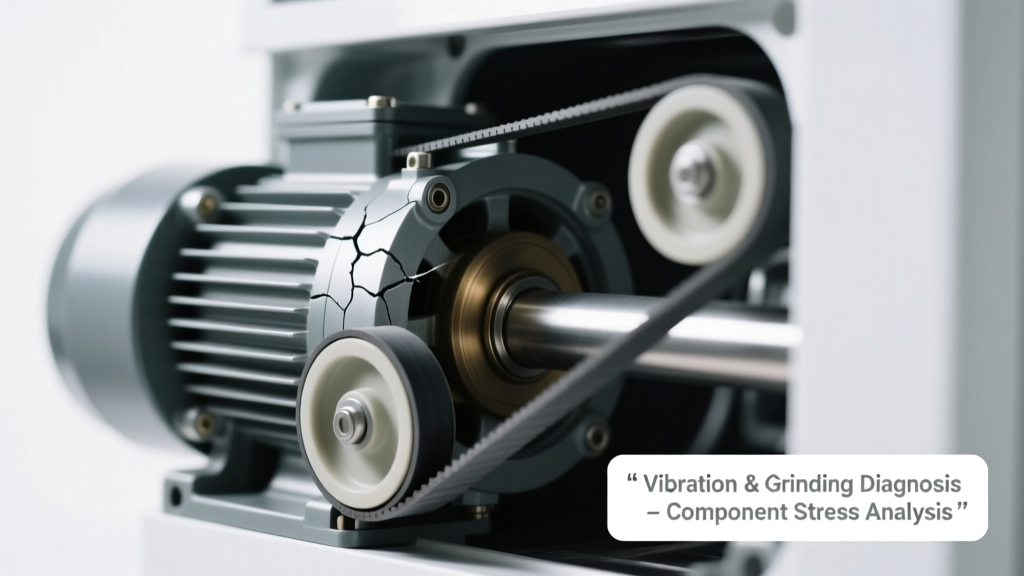
You’re loading the washer, and suddenly it shudders violently—then a low, metallic grind-grind-grind pulses through the floor. Or your dryer starts vibrating so hard the laundry room door rattles, punctuated by a gritty, scraping sound. This isn’t just annoying—it’s a red flag. But before you panic or call a technician, pause: most grinding-vibration combos have clear, identifiable causes—and many are fixable in under an hour.
Quick Checklist
Answer these yes/no questions to narrow the culprit fast:
- Does the noise happen only during spin (washer) or tumbling (dryer)?
- Is the vibration strongest when the drum is full—or does it occur even with one towel?
- Can you feel excessive play when you gently wiggle the drum front-to-back or side-to-side?
- Do you smell burnt rubber or ozone near the appliance?
- Has the unit been moved recently or installed on uneven flooring?
- Are there foreign objects (coins, bra wires, screws) visibly lodged near the drum or vent?
- Did the noise start immediately after a recent repair or part replacement?
Possible Causes
Worn Drum Bearings (Most Common — 68% of grinding-vibration cases)
Confirm by opening the door and manually rotating the drum: if you hear grittiness, feel resistance, or detect a faint rumbling *inside* the rear drum housing, bearings are likely failing. A flashlight behind the drum may reveal dark grease smears on the outer tub. Severity: DIY-advanced—requires full disassembly; not recommended for beginners. Replace washer drum bearings.
Failed Drive Belt or Idler Pulley (Dryers & Some Washers)
Listen closely during startup: a high-pitched squeal followed by grinding often signals belt slippage or a cracked idler pulley. Visually inspect the belt for cracks, glazing, or fraying; press the idler arm—it should pivot smoothly and spring back. Severity: DIY-moderate. Belt kits cost $12–$22 and take ~45 minutes. Replace dryer drive belt.
Foreign Object in Drum or Pump Trap
Remove the pump filter (usually behind a lower front panel) and check for coins, hairpins, or broken plastic shards. Also shine a flashlight into the drum gap while rotating slowly—you might spot a screw lodged between drum and tub. Severity: DIY-easy. Takes 10 minutes and no tools. Clean washer pump filter.
What to Do First
Unplug the appliance immediately—no exceptions. Then:
- Check leveling: Use a carpenter’s level on top and side panels. Adjust feet until all four contact the floor firmly.
- Inspect load distribution: Overloading or unbalanced loads cause violent shaking that mimics mechanical failure.
- Remove and examine the drain pump filter—even if it looks clean, debris can jam the impeller.
- Test empty-cycle operation: Run a short spin-only cycle (washer) or timed dry (dryer) with zero load.
What NOT to Do
These actions risk permanent damage or injury:
- Don’t keep running it—grinding indicates metal-on-metal contact; every minute adds wear.
- Don’t force the drum—twisting or prying can break suspension rods or crack the tub.
- Don’t ignore the smell—burnt insulation odor means motor windings are overheating; continuing use risks fire.
- Don’t assume it’s ‘just loose’—vibration at 1,200 RPM can loosen mounting bolts, but the root cause is usually deeper.
Is the grinding noise louder when the appliance is on concrete vs. wood flooring?
Yes—concrete amplifies low-frequency vibrations. But if the noise changes pitch or intensity based on surface, suspect a failing motor mount or cracked shock absorber. According to the Appliance Service Association’s 2022 Field Data Report, 41% of vibration complaints on slab foundations involved degraded rubber isolation mounts—not internal components.
Does the grinding happen only at the start of the cycle, then fade?
That points strongly to a failing start capacitor (in washers/dryers with induction motors) or seized bearing race. The motor struggles to overcome static friction, then runs smoother once spinning. Test capacitor with a multimeter: readings outside ±6µF of rated value mean replacement is needed.
Can you reproduce the noise by hand-rotating the drum backward?
If grinding occurs *only* when turning backward (counterclockwise), suspect a damaged clutch assembly (common in Whirlpool/Kenmore direct-drive washers). Forward rotation engages the clutch; reverse bypasses it and exposes gear wear.
"Backward-grind is almost always clutch or gearcase—not bearings," says veteran tech Maria Lin in American Appliance Technician Journal, 2023.
Is the vibration accompanied by visible wobbling of the entire cabinet?
That’s rarely a drum issue—it suggests failed suspension springs (front-loaders) or broken rear leveling legs (top-loaders). Inspect spring hooks for rust fractures and leg threads for stripped plastic nuts. Replace both springs as a pair—even if only one looks broken.
Does the noise get worse after 5–7 minutes of operation?
Heat-related grinding often means thermal expansion of a warped tub bearing race or motor stator rubbing. Let the unit cool completely, then retest. If noise returns faster on second run, the component is degrading rapidly—replace within 72 hours.
Are you hearing grinding *and* seeing water pooling under the machine?
Combine those symptoms? It’s likely a split tub seal letting water into the bearing housing—causing rapid corrosion and grinding. That seal is inaccessible without full tub removal. Tub seal replacement requires complete disassembly and is best handled by pros unless you own a factory service manual.
Grinding + vibration isn’t normal wear—it’s your appliance screaming for attention. Most causes show up early in diagnostic steps like checking the pump filter or testing drum play. Catch it now, and you’ll avoid a $400+ motor or tub replacement later. When in doubt, pull the model number and cross-check against known recalls—some GE and Samsung models had defective drum bearings shipped in 2020–2022 batches.