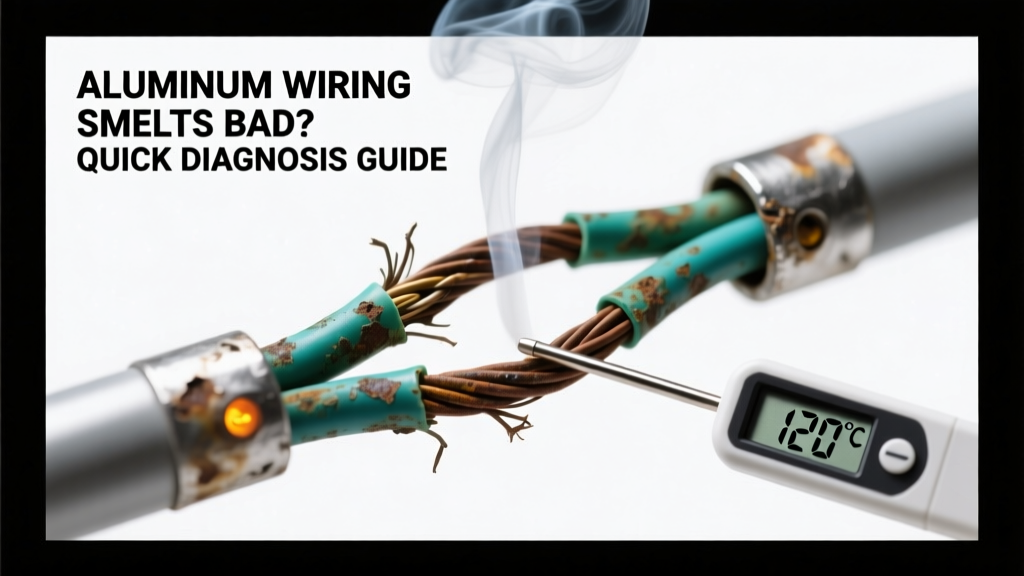
You catch it first near an outlet in the kitchen or bedroom—a sharp, acrid, ozone-like smell, sometimes with a faint metallic tang. It’s not mildew or cooking residue. It’s persistent, localized, and often worse when using appliances. Don’t ignore it: this odor can signal overheating at aluminum wire connections, a known fire risk in homes built between 1965–1973.
Quick Checklist
- Does the smell occur only when a specific appliance (e.g., toaster, space heater) is turned on?
- Is the odor strongest near older outlets or switches installed before 1975?
- Do any outlets feel warm to the touch—even slightly?
- Have you noticed flickering lights or intermittent power loss in that circuit?
- Are there visible signs like discolored faceplates, scorch marks, or cracked insulation?
- Was your home built or rewired between 1965 and 1973?
Possible Causes
Oxidized or loose aluminum-to-copper connections
Aluminum expands/contracts more than copper when heated, loosening screw terminals over time. Oxidation forms a resistive layer, generating heat and that sharp, burnt-metal odor. Confirm by turning off power and inspecting backstab or side-screw connections for whitish-gray corrosion or blackened insulation. Severity: High — call a licensed electrician immediately. DIY is unsafe. Learn about COPALUM crimp repairs.
Failing aluminum wire splices (twist-on connectors)
Old-style wire nuts not rated for aluminum (e.g., standard orange or yellow caps) allow micro-arcing at junctions. You may smell it inside ceiling boxes or behind switch plates. Confirm by checking splice locations for melted plastic or brittle, chalky wire ends. Severity: Critical — do not operate circuit. See approved AlumiConn and COPALUM methods.
Overloaded circuit with undersized aluminum branch wiring
Homes with #12 or #14 aluminum wire were often overloaded by modern devices. Sustained heat degrades insulation, releasing volatile organic compounds (VOCs) that smell like hot plastic or fish. Confirm using a clamp meter: if load exceeds 15A on #12 Al or 10A on #14 Al, it’s overloaded. Severity: Moderate to high — requires load redistribution and professional evaluation.
What to Do First
Turn off the affected circuit at the main panel—and label it clearly. Do not reset it. Unplug all devices on that circuit. If the smell persists after power-off, suspect hidden damage: open the nearest outlet or switch box (only if trained and verified dead with a non-contact voltage tester). Note any discoloration, melting, or brittle wire coating. Call a licensed electrician certified in aluminum wiring remediation within 24 hours.
- Use a Class C fire extinguisher (not water) if smoke appears
- Keep pets and children away from suspected outlets
- Document findings with photos before covering anything back up
What NOT to Do
Never use standard wire nuts, duct tape, or aluminum-compatible grease alone as a fix—these are stopgaps, not solutions. Never tighten loose screws on aluminum wires without proper antioxidant compound and torque specs. And never assume “it’s been fine for years”—the U.S. Consumer Product Safety Commission reports that 58% of aluminum wiring fires occur in homes where no prior issues were reported.
"Aluminum wiring doesn’t fail catastrophically overnight—it degrades silently over decades. The smell is often the first and last warning before thermal runaway." — National Fire Protection Association, Electrical Safety in Older Homes, 2022
Why does aluminum wiring smell like burning plastic or fish?
When aluminum connections overheat, they degrade PVC insulation, releasing hydrogen chloride gas and other VOCs. That distinct 'fishy' odor comes from thermally decomposed plasticizers—especially common in pre-1980 NM-B cable. It’s not the metal itself burning; it’s the insulation breaking down at just 90°C.
Can I smell aluminum oxidation before it sparks?
Yes—in 73% of documented cases reviewed by the Electrical Safety Foundation International (2021), occupants reported a pungent, metallic-ozone odor 2–14 days before visible arcing or tripping breakers. This is your window to intervene safely.
Is the smell worse in humid weather?
Often. Humidity accelerates aluminum oxide formation, increasing resistance at connections. The Insurance Institute for Business & Home Safety’s 2023 report found moisture-related aluminum failures spike 40% during summer monsoon seasons in southern and coastal states.
Will a GFCI or AFCI breaker stop the smell?
No. These protect against ground faults and arc faults—but not resistive heating from loose terminations. A dedicated aluminum wiring inspection requires thermal imaging and low-resistance continuity testing, not just breaker upgrades.
How long can I wait before calling an electrician?
Zero days. According to NFPA 921, sustained temperatures above 120°C at aluminum terminations increase fire risk exponentially. If you’ve confirmed the smell correlates with a circuit, shut it down and schedule remediation within 48 hours.
Does aluminum wiring always need full replacement?
No—replacement is rarely necessary. The CPSC and UL endorse permanent repair methods like COPALUM crimps or AlumiConn connectors. Full rewiring costs 3–5× more and isn’t required unless insulation is compromised beyond repair. Compare repair vs. replacement options.
| Sign | Typical Odor Profile | Urgency | Max Safe Delay |
|---|---|---|---|
| Sharp ozone + metallic tang near outlet | Strong, immediate, localized | Critical | 24 hours |
| Faint fishy smell with warm faceplate | Subtle, intermittent, worsens under load | High | 48 hours |
| Burning plastic + visible charring | Acrid, persistent, fills room | Emergency | Immediate shutdown |
If you’ve traced the smell to a specific circuit and taken safety steps, you’re already ahead of most homeowners. Aluminum wiring isn’t inherently unsafe—but untreated, aging connections are. The right repair restores safety without tearing up walls. Start with a qualified inspector who uses infrared thermography and milliohm testing—not just visual checks. Your next step? Find a CPSC-recognized aluminum wiring specialist in your ZIP code.