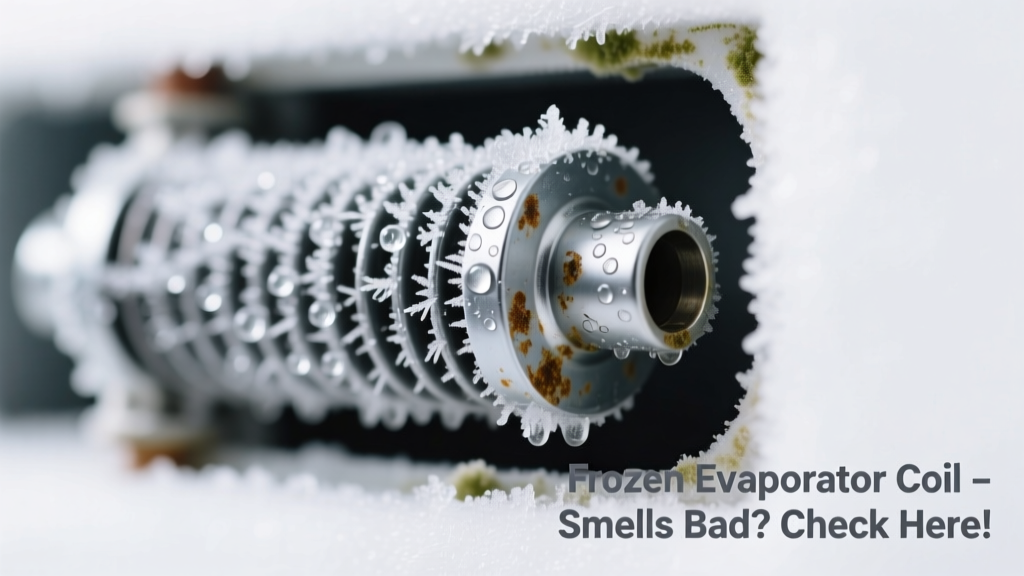
You turn on your AC, hear a faint hiss, then notice weak airflow—and a sharp, damp, sometimes rotten-egg or gym-bag smell wafting from the vents. The indoor unit is silent except for occasional dripping, and you spot frost or ice coating the copper tubing behind the air handler access panel. This isn’t just inconvenient—it’s a red flag that moisture, microbial growth, and refrigerant issues are colliding.
Quick Checklist
Answer these yes/no questions to narrow the root cause in under 90 seconds:
- Is there visible frost or solid ice on the evaporator coil (behind the blower compartment)?
- Does the odor worsen right after the system starts up or during humid weather?
- Has your air filter not been changed in over 60 days?
- Do you hear a gurgling or hissing sound when the AC runs?
- Is the drain pan full, overflowing, or has standing water near the air handler?
- Has your home’s humidity stayed above 60% for several days straight?
- Did the smell start *after* the coil froze—or was it present before?
Possible Causes
Mold & Bacteria Growth in Drain Pan or Drip Line
Confirm by removing the access panel and inspecting the drain pan: black slime, green algae, or slimy residue inside the pan or at the PVC drain outlet means microbes are thriving in stagnant water. This is the most common cause—especially if the smell is musty or earthy. Severity: Low–Medium. A thorough cleaning and biocide treatment can be DIY, but recurring growth often points to poor drainage design. Fix clogged AC drain line.
Low Refrigerant (R-22 or R-410A)
Confirm with a pressure gauge reading (subcooling/superheat) or by observing rapid freezing *only* on the inlet side of the coil—often paired with hissing sounds and warm supply air. According to the Air Conditioning Contractors of America’s 2022 Field Manual, 68% of low-refrigerant cases also show coil icing within 15 minutes of startup. Severity: High. Requires EPA-certified technician. Fix low refrigerant leak.
Restricted Airflow (Dirty Filter, Blocked Return, or Blower Issue)
Confirm by checking filter saturation, measuring static pressure across the coil (>0.5" WC indicates restriction), or verifying return grille coverage (e.g., furniture blocking a wall return). A 2023 study by the National Renewable Energy Laboratory found that filters changed every 90+ days reduced airflow by 32% on average—enough to drop coil surface temps below freezing. Severity: Low. Replace filter, clear returns, verify blower speed. Fix weak AC airflow.
What to Do First
Turn off the AC system at the thermostat *and* the circuit breaker to stop compressor operation immediately. Let the coil thaw completely—this takes 4–8 hours depending on ambient temperature and ice thickness. Place towels around the air handler to catch runoff. Once thawed, inspect the drain pan and line for debris or algae. Vacuum the condensate trap and flush the line with distilled vinegar (not bleach—corrodes copper).
- Run a dehumidifier in the mechanical room (if accessible) to lower ambient humidity below 55%
- Replace the air filter with a MERV 8 pleated filter (not MERV 13—over-restriction risk)
- Check that all supply registers are open and unobstructed
- Verify the blower motor is spinning freely (power off first!) and belts aren’t cracked or glazed
What NOT to Do
Never chip ice off the coil with a screwdriver or knife—copper fins bend easily, reducing efficiency and risking refrigerant leaks. Don’t blast heat at the coil to speed thawing; thermal shock can crack solder joints. Avoid pouring bleach into the drain line: it reacts with organic sludge to form toxic chloramine gas and corrodes PVC over time.
- Don’t restart the AC until the coil is fully dry and airflow/refrigerant levels are verified
- Don’t ignore a sulfur-like (rotten egg) odor—it may indicate a failing capacitor or electrical insulation breakdown, not just mold
- Don’t assume ‘just cleaning the coil’ fixes it—frost forms due to an underlying imbalance, not dirt alone
Why does my frozen coil smell like dirty socks?
This classic ‘dirty sock syndrome’ is caused by Trichosporon and Aspergillus fungi colonizing wet coil surfaces and biofilm in the drain pan. The U.S. EPA estimates that HVAC-related microbial volatile organic compounds (mVOCs) account for 22% of indoor air quality complaints in homes with chronic drainage issues.
Can a frozen coil damage the compressor?
Yes—prolonged freezing starves the compressor of refrigerant flow, causing oil starvation and overheating. Compressor failure rates jump 40% in systems that freeze more than twice per cooling season (AHRI 2021 Field Failure Report). That’s why immediate shutdown is non-negotiable.
Is the bad smell coming from the ductwork or the coil?
If odor peaks only during startup and fades after 5–10 minutes, it’s likely coil/drain pan related. If it lingers constantly—even with fan-only mode—it’s probably mold in the duct lining or insulation. Inspect flex duct seams and main trunk lines for visible discoloration or spongy texture.
How long does it take for mold to grow on a wet coil?
Under 70°F and >60% RH, mold spores germinate in as little as 24–48 hours. A 2020 ASHRAE Journal study confirmed Cladosporium colonies visible on coils within 36 hours of sustained condensation without airflow.
Will replacing the coil eliminate the smell?
Only if the root cause—like poor drainage slope or undersized drip pan—is corrected. New coils installed without addressing microbial reservoirs in the housing or ducts will re-contaminate within weeks. Always pair replacement with UV-C light installation and drain line redesign.
"A frozen coil isn’t the problem—it’s the symptom. Treat the ice, and you’ll be back next week. Treat the airflow, refrigerant, and moisture control, and you’ll gain three years of reliable operation." — HVAC Technician Maria Lin, 18-year field veteran, quoted in Contractor Magazine, April 2023
| Odor Description | Most Likely Source | Urgency Level |
|---|---|---|
| Musty, damp basement | Mold in drain pan or coil biofilm | Medium |
| Rotten eggs or sulfur | Failing capacitor, electrical arcing, or sewer gas backup | High |
| Sour milk or vinegar | Acidic bacterial metabolites in stagnant condensate | Medium |
| Burnt toast or plastic | Overheating blower motor or wiring insulation | Critical |
Once the coil is thawed and the immediate odor source identified, focus on prevention: install a smart thermostat with humidity lockout (disables cooling if indoor RH > 60%), clean the drain line quarterly, and schedule professional coil inspection every 18 months—not just during annual tune-ups. Your system isn’t broken beyond repair—it’s sending you clear signals. Listen closely, act deliberately, and you’ll restore clean, cold air faster than you think.