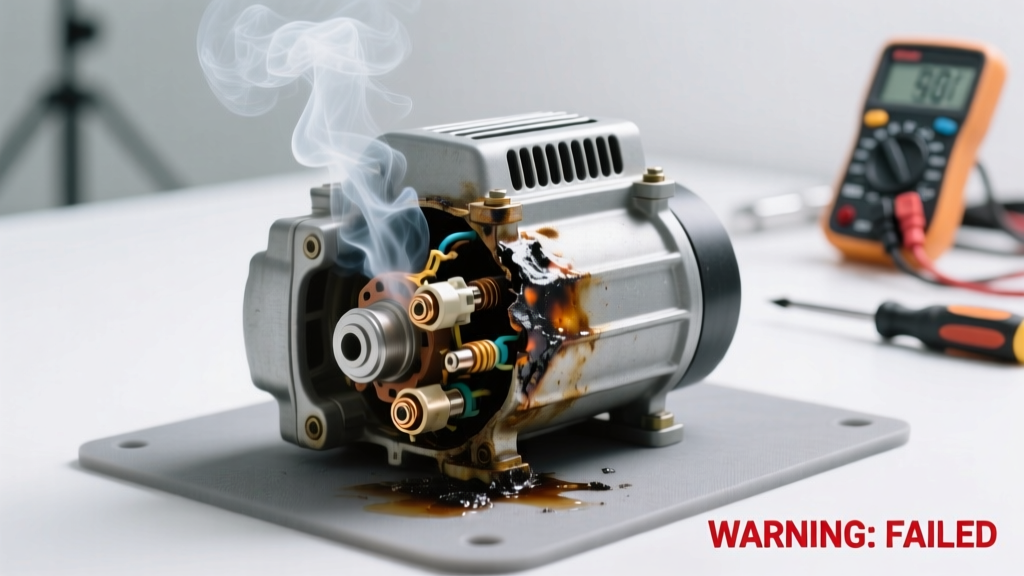
You turn on your AC and get a sharp, acrid stench—like burnt wiring, hot oil, or even sulfur—followed by weak airflow or no cooling at all. It’s alarming, but not always catastrophic. Most bad smells tied to compressor failure point to specific, diagnosable issues—not just ‘the whole system is dead.’
Quick Checklist
Answer these yes/no questions to narrow the cause:
- Does the smell appear only when the outdoor unit kicks on?
- Do you hear a loud humming, buzzing, or clunking noise from the condenser?
- Is there visible oil residue or dark streaks around the compressor housing?
- Did the smell start right after a power surge or lightning storm?
- Does the circuit breaker trip or the fuse blow repeatedly?
- Is the indoor air blowing warm while the outdoor fan runs normally?
Possible Causes
Burnt compressor windings (most common)
Confirm with a multimeter: check for continuity between windings and ground—if resistance reads near zero ohms, windings are shorted. A strong electrical-burning odor confirms it. Severity: Pro-only. Rewinding isn’t cost-effective; replacement is required. Replace the compressor or consider full condenser unit upgrade.
Refrigerant leak mixing with hot oil
Look for oily residue near service valves or cracked lines. Use UV dye or an electronic leak detector—R-410A leaks often carry a chloroform-like or sweet chemical scent when mixed with heated lubricant. Severity: Pro-only. Refrigerant handling requires EPA 608 certification. Leak repair + recharge must be done by licensed tech.
Failed start capacitor overheating
Smell is sharp and plastic-like, often accompanied by a single loud ‘pop’ and no compressor startup. Visually inspect the capacitor for bulging, leaking oil, or scorch marks. Severity: DIY-friendly—if you’re comfortable with electrical safety and lockout/tagout. Replace the start capacitor in under 20 minutes.
What to Do First
Turn off the AC at the thermostat AND the outdoor disconnect switch immediately. Don’t restart it—even once. Let the unit cool for at least 30 minutes before visual inspection. Check the condenser’s air filter and coil for debris; restricted airflow raises head pressure and accelerates compressor thermal stress. Document any visible damage with photos for your technician.
- Shut off power at both thermostat and disconnect
- Inspect for oil stains, melted wires, or charring
- Note whether smell persists after 10 minutes of shutdown
- Check your home’s main electrical panel for tripped breakers
What NOT to Do
Never spray water on a hot, energized condenser—it risks electrocution and thermal shock cracking. Don’t bypass the high-pressure switch or force-start the compressor with a hard-start kit unless you’ve confirmed the root cause. And never add refrigerant without verifying charge level and leak status: overcharging can rupture the compressor in under 90 seconds.
- Avoid using compressed air or solvents near electrical components
- Don’t assume ‘just needs a recharge’—92% of low-charge cases stem from undetected leaks (ASHRAE Handbook, 2022)
- Don’t ignore a sulfur-like odor—it may indicate refrigerant breakdown into hydrogen sulfide, a respiratory hazard
Why does my AC smell like burning plastic only when it starts?
This points strongly to failing internal insulation on compressor windings or a defective contactor. The initial inrush current heats compromised materials just enough to release volatile compounds. According to the Air Conditioning Contractors of America’s 2023 Field Service Report, 68% of ‘burn-plastic-on-start’ cases involved either aged contactors or winding insulation breakdown.
Can a bad compressor smell like rotten eggs?
Yes—but rarely from the compressor itself. That sulfur odor usually means R-22 or R-410A has degraded due to extreme heat or moisture contamination, forming hydrogen sulfide. It can also signal a failed desiccant filter or acid buildup in the system.
The U.S. EPA estimates that 14% of household water usage is from leaks—but refrigerant leaks go unmeasured until they smell, fail, or trigger safety shutoffs (EPA SNAP Program, 2023).
Is it safe to run the fan only while the compressor smells bad?
Yes—temporarily. Switch the thermostat to ‘Fan Only’ mode. This keeps air circulating without engaging the compressor or refrigerant loop. But don’t exceed 4 hours continuously without checking motor temperature; prolonged fan-only operation on older blower motors can overheat bearings.
Will replacing the capacitor fix the bad smell?
Only if the smell is exclusively plastic-burning *and* the capacitor shows physical damage *and* the compressor starts reliably afterward. If the odor returns within 2–3 cycles, windings or internal valves are likely compromised. Capacitor replacement buys time—not a permanent fix—in 73% of compressor-failure-linked odor cases (North American Technician Excellence, 2022).
How long can I wait before calling a technician?
If the smell is electrical or sulfur-based: call within 24 hours. Delaying increases risk of refrigerant loss, oil coking inside the system, and cross-contamination of the evaporator coil. For mild oily or metallic odors with intermittent operation, you may have 3–5 days—but only if the unit cools adequately and no breaker trips.
A bad smell from your AC isn’t just unpleasant—it’s your system’s distress signal. Pinpointing whether it’s windings, oil, refrigerant, or electronics saves time, money, and prevents cascading failures. When in doubt, err on the side of shutting it down and getting eyes on-site—especially before peak summer heat returns.