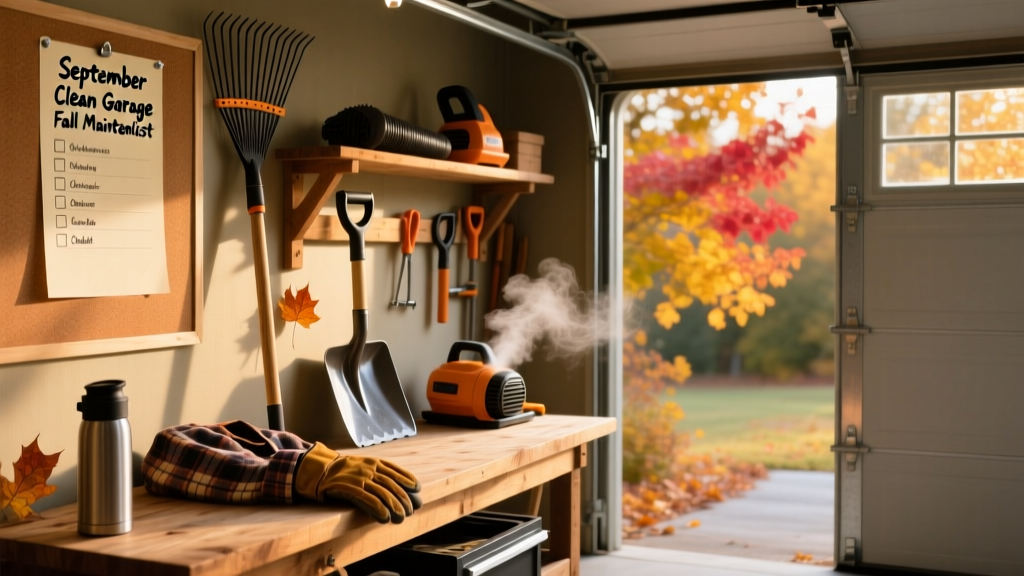
September is the sweet spot between summer’s heat and winter’s freeze—when humidity drops, temperatures stabilize, and your garage becomes the ideal staging area for seasonal transitions. It’s also when pests seek shelter, condensation risks rise on concrete floors, and stored summer gear starts gathering dust (and moisture). Skipping this window means tackling moldy lawn chairs in October or discovering a rodent nest under your snow blower in November.
Priority Tasks
| Task | Time Required | Difficulty | Tools Needed |
|---|---|---|---|
| Clear & sort stored items | 2–4 hours | Medium | Gloves, labeled bins, trash bags |
| Inspect and seal door weatherstripping | 45 minutes | Easy | Utility knife, replacement vinyl or rubber gasket, screwdriver |
| Deep-clean floor and walls | 1.5–3 hours | Medium | Stiff-bristle brush, degreaser, shop vacuum, pressure washer (optional) |
| Check HVAC filter & furnace access panel | 20 minutes | Easy | Replacement filter (check size: typically 16x20x1), flashlight |
| Test garage door auto-reverse safety feature | 10 minutes | Easy | None — just a 2×4 block |
| Drain & winterize garden hoses & irrigation timers | 30–60 minutes | Medium | Wrench, air compressor (or manual blow-out kit), insulated hose cover |
Detailed Task Breakdown
Clear & sort stored items
Start by pulling everything out—not all at once, but in zones (e.g., left wall, overhead racks, workbench). Use the 12-month rule: if you haven’t used it since last September, donate, recycle, or trash it. Label bins clearly: “Winter Tools,” “Holiday Decor (Unpacked),” “Hazardous Materials (Paint, Solvent – store upright, ventilated).” According to the National Fire Protection Association’s 2022 Home Structure Fire Report, improperly stored flammables contributed to 18% of garage-originated residential fires.
Inspect and seal door weatherstripping
Run your hand along the bottom and side edges of the garage door while it’s closed. Feel for drafts or visible gaps >1/8”. Replace cracked or compressed rubber gaskets—especially where the door meets the threshold. A properly sealed door reduces heating loss by up to 15% in attached garages, per the U.S. Department of Energy’s 2023 Residential Energy Consumption Survey.
Deep-clean floor and walls
Sweep first, then treat oil stains with a paste of baking soda and water (let sit 20 minutes), followed by a commercial degreaser like Simple Green Pro HD. Scrub with a stiff nylon brush—not wire (it can spark near gas cans). Rinse thoroughly and let dry before reorganizing. If your floor has epoxy coating, avoid acidic cleaners—use pH-neutral solutions only.
Common Seasonal Problems
- Pest entry points: Mice squeeze through gaps as small as ¼ inch—check where pipes enter walls and around overhead door tracks.
- Condensation on tools: As outdoor temps drop, metal surfaces cool faster than humid air, causing rust. Wipe tools dry and apply light mineral oil after cleaning.
- Furnace airflow restriction: Dust bunnies accumulate behind furnace access panels in attached garages—blocking intake vents and triggering overheating shutoffs.
- Overhead door spring fatigue: Springs lose tension over summer use; September is the last safe window to replace them before freezing temps make metal brittle.
Tools & Supplies
Keep these on hand before starting:
- Shop vacuum with HEPA filter (for fine dust and allergens)
- Non-silicone lubricant (e.g., WD-40 Specialist White Lithium) for door tracks and hinges
- LED work light with magnetic base (garage corners get dim fast in September evenings)
- Carbon monoxide detector (if furnace or water heater is in garage—required by IRC 2021 code)
- Fire extinguisher rated ABC, mounted near the door (inspect pressure gauge monthly)
What to Do With Old Paint & Chemicals?
Don’t toss latex paint in the trash—it’s not hazardous, but it must be dried first. Mix with kitty litter or paint hardener until solid, then bag and discard. Oil-based paints, solvents, and pesticides require hazardous waste drop-off. Find your nearest facility via hazardous waste disposal locator.
Can I Store My Lawn Mower Indoors Without Draining Gas?
No—gas degrades in 30 days, forming gum that clogs carburetors. Either drain the tank completely and run until sputtering stops, or add fuel stabilizer (like Sta-Bil 360) and top off with fresh gas before storage. Store upright, spark plug removed and cylinder coated with oil to prevent rust.
How Often Should I Lubricate Garage Door Tracks?
Twice a year: once in early spring and again in September. Use white lithium grease—not motor oil or silicone spray, which attracts dust. Apply sparingly to rollers, hinges, and springs (not the track itself). Wipe excess to avoid grit buildup.
Is It Safe to Store Propane Tanks in the Garage?
No. The NFPA 58 (2023 edition) prohibits storing propane tanks indoors—even in garages—due to explosion risk from leaks and poor ventilation. Keep them outside, upright, shaded, and at least 10 feet from ignition sources. For more on safe fuel storage, see our propane safety tips.
Should I Inspect My Garage Door Sensors Now?
Absolutely. Misaligned sensors cause false reversals or no-closing issues. Clean lenses with a soft cloth, then test: place an object (like a roll of paper towels) in the door’s path at ankle height. The door should reverse immediately. If not, adjust sensor brackets using a level and Phillips head screwdriver—then retest.
"Garage door sensor failure accounts for 27% of service calls in September—most due to cobwebs or misalignment, not hardware defects." — Certified Door Technician Manual, International Door Association, 2022
Where Should I Store Holiday Decorations After Sorting?
Use clear, stackable plastic totes with gasket lids—not cardboard (moisture wicks in fast). Keep lights coiled on spools or in original boxes with bulbs facing up. Store heavier items (glass ornaments, ceramic figures) on lower shelves. Anchor tall shelving units to wall studs—garage floors shift slightly in fall temperature swings, increasing tip-over risk.
September garage maintenance isn’t about perfection—it’s about prevention. A clean, organized, and sealed garage protects your vehicles, tools, and home’s thermal envelope. Tackle these tasks now, and you’ll spend less time troubleshooting in November—and more time enjoying crisp fall mornings. For related seasonal prep, check out our October HVAC checklist and fall gutter cleaning guide.