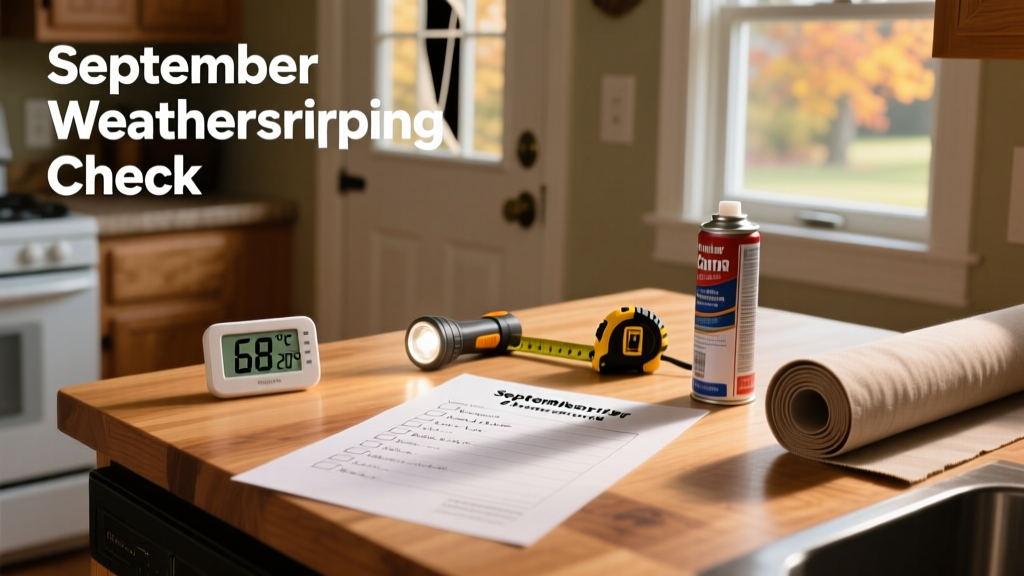
September is the sweet spot—cool enough to feel drafts but warm enough to work comfortably outdoors and indoors. With heating season just six weeks away, this is your last low-pressure chance to catch air leaks before they cost you money and comfort. According to the U.S. Department of Energy, poorly sealed doors and windows account for up to 20% of a home’s heating and cooling loss—most of it through gaps where weatherstripping fails.
Priority Tasks
| Task | Time Required | Difficulty | Tools Needed |
|---|---|---|---|
| Inspect all exterior doors for gaps and compression wear | 15–20 min per door | Easy | Flashlight, dollar bill |
| Test window sashes for air movement with incense or smoke pencil | 10–15 min per window | Easy | Incense stick or smoke pencil, lighter |
| Replace worn V-strip or foam tape on entry doors | 25–40 min per door | Moderate | Utility knife, measuring tape, rubbing alcohol, clean cloth |
| Re-caulk perimeter gaps around door frames (if visible) | 30–45 min per frame | Moderate | Caulk gun, silicone caulk, painter’s tape, utility knife |
Detailed Task Breakdown
Inspect exterior doors with the dollar bill test
Close each exterior door on a new dollar bill—leave it partially sticking out at the top, middle, and bottom of the latch side and strike plate side. Try to pull it out. If it slides free with no resistance, the weatherstripping isn’t compressing properly. Note which locations fail. Repeat on all four sides if your door has full-perimeter stripping. Pay special attention to the threshold sweep: if it’s cracked, bent, or doesn’t contact the floor evenly, it’s time for replacement.
Check windows using smoke or incense
On a calm day (no wind or fans running), light an incense stick and hold it near the meeting rails, sash edges, and frame corners of each operable window. Watch for smoke deflection—any visible waver means air is moving through a gap. Vinyl and aluminum windows often develop compression-set gaskets; wood windows may show paint cracking where the sash meets the stop. Mark problem windows with removable tape for follow-up.
Common Seasonal Problems
Fall brings fluctuating humidity and early temperature swings that expose weaknesses in aging seals. You’ll start noticing drafts near door bottoms first—especially on slab doors without adjustable thresholds. Window condensation on interior glass during cool mornings? That’s not just moisture—it’s often a sign of cold air infiltration chilling the surface. And don’t overlook garage doors: their bottom seal can harden and shrink by up to ¼ inch after summer UV exposure, creating a gap large enough for mice to enter.
- Cracked or brittle foam tape on storm doors (common after 2+ seasons)
- V-strip lifting at corners due to adhesive failure
- Door sweeps dragging or missing rubber fin segments
- Paint buildup on door jambs preventing full closure
Tools & Supplies
Keep these on hand before you begin—not just for weatherstripping, but for related September gutter cleaning and HVAC filter replacement. You’ll also want them for upcoming October furnace safety checks.
- Rubbing alcohol and lint-free cloths (for surface prep before adhesion)
- Measuring tape with 1/16″ increments (critical for precise cut lengths)
- Heavy-duty utility knife with snap-off blades
- Silicone-based caulk rated for exterior use (e.g., GE Silicone II)
- Replacement weatherstripping: adhesive-backed foam tape (3/8″ x 1/4″), V-strip (0.030″ thick), and adjustable door sweep kit
How often should I replace weatherstripping?
Most adhesive-backed foam lasts 2–3 years in direct sun or high-traffic areas. V-strip lasts 5–7 years if undisturbed—but check annually. According to the National Association of Home Builders’ 2022 Residential Construction Performance Guidelines, 68% of homes older than 10 years have at least one door or window with compromised sealing.
Can I install weatherstripping over old material?
No—residue, uneven surfaces, and layered thickness prevent proper compression. Always remove old stripping completely with a plastic scraper and alcohol wipe. Skipping this step causes premature failure and inconsistent gaps. As HVAC technician Marcus Lee told us during a 2023 field audit: “I’ve seen three layers of foam tape stacked like shingles—looks sealed, performs like Swiss cheese.”
“Every 1% improvement in building envelope tightness reduces heating energy use by 0.5–0.7%—and September is when homeowners get the highest ROI on sealing efforts.” — Building Science Corporation, Envelope Efficiency Report 2023
What’s the best weatherstripping for a steel entry door?
Use kerf-mounted bulb seals or magnetic gasket systems—they compress evenly under door weight and resist warping. Avoid generic foam tape; steel doors expand/contract more than wood, and adhesive bonds fail faster. Look for products rated for -20°F to 120°F operating range.
Why does my front door draft only in the morning?
Temperature differentials cause wood framing to contract overnight. If your door jamb is slightly out-of-plumb or the header has settled, the gap opens most when the wood is coldest—usually between 5–8 a.m. This is a structural clue, not just a seal issue. Check for nail pops or drywall cracks near the door frame.
Do storm windows need weatherstripping too?
Yes—if they’re operable. Most aluminum storm windows use bulb-type gaskets that degrade after 5–8 years. Test by closing the storm sash and sliding a piece of paper between it and the primary window frame. If it moves freely, replace the gasket or apply a thin bead of clear silicone along the meeting rail.
Don’t wait until November’s first freeze to discover your front door is whispering cold air into your living room. A focused 90-minute session this September pays off in comfort, efficiency, and fewer emergency calls come January. And remember: sealing gaps now also helps keep pollen and pests out as autumn winds pick up.