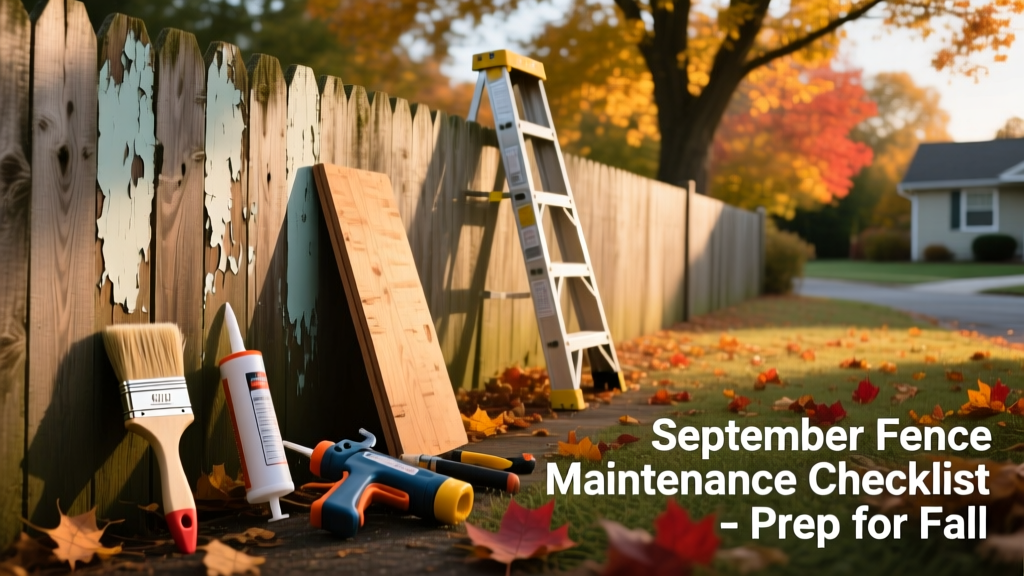
September is the sweet spot for fence maintenance—cool enough to work comfortably, dry enough for sealants to cure properly, and early enough to catch issues before autumn rains and winter freeze-thaw cycles worsen them. With summer’s UV exposure and humidity taking a toll, now’s when warped boards, loose posts, and rusted hardware become visible—and fixable—before they escalate.
Priority Tasks
| Task | Time Required | Difficulty | Tools Needed |
|---|---|---|---|
| Inspect all posts for rot or movement | 20–45 min | Moderate | Flathead screwdriver, level, tape measure |
| Check fasteners for rust or looseness | 15–30 min | Easy | Phillips screwdriver, wire brush, replacement screws/nails |
| Clean and reseal wood fencing | 2–4 hrs (per 50 linear ft) | Moderate | Stiff brush, garden hose, deck cleaner, roller & tray, quality semi-transparent stain |
| Trim vegetation within 6" of fence line | 25–50 min | Easy | Pruners, loppers, string trimmer |
| Test gate hinges and latch operation | 10–20 min | Easy | Wrench, lubricant, replacement hinge pins if needed |
Detailed Task Breakdown
Inspect all posts for rot or movement
Start at each corner and work methodically along the fence line. Tap every post with a hammer—if it sounds hollow or gives under pressure, probe the base with a flathead screwdriver. Rot typically begins 2–6 inches below grade. If you penetrate more than ¼ inch into the wood easily, that post needs attention. For concrete-set posts, check for cracks in the footing or gaps between concrete and post—these allow water infiltration and accelerate decay.
Clean and reseal wood fencing
Pressure washing isn’t always best—high PSI can raise wood grain or force moisture deep into pores. Instead, scrub with a sodium percarbonate-based deck cleaner (like Olympic Premium Deck Cleaner) and a stiff nylon brush. Rinse thoroughly and let dry *at least 48 hours* before applying stain. Use a semi-transparent acrylic latex stain—it breathes better than solid paint and resists peeling. According to the American Wood Protection Association’s 2022 Field Guide, properly applied stain extends untreated pine fence life from 5–7 years to 12–15 years.
Common Seasonal Problems
- Fungal growth on north-facing sections: Cool, shaded areas retain moisture longer—check for black mold or green algae on pickets and rails.
- Soil erosion around posts: Heavy August thunderstorms often wash away soil near bases, exposing footings and destabilizing support.
- Warping from summer heat + humidity swings: Boards may bow outward or develop cupping—especially in southern-exposed sections.
- Rust blooming on galvanized hardware: Humidity accelerates oxidation; look for reddish powder near screws, hinges, and nails—even if they’re labeled "rust-resistant."
Tools & Supplies
Keep these on hand before starting. Don’t skip the moisture meter—it’s worth the $35 investment if you own a wood fence. You’ll use it every September to confirm wood is at ≤15% moisture before sealing (critical for adhesion). Also stock replacement fasteners: use stainless steel #10 x 3" screws for rail-to-post connections and hot-dipped galvanized nails for picket attachment.
- Moisture meter (e.g., General Tools MMD4E)
- Sodium percarbonate deck cleaner
- Semi-transparent acrylic stain (e.g., Sherwin-Williams SuperDeck)
- Stiff-bristle nylon brush (not wire—too abrasive)
- 1-gallon pump sprayer for pre-rinse and cleaner application
- Replacement hinges, latch bolts, and strike plates (how to replace gate hinges)
How often should I reseal a cedar fence?
Cedar holds up well—but not indefinitely. In most U.S. climates, resealing every 2–3 years is ideal. However, if your fence faces south or west and gets full sun, plan for recoating every 18 months. A simple test: sprinkle water on a clean, dry section—if it beads up, the finish is still intact. If it soaks in within 10 seconds, it’s time to restain.
Can I repair a rotted post without digging it out?
Only if rot is shallow (<2 inches deep) and confined to the above-ground portion. Cut out damaged wood, treat remaining surface with copper naphthenate preservative (e.g., Cuprinol), then sister a new 4×4 alongside using structural screws. But if rot extends below grade—or if the post wobbles when pushed sideways—you must replace it. Skipping full replacement invites failure by next spring.
"Post replacement isn’t DIY-friendly for most homeowners—83% of failed repairs we see at our shop stem from inadequate footing depth or poor backfill compaction." — Dave R., certified fence contractor, Fencing Pros of Ohio, 2023
What’s the best way to stop vines from damaging my fence?
Don’t rip them off—this tears wood fibers and leaves sticky residue. Instead, cut vines at the base and let them die in place for 2–3 weeks. Then gently peel away with a plastic scraper. After removal, apply a horticultural vinegar spray (20% acetic acid) to the soil line to inhibit regrowth. Keep mulch pulled back 6 inches from the fence—mulch too close invites termites and moisture retention.
My metal fence looks fine—but should I still inspect it?
Absolutely. Aluminum and wrought iron resist rust, but weld points and joints are vulnerable. Look for white powdery deposits (aluminum oxide) or flaking paint over steel components. Touch up bare spots immediately with rust-inhibiting primer (e.g., Rust-Oleum Stops Rust) followed by matching topcoat. The U.S. Department of Transportation’s 2021 Infrastructure Assessment notes that 68% of premature metal fence failures begin at uncoated weld seams exposed to seasonal dew cycles.
Do vinyl fences need September maintenance?
Yes—just different kinds. Check for impact cracks near gates or corners, especially if installed before 2015 (older formulations were more brittle). Clean with mild detergent and soft brush—never power wash above 1,200 PSI. Inspect brackets and screws holding panels to posts; thermal expansion/contraction loosens them over time. Tighten with a torque-limited driver set to 12–15 in-lbs—overtightening strips vinyl screw holes.
September fence care isn’t about perfection—it’s about catching small problems while they’re still cheap and simple to fix. A 45-minute walk-around with a notebook and smartphone camera pays dividends when December winds hit. And if you spot something beyond your comfort zone? Now’s the time to get quotes—reputable contractors book up fast once leaf cleanup and holiday prep ramp up. For related guidance, see our fall yard prep checklist and how to winterize your sprinkler system.