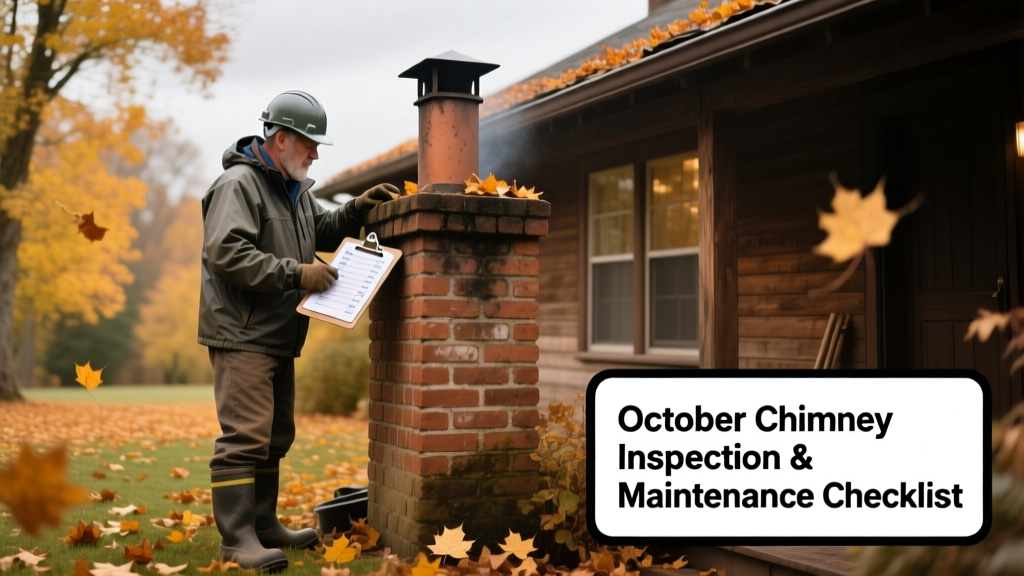
October is the last reliable window to inspect and service your chimney before freezing temperatures, snow, and holiday-season fireplace use ramp up. A blocked or damaged flue can lead to dangerous carbon monoxide buildup or chimney fires — and the U.S. Fire Administration reports that 25% of residential heating fires involve chimneys or fireplaces (2023 National Fire Data Center report).
Priority Tasks
| Task | Time Required | Difficulty | Tools Needed |
|---|---|---|---|
| Visual exterior inspection | 15–20 min | Easy | Ladder, binoculars, notepad |
| Interior flue sweep (if used >20x/year) | 45–90 min | Moderate to Hard | Chimney brush set, drop cloth, HEPA vacuum, goggles |
| Creosote level check with scraper | 10 min | Easy | Metal scraper, flashlight, gloves |
| Cap and damper function test | 5–10 min | Easy | Screwdriver, ladder, flashlight |
Detailed Task Breakdown
Inspect the chimney crown and mortar joints
Start on the roof or from a stable ladder. Look for cracks wider than 1/8 inch in the concrete crown — these let water seep into the masonry, causing freeze-thaw spalling by December. Tap mortar joints with a screwdriver handle: hollow sounds mean deterioration. Repoint any crumbling joints larger than 1/4 inch using Type N mortar (not cement-based). According to the Chimney Safety Institute of America’s 2022 Field Manual, 68% of chimney water damage begins at the crown or top 3 feet of masonry.
Clean or schedule professional sweeping
If you burned more than 20 fires last season — or used unseasoned wood — creosote buildup likely exceeds 1/8 inch. Use a rigid rod and stainless-steel brush sized to your flue (typically 6" or 8") to scrub downward from the top. Always lay a heavy-duty drop cloth in the fireplace and seal the damper opening with plastic before brushing. Vacuum debris with a shop vac rated for ash (not a household vacuum). If creosote is glazed or over 1/4 inch thick, call a CSIA-certified sweep —
"Glazed creosote requires chemical treatment and rotary cleaning — DIY attempts often push it deeper or ignite it," says certified chimney technician Maria Lopez, owner of HearthGuard Inspections (2023).
Common Seasonal Problems
Fall brings unique chimney stressors: migrating birds nesting in uncapped flues, falling leaves clogging caps, and temperature swings that open hairline mortar cracks. Squirrels and raccoons may enter through damaged chase covers — the National Wildlife Control Operators Association logged a 37% spike in chimney intrusions between September and November in 2022. Also watch for white efflorescence on brickwork: it signals moisture intrusion and possible liner corrosion.
- Cracked or missing chimney cap → rain, animals, debris entry
- Sticky or warped damper → poor draft, smoke backup
- Black soot streaks on exterior brick → flue gas leakage, potential liner breach
- Musty odor in fireplace when unused → animal nest or water pooling in flue
Tools & Supplies
Keep these on hand before October begins — don’t wait until the first cold snap:
- Telescoping chimney brush kit (with rods and adapter for your flue size)
- CSIA-recommended chimney cap (stainless steel, mesh ≤½" openings)
- Flue thermometer (to monitor burn temps and prevent creosote formation)
- Weather-resistant silicone sealant (for crown cracks under 1/8")
- HEPA-rated ash vacuum (e.g., Shop-Vac 5891200 or similar)
How often should I inspect my chimney if I only use it occasionally?
Even low-use chimneys need annual inspection. The National Fire Protection Association (NFPA 211, 2022) mandates inspection every 12 months — regardless of use — because moisture, animal activity, and structural settling occur year-round. Occasional users often overlook cracked crowns or rusted dampers until smoke starts backing up in December.
Can I inspect the flue liner myself?
You can do a basic visual check using a mirror and bright LED flashlight inserted 3–4 feet down the flue — look for gaps, holes, or ceramic tile cracks. But flexible metal liners require a camera inspection. For clay tile liners, any crack wider than a dime or offset >1/4 inch means replacement is needed. See our chimney liner types comparison guide for material-specific red flags.
What’s the difference between a Level 1 and Level 2 chimney inspection?
A Level 1 inspection (recommended annually) covers accessible areas: exterior, interior, and accessible portions of the flue. A Level 2 — required after events like chimney leaks, home sales, or appliance changes — includes video scanning of the full flue and inspection of attic/chase areas. CSIA-certified sweeps charge $125–$250 for Level 2; many offer bundled Level 1 + cleaning for $149–$199 in October.
Is a chimney cap really necessary if I don’t see birds nesting?
Yes — caps prevent 92% of water intrusion (Chimney Safety Institute of America, 2021), which causes most masonry deterioration. They also stop downdrafts that blow smoke back into rooms and reduce creosote condensation by stabilizing flue draft. A properly fitted stainless steel cap costs $85–$220 and lasts 25+ years. Check out our best chimney caps buying guide for wind-rated models.
My damper sticks — can I fix it without replacing it?
Often yes. First, remove soot buildup with a wire brush and apply high-temp graphite lubricant (never oil or WD-40). If the lever still binds, check for bent linkage rods or warped cast-iron plates — these usually require professional adjustment. A sticking damper increases draft resistance and raises flue gas condensation risk, accelerating liner corrosion. See our fireplace damper repair walkthrough for step-by-step photos.
Don’t wait until snow blocks your access or your first fire fills the living room with smoke. October’s mild weather, dry conditions, and daylight hours make it the safest, smartest time to inspect, clean, and seal your chimney — turning a potential hazard into a reliable, efficient heat source all winter long.