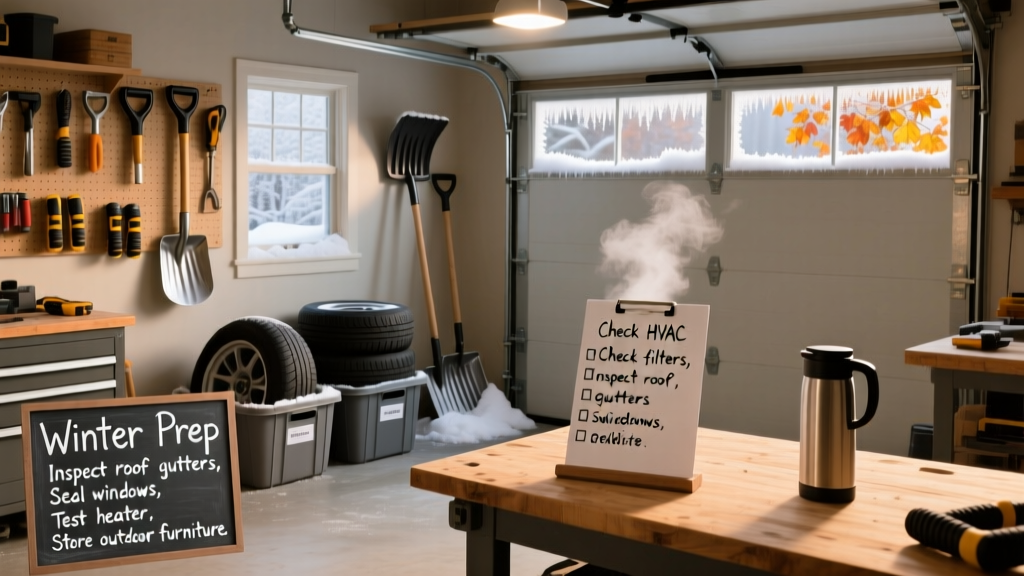
October is the last reliable window before freezing temps and snow make garage work difficult or dangerous. A well-prepped garage shields vehicles from moisture, stops pests from nesting, and prevents pipes from freezing in attached garages — 37% of home heating oil line failures begin with neglected garage seals (National Fire Protection Association, 2022).
Priority Tasks
| Task | Time Required | Difficulty | Tools Needed |
|---|---|---|---|
| Clear and deep-clean floor & walls | 2–3 hours | Moderate | Broom, pressure washer (or hose + scrub brush), degreaser, trash bags |
| Inspect and seal door weatherstripping | 45 minutes | Easy | Utility knife, replacement vinyl or rubber seal, screwdriver |
| Drain & winterize garden hoses & irrigation | 20 minutes | Easy | Wrench, bucket, air compressor (optional) |
| Check HVAC filter & furnace access panel | 15 minutes | Easy | Replacement filter (check size), flashlight |
| Test garage door balance & safety sensors | 30 minutes | Moderate | Step ladder, level, tape measure, smartphone (for sensor alignment test) |
| Store summer tools & prep winter gear | 1–2 hours | Easy | Tool rack, labeled bins, silicone spray, battery charger |
Detailed Task Breakdown
Deep-clean floor and walls
Start by removing all vehicles, shelves, and loose items. Sweep thoroughly, then spot-treat oil stains with a citrus-based degreaser (let sit 10 minutes). Rinse with a garden hose — avoid high-pressure washing near electrical outlets or wall-mounted lighting. Wipe down walls and baseboards with a vinegar-water solution (1:3 ratio) to remove dust and cobwebs. Let dry fully before reorganizing.
- Dispose of old paint cans at a hazardous waste drop-off site — never pour down drains
- Label and vacuum sealed containers of sawdust, fertilizer, or rodent bait before storage
- Check for cracks >1/8" in concrete — fill with polymer-modified caulk before winter expansion
Seal garage door gaps
Close the door fully and run your hand along the bottom edge and sides. If you feel drafts, measure the gap. Replace worn vinyl bulb seals with adhesive-backed replacements sized for your track type (standard residential doors use 3/8" or 1/2" bulbs). Trim excess with a utility knife. For side gaps, add compression seals that mount to the jamb — they compress when the door closes, not just sit passively.
Winterize outdoor water lines
Disconnect all hoses, drain completely, and store coiled indoors. Shut off the interior shut-off valve feeding outdoor spigots, then open the spigot to release residual pressure. Blow out remaining water using an air compressor set to ≤50 PSI — critical if your spigot lacks a frost-proof design. Wrap exposed shutoff valves in foam insulation sleeves.
Common Seasonal Problems
Garage-specific issues escalate fast once temperatures dip below 40°F. Rodents seek warmth — 62% of mouse infestations begin in garages (University of Nebraska-Lincoln Extension, 2023). Condensation builds on cold metal surfaces, rusting tools and corroding car undercarriages. Uninsulated overhead door panels can crack in sub-zero wind chills. And forgotten extension cords left outside become brittle and hazardous after repeated freeze-thaw cycles.
- Look for greasy smudges near baseboards — sign of rodent activity
- Check for white powdery residue on concrete — efflorescence indicating trapped moisture
- Listen for grinding or jerking during door operation — worn springs or rollers
Tools & Supplies
You don’t need specialty gear — but having these on hand avoids mid-task trips to the hardware store:
- Heavy-duty shop vacuum (with HEPA filter for dust and rodent droppings)
- Silicone-based lubricant (not WD-40 — it attracts dust and dries out rubber)
- LED work light with magnetic base (for inspecting overhead tracks)
- Insulated gloves rated to -20°F (for handling frozen hoses or metal parts)
- Non-toxic rodent deterrent spray (peppermint oil + clove oil blend)
"A garage door that isn’t balanced puts 300% more strain on the opener motor — and doubles failure risk before February." — Certified Door Technician, International Door Association Handbook, 2021
How do I know if my garage door springs need replacing?
If the door feels unusually heavy when lifted manually, or if one side rises faster than the other, springs are likely fatigued. Most torsion springs last ~10,000 cycles — roughly 7 years with daily use. Look for visible gaps in the winding cones or rust pitting on the coil surface. Never attempt DIY spring replacement — tension exceeds 200 lbs.
Can I insulate my garage door myself?
Yes — if it’s a standard 4-panel steel door. Use rigid foam board (R-6 minimum) cut to fit each panel cavity, secured with construction adhesive and small washers. Avoid expanding foam — it warps panels. Seal seams with aluminum tape. Note: Insulating only the door won’t reduce heat loss significantly unless you also seal wall and ceiling gaps.
What’s the safest way to store gasoline for snowblowers?
In approved red 5-gallon UL-listed containers, no more than 3/4 full, in a detached shed or well-ventilated corner of the garage away from water heaters or pilot lights. Add fuel stabilizer (1 oz per 2.5 gallons) before storage — unstabilized gas degrades in 30 days. Rotate stock yearly; discard fuel older than 6 months.
Why does my garage get so humid in early November?
Cooler outdoor air meeting warm, moist indoor air creates condensation — especially if your garage shares a wall with a heated living space or has poor ventilation. Install a humidity sensor (aim for 40–50% RH) and run a dehumidifier on low if readings exceed 60%. Also check for clogged weep holes in vinyl siding above the garage door.
Should I unplug my garage refrigerator over winter?
Only if it’s empty and you’ll be gone for >30 days. Otherwise, keep it running — cycling prevents mold in seals and keeps lubricants fluid. Set temperature to 45°F instead of 37°F to reduce compressor strain. Wipe door gaskets monthly with diluted vinegar to prevent mildew.
Do I need to cover my car if it stays in the garage all winter?
No — unless your garage leaks or has high humidity. Car covers trap moisture against paint and upholstery, encouraging oxidation and mildew. Instead, run a dehumidifier, park on a vapor barrier (like 6-mil poly), and use a battery tender to maintain charge. For classic cars, add silica gel packs inside the cabin and wheel wells.
Completing this checklist now means fewer emergency calls in January — and a garage that actually functions as shelter, workshop, and storage all winter long. Revisit your November home maintenance checklist next to tackle attic vents and gutter debris before the first hard freeze.