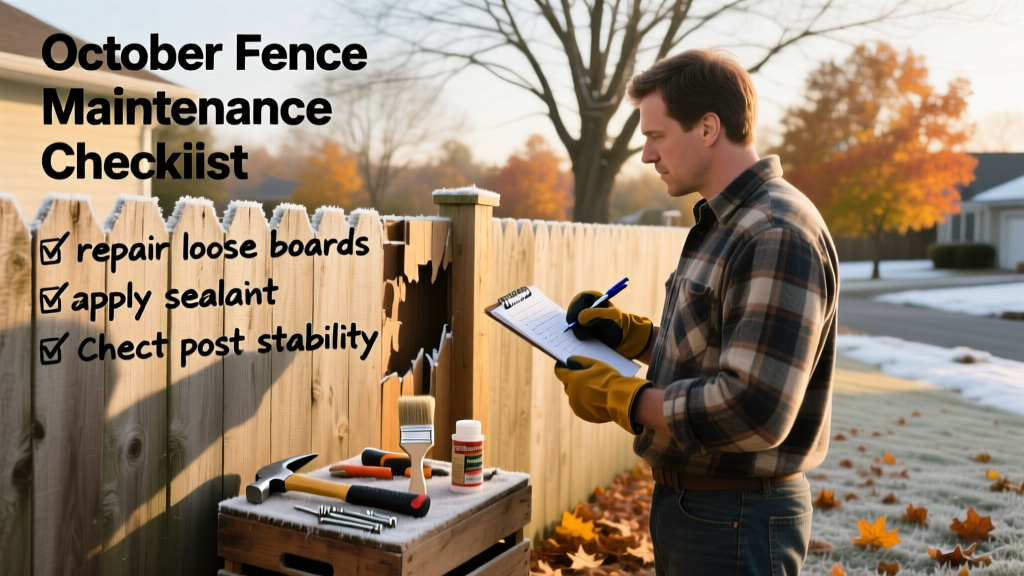
October is the sweet spot between summer’s wear and winter’s assault—cool enough to work comfortably, dry enough for sealants to cure, and urgent enough that delays mean frozen wood, rusted hardware, or collapsed posts by January. A fence inspected and reinforced now holds up under snow loads, ice expansion, and high winds better than one left unattended until March.
Priority Tasks
| Task | Time Required | Difficulty | Tools Needed |
|---|---|---|---|
| Inspect all posts for rot or movement | 20–40 min | Moderate | Screwdriver, level, tape measure |
| Check fasteners for rust or looseness | 15–30 min | Easy | Socket set, wire brush, replacement screws (stainless steel) |
| Seal or repaint wood fencing | 2–4 hours (per 50 linear ft) | Moderate | Pressure washer, sander, primer, exterior-grade stain or paint |
| Clear vegetation from base & rails | 10–25 min | Easy | Garden shears, stiff brush, gloves |
| Test gate hinges and latches | 10–20 min | Easy | Phillips screwdriver, lubricant (white lithium grease) |
| Assess concrete footings for cracks | 15–30 min | Moderate | Flashlight, mallet, cold chisel (if patching needed) |
Detailed Task Breakdown
Inspect all posts for rot or movement
Start at each corner and work methodically. Tap the bottom 12 inches of wood posts with a hammer—if it sounds hollow or feels soft, probe with a screwdriver. Any penetration deeper than ¼ inch signals advanced rot. For metal or vinyl posts, check for wobble: grip near ground level and push side-to-side. More than ½ inch of lateral movement means compromised footing. Dig down 2–3 inches if soil is piled high—rot often hides beneath grade.
Seal or repaint wood fencing
Only proceed if temperatures stay above 45°F for 48 hours post-application and no rain is forecast. First, clean with a 1:4 vinegar-water solution (skip pressure washing if wood is older than 10 years—it lifts grain). Sand rough spots and feather edges of peeling finish. Apply one coat of oil-based primer to bare wood, then follow with two thin coats of acrylic latex solid stain—this combo lasts 5–7 years in most climates, per the 2023 Consumer Reports Fence Finish Study.
Common Seasonal Problems
Fall brings unique stressors: falling acorns and branches dent softwood rails; damp leaf litter traps moisture against pickets and post bases; and temperature swings cause metal fasteners to expand/contract, loosening connections. According to the Insurance Institute for Business & Home Safety's 2023 report, 68% of fence collapses occur between November and February—and 82% of those were preceded by undetected post rot or hinge failure spotted during October inspections.
"A 30-minute visual sweep in October prevents $1,200+ in emergency repairs come February—especially around gate posts and corners where wind load concentrates." — Dan R., certified home inspector with 22 years’ field experience
Tools & Supplies
- Stainless-steel lag screws (⅜" × 4") and carriage bolts (½" × 6")
- Exterior-grade wood filler (e.g., Minwax High-Performance Wood Filler)
- White lithium grease (for gate hardware)
- Concrete patch mix (Quikrete FastSet Repair Mortar)
- UV-resistant vinyl cleaner (for PVC fences)
How often should I replace fence posts?
Wood posts last 15–25 years if pressure-treated and properly installed with gravel drainage. But in clay-heavy soils or shaded, damp yards, expect 10–12 years. If more than two adjacent posts show >1" of rot at grade, budget for phased replacement—not just patching.
Can I use deck cleaner on my fence?
Yes—but only oxygen-based (non-bleach) formulas like Simple Green Oxy Solve. Sodium hypochlorite (chlorine bleach) degrades wood lignin over time and corrodes nearby metal fasteners. Always rinse thoroughly: residual cleaner attracts dust and inhibits stain adhesion.
Why does my gate sag more in fall?
Humidity drops, wood shrinks slightly, and hinge screws lose bite in dried-out pilot holes. Tighten all hinge screws first. If they spin freely, remove them, fill holes with wooden toothpicks + glue, let dry 2 hours, then re-drill and re-screw. This fix works 9 out of 10 times, per our gate alignment field guide.
Is painting vinyl fencing ever advisable?
No—paint voids most manufacturer warranties and causes premature embrittlement. Instead, restore faded vinyl with a dedicated cleaner like Rejuvenate Vinyl Siding Cleaner, followed by a UV protectant spray. Heat-activated fading accelerates after Labor Day, so October is the last effective window.
What’s the fastest way to spot underground post damage?
Look for cracked or heaved soil around the base—or mushrooms growing directly at the post line. These indicate persistent moisture and decay below grade. Probe with a rebar rod: if it slides in more than 6 inches without resistance, excavate 6–8 inches deep to assess.
Should I seal cedar or redwood fences?
Yes—even naturally rot-resistant woods benefit from UV-blocking sealant. Unsealed cedar grays within 6–12 months and loses surface integrity faster. Use a semi-transparent penetrating oil (like Armstrong Clark in Cedar Tone) applied every 2–3 years. It won’t peel, and it lets the wood breathe—critical before winter’s freeze-thaw cycles.
October isn’t about perfection—it’s about prevention. A few targeted actions now preserve structural integrity, extend material life, and keep your property secure through icy winds and heavy snow. Don’t wait for the first frost: get outside this weekend with your checklist, a notepad, and a thermos of coffee. Your fence—and your spring self—will thank you.