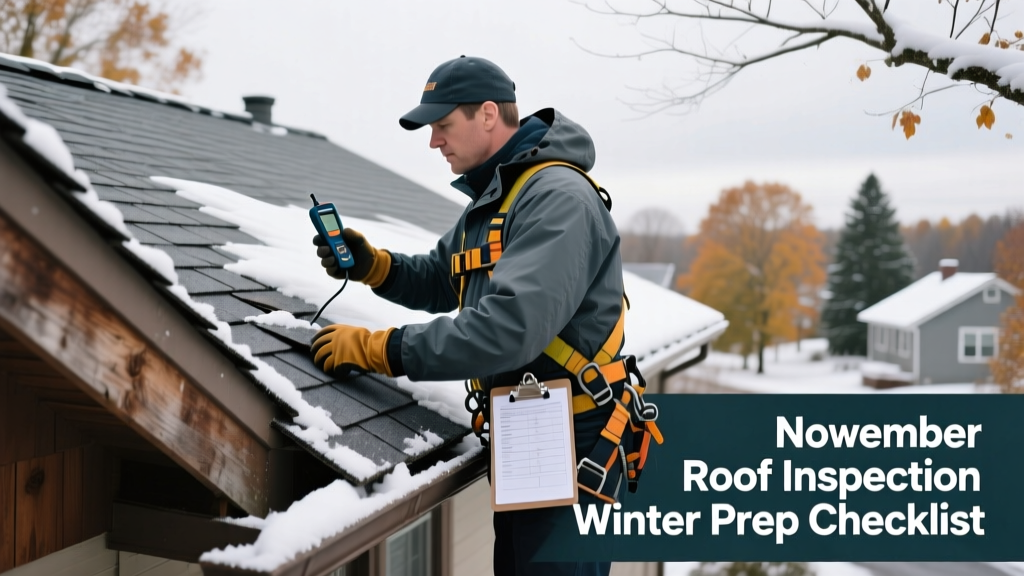
November is the last realistic window to spot and fix roof vulnerabilities before snow, ice, and subfreezing temps lock problems in place. A single undetected leak or clogged gutter can escalate into $5,000+ in water damage by February — and the Insurance Institute for Business & Home Safety's 2023 report found that 68% of winter roof failures trace back to pre-winter neglect.
Priority Tasks
| Task | Time Required | Difficulty | Tools Needed |
|---|---|---|---|
| Inspect shingles for curling, cracking, or missing granules | 25–40 min | Moderate | Extension ladder, binoculars, notepad |
| Clear gutters and downspouts of leaves and debris | 45–75 min | Easy–Moderate | Gutter scoop, work gloves, garden hose with spray nozzle |
| Check attic ventilation and insulation coverage near eaves | 20–30 min | Moderate | Flashlight, tape measure, thermal camera (optional) |
| Examine flashing around chimneys, vents, and skylights | 15–25 min | Moderate–Hard | Ladder, putty knife, roofing cement, caulk gun |
Detailed Task Breakdown
Inspect shingles for wear and tear
Start from ground level using binoculars to scan for obvious issues: lifted, curled, or missing shingles; bald spots where granules have washed away; dark stains indicating algae or moisture retention. Then climb safely onto the roof (only if dry and stable) and run your hand over each section — loose granules sticking to your palm mean the shingle’s lifespan is nearing its end. Replace any shingle with >25% surface loss; don’t wait until spring — cold weather makes adhesive failure more likely.
- Focus especially on south- and west-facing slopes — they endure the most UV exposure and thermal cycling
- Mark damaged areas with chalk or flagging tape for later repair
- If you spot three or more adjacent missing shingles, get a licensed roofer to assess underlying deck integrity
Clear gutters and test drainage
Remove leaf litter, pine needles, and silt buildup with a gutter scoop — avoid pressure washers, which can dislodge sealant or bend aluminum. Flush each downspout with a garden hose at full pressure; if water backs up or leaks at seams, reseal joints with silicone-based gutter sealant. Check splash blocks: they must extend at least 5 feet from the foundation to prevent erosion and basement seepage.
- Install leaf guards on gutters if you have mature deciduous trees within 30 feet
- After cleaning, inspect hangers — replace any rusted or bent ones to prevent sagging under snow load
Common Seasonal Problems
November brings unique threats: rapid temperature swings cause metal flashing to expand and contract, opening micro-gaps; late-fall rain followed by freeze-thaw cycles forces water under shingle edges; and early snowmelt from attic heat creates icy dams that trap water behind them. According to the U.S. EPA, homes with inadequate attic insulation lose up to 25% of heating energy through the roof — worsening both ice dam formation and energy bills.
"A properly ventilated attic stays within 10°F of outside air — that’s the single biggest factor in preventing ice dams," says roofing engineer Dr. Lena Cho, National Roofing Contractors Association Technical Bulletin, 2022.
Tools & Supplies
Keep these items accessible and in working order before November 15:
- Sturdy extension ladder with standoff arms (rated for roof work)
- Rubber-soled shoes with aggressive tread (no sneakers or boots with smooth soles)
- Roofing cement (e.g., Henry 208), butyl rubber caulk, and galvanized roofing nails
- Insulation R-value checker (or note your current attic insulation depth — aim for R-38 minimum)
- Moisture meter for checking decking beneath suspect shingles
How often should I inspect my roof in November?
Once — but make it thorough. Annual November inspections are non-negotiable for homes older than 10 years. If your roof is asphalt shingle and installed before 2010, add a second look mid-month after heavy wind or rain events.
Can I inspect the roof myself, or do I need a pro?
You can safely inspect from the ground and ladder (not the roof surface) if you’re comfortable at height and your roof pitch is ≤6:12. Hire a certified inspector if your roof is slate, tile, or over 15 years old — or if you see sagging, moss growth, or daylight through decking boards. Roof inspection costs typically range $150–$300, far less than emergency winter repairs.
What’s the biggest mistake homeowners make in November roof prep?
Ignoring the attic. Over 40% of ice dams start because warm air leaks into the attic, melting snow from below. Seal recessed lights, bath fans, and ductwork penetrations with fire-rated caulk — then verify insulation isn’t blocking soffit vents. Proper attic ventilation requires 1 square foot of net free vent area per 150 sq ft of attic floor space.
Should I worry about icicles forming in early December?
Yes — but only as a symptom. Icicles indicate heat loss and poor drainage. Don’t knock them down (risk of injury or roof damage); instead, check attic insulation depth and ventilation balance immediately. If icicles exceed 2 inches in diameter or form repeatedly in same spot, call a contractor to assess heat loss sources.
Do solar panels change my November roof checklist?
Yes. Panels block visual inspection of underlying shingles and trap heat — accelerating aging underneath. Schedule a panel-lift inspection every 2 years. In November, focus on clearing debris from panel edges and checking mounting flashings for cracks or separation. Solar panel maintenance includes verifying conduit seals and monitoring for voltage drops that suggest moisture intrusion.
Don’t let November slip by without action. A 90-minute inspection now saves weeks of stress — and thousands in repairs — when January winds howl and snow piles high. Your roof isn’t just overhead; it’s your home’s first defense against winter’s worst. Start today — while the sun still shines long enough to see clearly and the ground stays dry enough to set up a ladder safely.