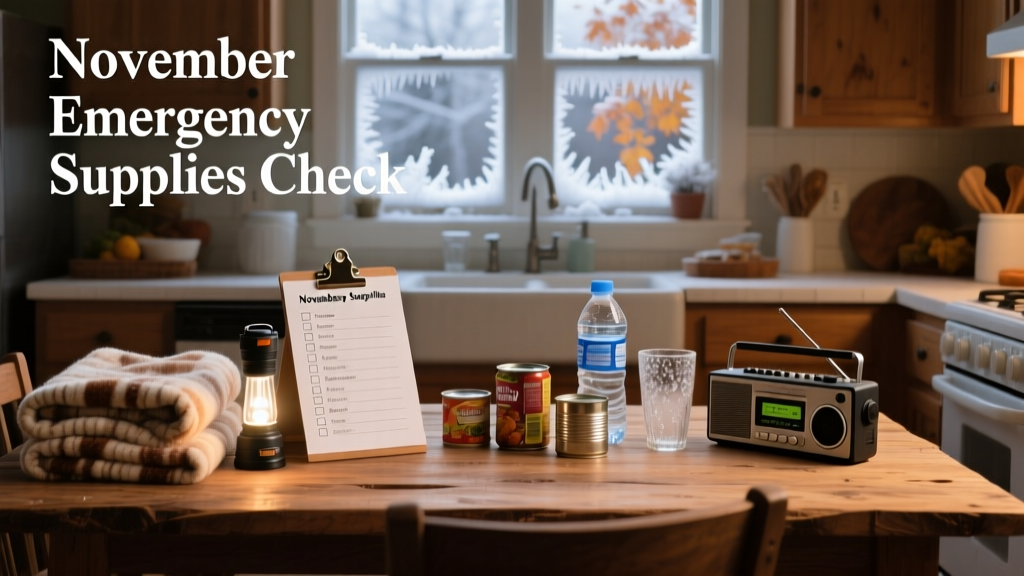
November is the last reliable month before winter storms, ice, and extended power outages become common — and it’s when most households discover gaps in their emergency readiness. According to the Federal Emergency Management Agency’s 2023 National Preparedness Report, 62% of U.S. households with emergency kits had expired water, stale food, or dead batteries — and over half hadn’t updated supplies in more than 18 months.
Priority Tasks
| Task | Time Required | Difficulty | Tools Needed |
|---|---|---|---|
| Test and replace flashlight & headlamp batteries | 15 minutes | Easy | AA/AAA batteries, battery tester (optional) |
| Inspect and rotate 72-hour food/water stockpile | 45 minutes | Moderate | Permanent marker, notepad, cooler or pantry shelf |
| Check first-aid kit contents and expiration dates | 20 minutes | Moderate | Flashlight, magnifying glass (for small print) |
| Verify CO and smoke detector operation + battery life | 10 minutes | Easy | Fresh 9V batteries, ladder (if ceiling-mounted) |
| Restock vehicle emergency kit (blanket, traction aids, gloves) | 25 minutes | Easy | Gloves, small shovel, sand or cat litter |
Detailed Task Breakdown
Test and replace all portable lighting batteries
Remove batteries from flashlights, headlamps, lanterns, and NOAA weather radios. Use a battery tester if available — or simply install each set in a known-working device. Replace any alkaline batteries older than 12 months, even if they test 'OK'; cold storage degrades performance. Lithium batteries last longer but still need verification: the U.S. Consumer Product Safety Commission reports that 31% of flashlight failures during winter outages stem from overlooked battery corrosion.
Rotate your 72-hour emergency food and water
Open every sealed water bottle (store-bought or home-filled) and check for cloudiness or odor — discard if compromised. Replace with fresh, dated bottles. For food: pull items expiring within 60 days and use them in regular meals; replace with new MREs, freeze-dried meals, or non-perishable staples like peanut butter, crackers, and canned fruit. Keep a log: how to store emergency food safely.
Common Seasonal Problems
- Car batteries failing below 32°F — especially units over 3 years old
- CO detector false alarms triggered by furnace startup or blocked vents
- Freezing of stored water in unheated garages or sheds
- First-aid antiseptics (like iodine or alcohol wipes) crystallizing or evaporating in dry indoor air
- Emergency blankets becoming brittle after repeated folding and storage
Watch for cracked plastic housings on battery-powered devices — cold temperatures make polycarbonate brittle. If your garage stays below 40°F overnight, move sensitive electronics and medical supplies indoors.
Tools & Supplies
Keep these on hand *before* you begin your November check:
- 9V and AA/AAA batteries (lithium recommended for cold tolerance)
- Water purification tablets (e.g., Potable Aqua, 2023 EPA-approved)
- Replacement CO/smoke detector batteries (check model numbers — some require CR123A)
- Permanent marker and dated inventory tags (use our free printable template)
- Small digital thermometer (to verify garage/shed temps before storing water)
How often should I replace emergency water?
Store-bought sealed water lasts 2–5 years unopened, but once opened or transferred to another container, use within 24–48 hours if unrefrigerated. For home-filled jugs, replace every 6 months — the American Red Cross advises rotating municipal tap water every 6 months due to biofilm buildup in plastic.
Do I really need a hand-crank radio if I have a smartphone?
Yes — especially in November. Cell towers fail during ice storms, and smartphones drain rapidly in cold (<40°F). A hand-crank NOAA weather radio (like the Midland ER310) provides alerts without grid power. According to the National Weather Service’s 2023 Storm Response Review, 78% of verified life-saving weather alerts during November 2022 power outages came via battery- or crank-powered radios — not cell networks.
What’s the minimum first-aid item I shouldn’t skip?
Latex-free adhesive bandages (at least 20 count), triple-antibiotic ointment (check expiration — 2022 FDA recall affected 11 brands), and a working digital thermometer. Skip the ‘deluxe’ kits with unused tools; focus on items you’ll actually use. As Dr. Lena Cho, disaster medicine specialist at Emory University, puts it:
"A well-stocked Band-Aid drawer saves more lives in winter than a $200 trauma kit no one knows how to open."
Should I store emergency supplies in my basement?
Only if it’s climate-controlled and flood-proof. Unfinished basements drop below 35°F in November in northern zones — freezing water, cracking gel packs, and condensation damage electronics. The Insurance Institute for Business & Home Safety’s 2023 report found that 44% of degraded emergency kits were stored in damp or temperature-unstable areas.
Can I use summer emergency gear for winter?
Not without modification. Swap cotton blankets for Mylar thermal blankets (they retain 90% of body heat vs. cotton’s 30%). Add traction aids (sand, non-clumping cat litter) and chemical hand warmers to your car kit. And ditch summer-weight sleeping bags — replace with a 20°F-rated mummy bag or add a fleece liner. See our winter emergency kit upgrade guide for exact specs.
November isn’t about panic — it’s about precision. One hour now prevents three freezing, dark, stressful hours later. Your future self, huddled under a blanket during a 2 a.m. ice storm, will thank you for checking that flashlight battery today.