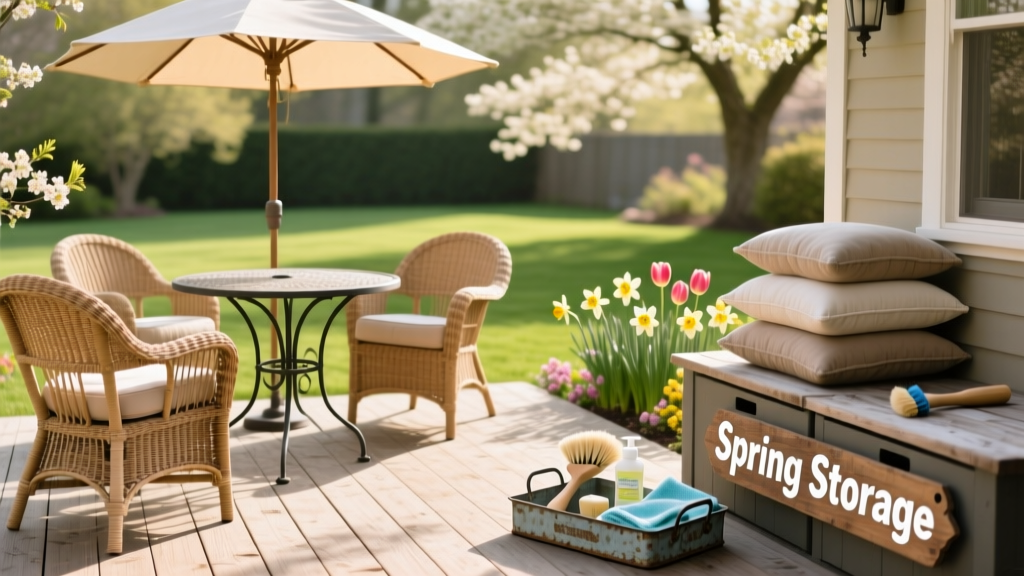
May is the sweet spot for patio furniture prep—warm enough to work comfortably, cool enough to avoid sun fatigue, and just before pollen peaks and summer humidity sets in. Skipping this window means tackling mildew-stained cushions or rust-pitted frames mid-July, when repairs cost more and options shrink.
Priority Tasks
| Task | Time Required | Difficulty | Tools Needed |
|---|---|---|---|
| Clean frames & surfaces | 45–90 min | Moderate | Soft brush, mild detergent, garden hose, microfiber cloths |
| Inspect & tighten hardware | 20–30 min | Easy | Allen wrench set, Phillips screwdriver, threadlocker (optional) |
| Deep-clean & air-dry cushions | 60–120 min | Moderate | Upholstery cleaner, soft-bristle brush,晾晒 rack or clothesline |
| Apply protective sealant (wood/metal) | 30–60 min | Moderate | Teak oil or rust-inhibiting spray, lint-free rags, gloves |
Detailed Task Breakdown
Clean frames & surfaces
Start with dry brushing to remove dust and spiderwebs. Mix 1 part white vinegar with 3 parts water—or use a pH-neutral cleaner—for aluminum, wrought iron, or resin wicker. Avoid bleach on metal; it accelerates corrosion. Rinse thoroughly and let air-dry completely before reassembling. For teak, skip harsh cleaners—use only water and a soft brush to preserve natural oils.
Inspect & tighten hardware
Check every bolt, screw, and hinge—especially on folding chairs and reclining loungers. Loose hardware causes wobbling and uneven stress that leads to premature frame failure. Tighten with the correct-size tool (not pliers—stripped heads are common). Apply a drop of blue threadlocker (Loctite 242) to critical joints like seat-to-leg connections if furniture sees heavy daily use.
Deep-clean & air-dry cushions
Remove cushion covers if machine-washable (check tags—many polyester blends can handle cold gentle cycles). For non-removable foam cushions, vacuum first, then spot-clean with a mix of 1 tsp dish soap + 1 cup warm water + 1 tbsp baking soda. Blot—not scrub—to avoid fiber damage. Dry fully outdoors for at least 48 hours; trapped moisture invites mold. According to the U.S. EPA, indoor humidity above 60% encourages microbial growth—even in stored cushions.
Common Seasonal Problems
- Mildew spots on fabric or foam (especially under cushion seams)
- Rust blooms on steel legs or fasteners after winter condensation exposure
- Teak graying or surface checking from freeze-thaw cycles
- Wicker fibers lifting or separating due to UV degradation
- Plastic resin becoming brittle or discolored near pool chlorine off-gassing
Tools & Supplies
Keep these on hand before May begins—no last-minute hardware store runs:
- Teak oil (for solid wood) or matte-finish acrylic sealant (for painted metal)
- Microfiber cloths (lint-free, dye-free—avoid paper towels on delicate fabrics)
- Small container of marine-grade grease for moving parts (e.g., umbrella tilt mechanisms)
- Zip-top bags labeled with furniture type for storing removed hardware
- A dedicated outdoor cleaning caddy—store it in your garage storage solutions area for year-round access
How often should I re-oil teak furniture?
Every 6–12 months, depending on sun exposure. South-facing patios may need oiling every 6 months; north-facing or covered areas stretch to 12. Over-oiling traps dust and attracts insects—apply only when the wood looks dry or lightens noticeably. See our full teak furniture care guide for seasonal timing tips.
Can I pressure-wash my wicker furniture?
No—pressure washing shreds synthetic resin fibers and forces water into joints where it pools and corrodes. Use a garden hose on low-pressure spray plus a soft nylon brush instead. If you own natural rattan, skip water entirely; dust with a dry microfiber duster and condition annually with lemon oil.
My metal furniture has white powdery residue—what is it?
That’s likely oxidation—not rust—but left untreated, it becomes pitting corrosion. Wipe with vinegar-dampened cloth, rinse, dry, then apply a thin coat of automotive wax or Rust-Oleum Stops Rust Clear Coat. The National Association of Home Builders’ 2022 Outdoor Living Report found 68% of metal furniture failures started at untreated oxidation sites.
Should I store cushions indoors all summer?
Only if your patio lacks cover or gets frequent rain. Otherwise, use breathable, UV-resistant storage bags (not plastic trash bags—they trap condensation). Store them upright on shelves—not stacked—to prevent foam compression. For long-term protection, consider adding patio cushion covers with vented panels.
What’s the best way to test if my umbrella fabric is still waterproof?
Sprinkle water on a small section—if it beads and rolls off, the DWR (durable water repellent) coating is intact. If it soaks in within 10 seconds, reapply a silicone-based fabric protector like Nikwax TX.Direct. Note: never use fluorocarbon sprays on eco-friendly fabrics—they degrade recycled polyester fibers.
"Most patio furniture fails not from age, but from seasonal neglect—especially skipping the May inspection. A 5-minute bolt check prevents 80% of structural complaints filed after Memorial Day." — Sarah Lin, Outdoor Product Engineer, Lifetime Brands, 2023
By investing two focused hours in May, you’ll dodge emergency replacements, keep warranties valid (many require documented seasonal maintenance), and enjoy your space without distraction. Tackle one task per weekend—start with cleaning, move to inspection, finish with protection—and your patio will stay functional, safe, and inviting through Labor Day.