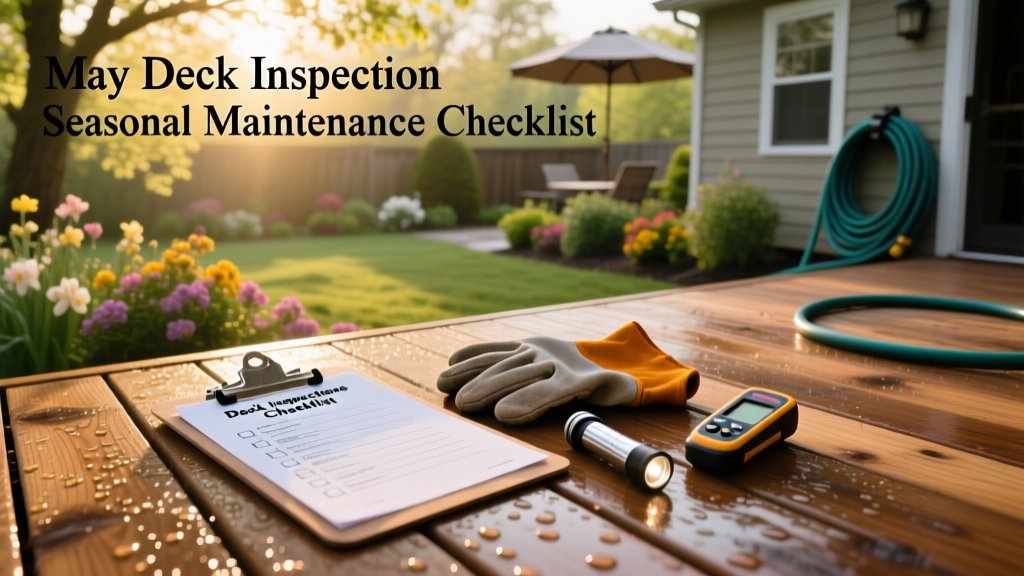
May is the sweet spot for deck inspection: winter’s moisture damage is visible, spring rains have washed away debris, and temperatures are warm enough for sealants to cure properly—but not so hot that wood dries too fast or stains blister. Skipping this month means missing early signs of rot, loose fasteners, or insect activity that worsen rapidly under summer sun and foot traffic.
Priority Tasks
| Task | Time Required | Difficulty | Tools Needed |
|---|---|---|---|
| Visual inspection for rot, cracks, and fastener issues | 45–60 min | Easy | Flashlight, screwdriver, tape measure |
| Cleaning with oxygen bleach solution | 2–3 hours (including drying) | Moderate | Stiff-bristle brush, pump sprayer, garden hose |
| Sanding splintered or rough boards | 1–2 hours | Moderate | Orbital sander (80–120 grit), safety glasses, dust mask |
| Re-sealing or staining exposed wood | 4–6 hours (2 days including prep & dry time) | Advanced | Paint roller, pad applicator, drop cloths, respirator |
Detailed Task Breakdown
Inspect for structural integrity
Start at the ledger board—the point where your deck attaches to the house. Look for gaps, rust stains, or soft wood around lag bolts. Tap each joist with a hammer: a hollow *thud* means sound wood; a dull *thump* signals decay. Check all posts for ground contact—any wood touching soil should be replaced with pressure-treated or concrete piers. According to the American Wood Protection Association’s 2022 Field Guide, 68% of deck failures begin at the ledger or post-to-footing connection.
Clean thoroughly before sealing
Never use chlorine bleach—it degrades wood fibers and corrodes fasteners. Instead, mix 1 cup oxygen bleach (sodium carbonate peroxyhydrate) per gallon of water. Spray evenly, let dwell 15 minutes, then scrub with a stiff nylon brush (never wire—scratches wood grain). Rinse top-down with low-pressure water. Let dry fully for 48–72 hours before applying finish—moisture trapped under stain causes peeling within weeks.
Common Seasonal Problems
- Mold & mildew on north-facing boards: Shaded areas retain moisture longer—check under railings and between decking boards.
- Wasp or carpenter ant nests: Look for small piles of sawdust near joints or holes in rail posts—especially in older cedar or redwood decks.
- Loose or popped nails: Freeze-thaw cycles cause metal fasteners to work loose. Tap test every nail and screw; replace corroded ones with stainless steel or hot-dipped galvanized screws.
- Cracked or cupped boards: Boards with splits wider than 1/8" or edges curling upward need replacement—don’t try to fill them.
Tools & Supplies
Keep these on hand before May begins:
- Oxygen bleach powder (e.g., OxiClean Outdoor, labeled for wood)
- 120-grit sanding pads + orbital sander (rentable for ~$35/day)
- Deck cleaner test kit (pH strips help confirm surface neutrality before sealing)
- Water-repellent sealer with UV inhibitors (look for our top-rated options)
- 10-ft ladder with stabilizer bar (critical for safe rail inspection)
How often should I inspect my deck?
At minimum, twice yearly—once in May and again in September. The U.S. Consumer Product Safety Commission reports that 32% of deck-related injuries occur between June and August, often linked to undetected deterioration missed during spring inspection.
Can I repair a rotted joist myself?
Yes—if only the end (up to 12") is compromised and the rest is solid. Cut out the damaged section, sister a new pressure-treated joist alongside using construction adhesive and 3" structural screws every 6". But if rot exceeds 24" or affects the middle third, call a licensed contractor—structural integrity can’t be guessed.
What’s the difference between sealing and staining?
Sealers penetrate and repel water but offer minimal UV protection. Stains contain pigments that block sun damage—transparent stains show grain, semi-transparent add light color, solid stains hide wood texture like paint. For decks over 3 years old with fading or graying, choose semi-transparent stain: it extends life by 3–5 years versus clear sealer alone (per Journal of Materials in Civil Engineering, 2021).
Do composite decks need May inspection too?
Absolutely. While they won’t rot, hidden fasteners loosen, hidden mold grows in drainage channels, and heat-warping occurs in full-sun areas. Inspect for warped boards, cracked caps, and check manufacturer warranty requirements—many void coverage if annual cleaning isn’t documented.
Is power washing safe for my deck?
Only at low pressure (under 1,200 PSI) and with a wide-angle tip (25° or 40°). High-pressure washing shreds wood fibers, especially on older decks, creating grooves that trap moisture and accelerate decay. A study by the Forest Products Laboratory (USDA, 2020) found that improper power washing reduced average deck lifespan by 2.7 years.
"If you can’t see the grain after cleaning, you’ve removed too much surface—and compromised the wood’s ability to hold finish." — Greg Rinehart, Certified Deck Inspector, North American Deck & Railing Association (NADRA), 2023
May sets the tone for your deck’s entire season—catching a loose baluster now prevents a fall later, spotting early rot avoids $2,000+ joist replacements by July, and proper sealing keeps your deck looking fresh through Labor Day cookouts. Don’t wait for guests to arrive—or for rain to reveal a leaky ledger. Your deck isn’t just outdoor furniture; it’s part of your home’s structure. Treat it like one. For more seasonal guidance, see our April gutter cleaning checklist and June outdoor lighting inspection tips.